

1 to 2 years
Unopened, sealed, cool and dry at 65 to 70°F
12 months
Opened, capped tightly, at 37 to 40°F
No figure
None of the storage charts we opened gives mustard a freezer time
Has your Dijon mustard gone bad?
See all 5 stages ↓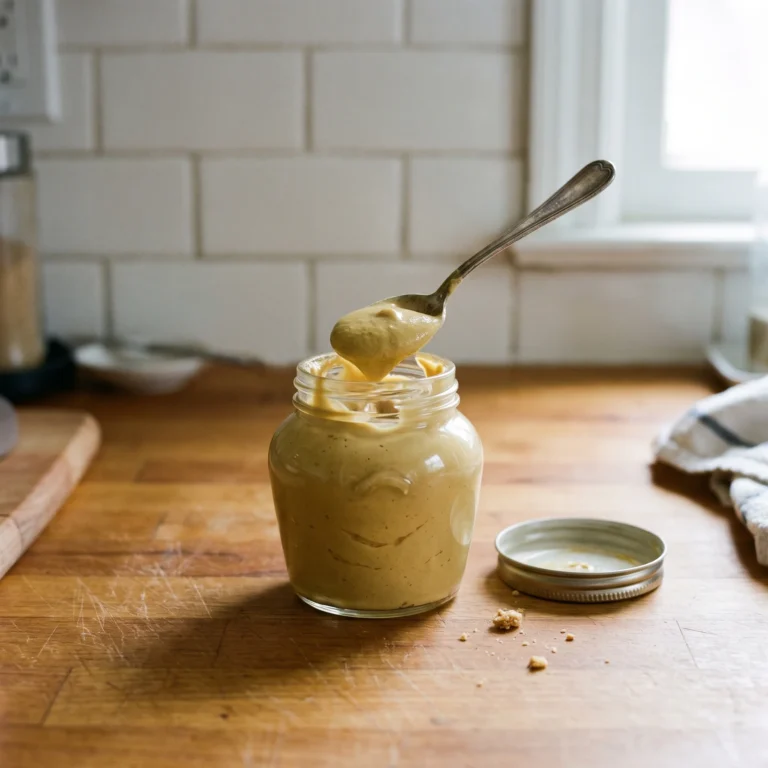 Use itSharp, pale Dijon mustard
 Stir it and use itDijon mustard with liquid on top
 Throw it outDarkened or clumped Dijon mustard
Dijon mustard goes bad slowly, and mostly it fades rather than spoils. An unopened jar keeps 1 to 2 years in the pantry, while an opened one keeps about 12 months in the fridge against roughly 1 month in a cupboard. So how to store Dijon mustard comes down to refrigerating it once the seal is broken.
What should you look for when you buy Dijon mustard?
Buy the jar you will actually finish, because the clock starts the day you open it. An opened jar is given about a year in the fridge, so a big catering tub is a false economy in a small household. Check the jar itself too, since a lid that does not seal properly is what dries mustard out at the rim.
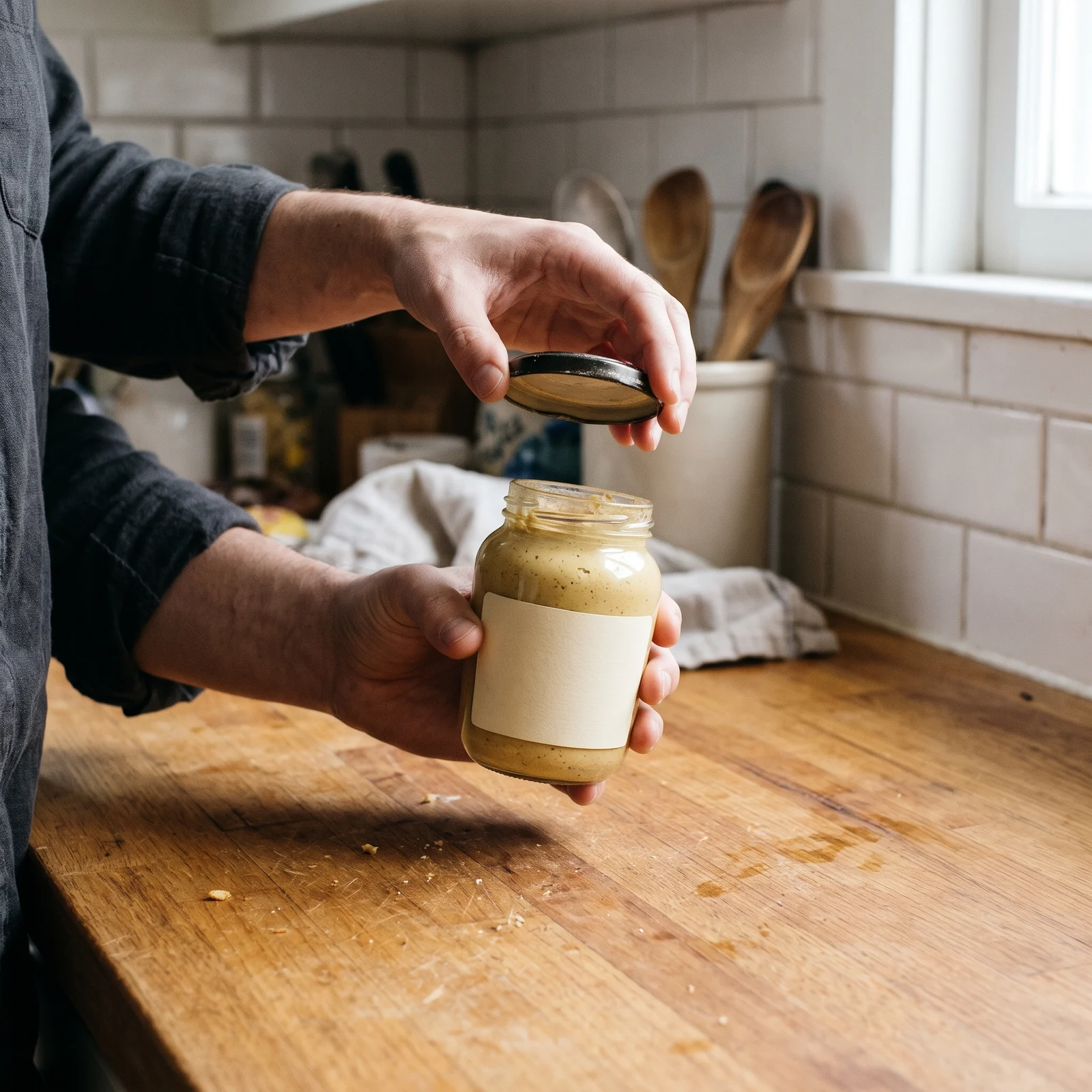
A jar you will finish, with a lid that seals.
A size you will use within a year. An opened jar gets roughly 12 months refrigerated, so match the jar to how often you reach for it.
A lid that screws down tightly. Air is what dries and darkens mustard, so the seal matters more than the brand.
A jar with a flat, unbulged lid. A bulging lid is one of the signs that means throw the food out, so it is worth a glance in the shop.
A date on the label. Best-by dates mark peak quality rather than a safety cutoff, so note the date and write the day you opened it beside it.
How to store Dijon mustard so it lasts
To store Dijon mustard so it lasts, keep the sealed jar in a cool dry cupboard and move it to the fridge once you open it. Its acidity does the preserving, so the fridge is not really about safety, but it is what buys the opened jar another eleven months.
Where should you store Dijon mustard?
Store Dijon mustard in a cool, dry cupboard at 65 to 70°F while it is sealed, then in the fridge at 37 to 40°F once it is open. Keep the jar away from the oven, hot water pipes and heating ducts, because heat and humidity shorten pantry storage considerably. So the shelf beside the cooker is the one place a jar should not live.
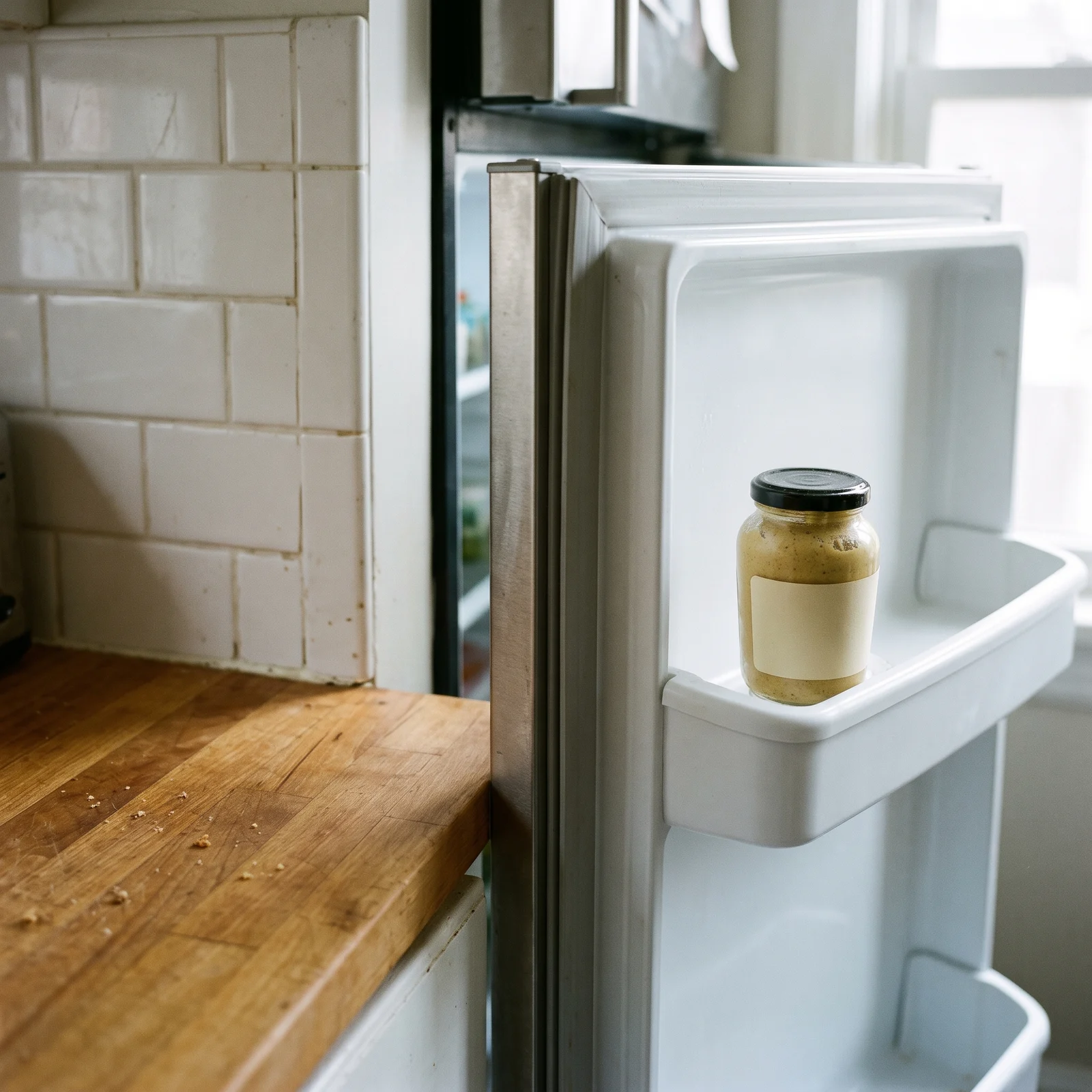
Cupboard while sealed, fridge once opened.
How long does Dijon mustard last after opening?
An opened jar is given about 12 months in the fridge, against roughly 1 month if it stays in a cupboard. That gap is the single most useful figure here, since it is the one thing refrigeration actually buys you. Unopened, the charts give mustard 1 to 2 years, though they are not unanimous: one puts an unopened jar at 2 years and another at 1 to 2, so treat the shorter end as the planning figure.
Write the date you opened it on the lid, because that is the only way to use the figure. The Worcestershire sauce guide covers another condiment that sits on the same shelf and the same charts.
Does Dijon mustard need to be refrigerated?
Not for safety, but yes for quality and for time. Mustard is strongly acidic, measured at about pH 3.1, and anything at 4.6 or below counts as a high-acid food. In one test, Salmonella added to opened shop-bought mustard died within an hour, whether the jar sat at 40°F or at 73°F. Even so, the cupboard figure for an opened jar is 1 month against 12 in the fridge, so refrigerate it. The same acidity keeps white wine vinegar stable in a cupboard for years, although vinegar has nothing in it to dry out.
Why is there liquid on top of my Dijon mustard?
A thin layer of liquid on top is separation, and the fix is to stir it back in before using the jar. Storage guidance says plainly to stir mustard before use, so a settled jar is doing what mustard does rather than going off. One condiment guide does count a significant texture change as a spoilage sign, however, so stir it and then taste it: if it smells and tastes right, it is right.
Can Dijon mustard sit out overnight?
Yes, Dijon mustard can sit out overnight safely. Its acidity is strong enough that pathogens added to an opened jar died within an hour at room temperature, so a night on the table is not a safety problem. The exception is contamination: a basting brush that touched raw meat, or a knife licked and dipped again, can load the jar with more germs than the acid can handle. Put it back in the fridge in the morning, and see the food left out overnight guide for the foods where the answer is no.
Can you freeze Dijon mustard?
None of the storage charts we opened gives mustard a freezer time, so we will not invent one. The freezer column is simply blank where mustard appears, while the fridge column gets a full 12 months. There is also little to gain, because a year is already longer than most jars last in a kitchen.
What should you do instead of freezing Dijon mustard?
Keep it in the fridge and buy a smaller jar next time. Refrigeration already stretches an opened jar from about 1 month to about 12, so it does the job a freezer would be asked to do. If a jar is heading for its date and still half full, cook it down into dressings, glazes and marinades instead, since mustard loses nothing in a vinaigrette.
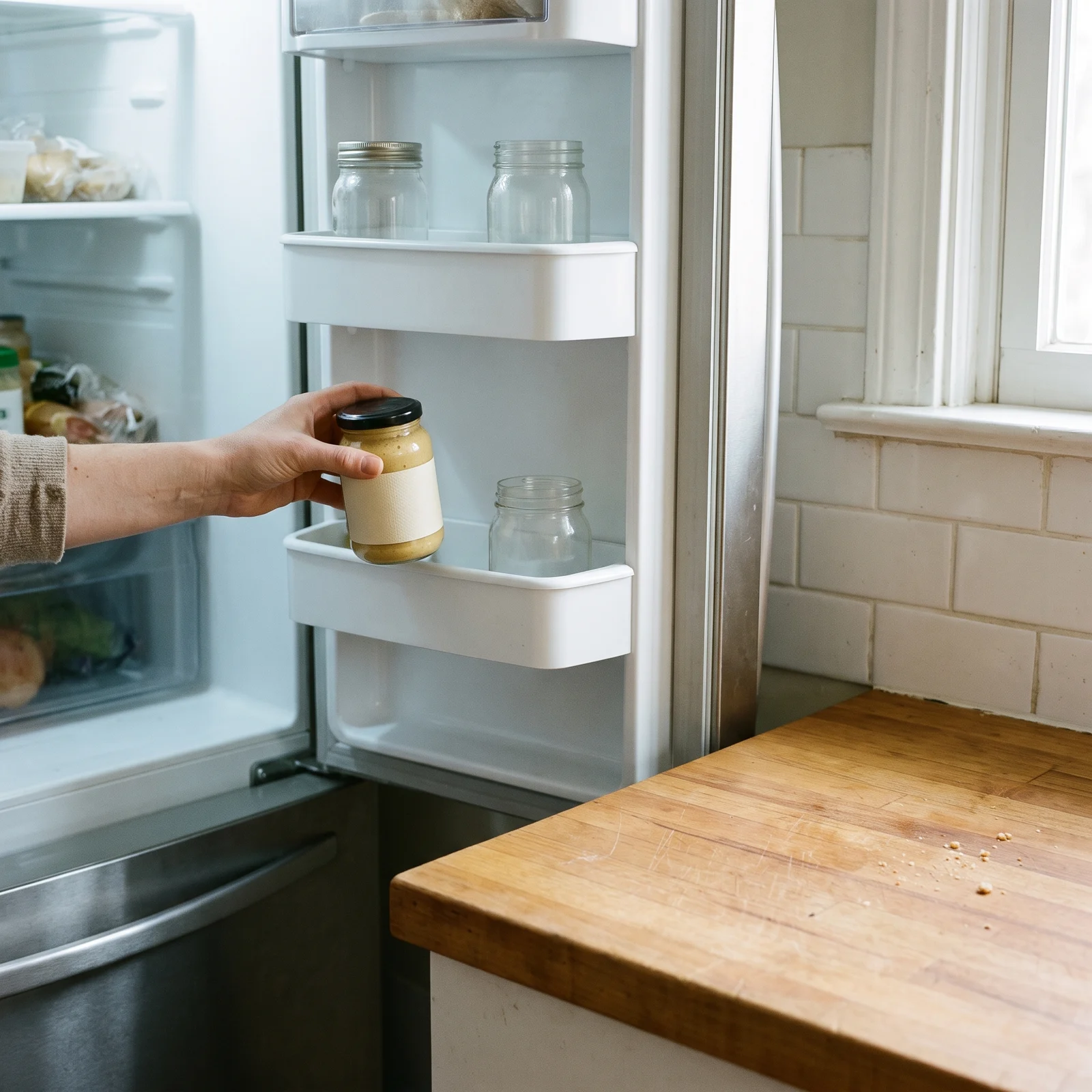
The fridge door, not the freezer.
How should you store homemade Dijon mustard?
Homemade mustard keeps about a week in the fridge, which is far shorter than the year a shop-bought jar gets. Homemade condiments generally carry that one-week refrigerated window, so make small batches and date them. Avoid any homemade version built on raw eggs as well, because commercial products use pasteurized eggs and a home kitchen usually does not.
Does Dijon mustard lose its heat over time?
Yes, an old jar goes quieter long before it becomes unsafe. Past its date a condiment can lose flavor, texture and nutritional value, and with Dijon the sharp bite is the first thing to go. That is a quality change rather than a safety one, so a flat jar still belongs in a dressing or a pan sauce, just in a larger spoonful than the recipe asks for.
How to tell if Dijon mustard has gone bad
Dijon mustard rarely spoils, and that is the honest headline. Its acidity keeps most bacteria from growing, so three of the five stages below are quality calls rather than safety ones. Mold, a bulging lid and a darkened, clumped jar are the signs that actually end one. Here is what each stage means.
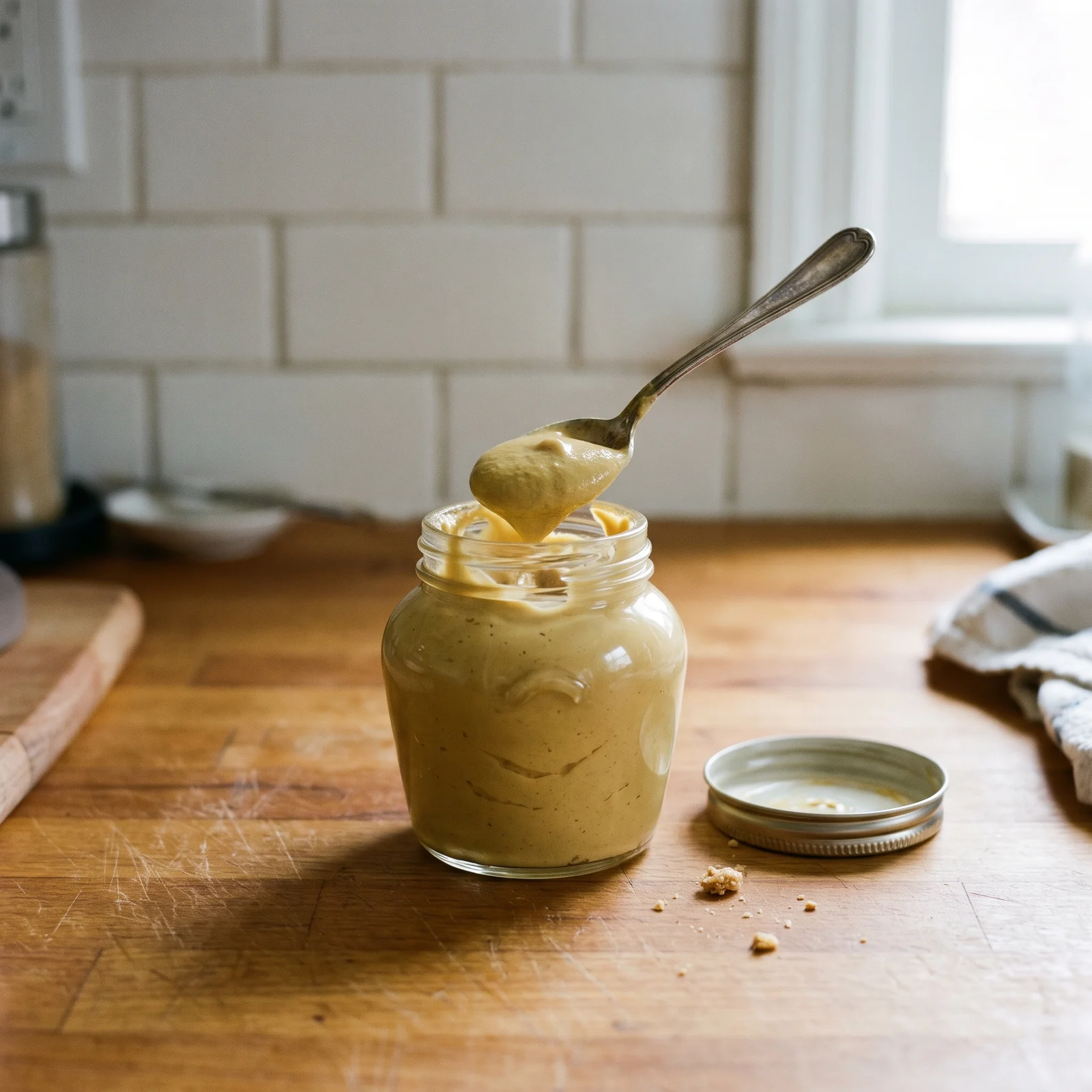
Verdict: use it
Sharp, pale Dijon mustard
Smooth and pale gold in the jar, with the sinus-clearing bite it had when you opened it. This Dijon mustard is doing exactly what it should, so use it for dressings, sandwiches and sauces alike.
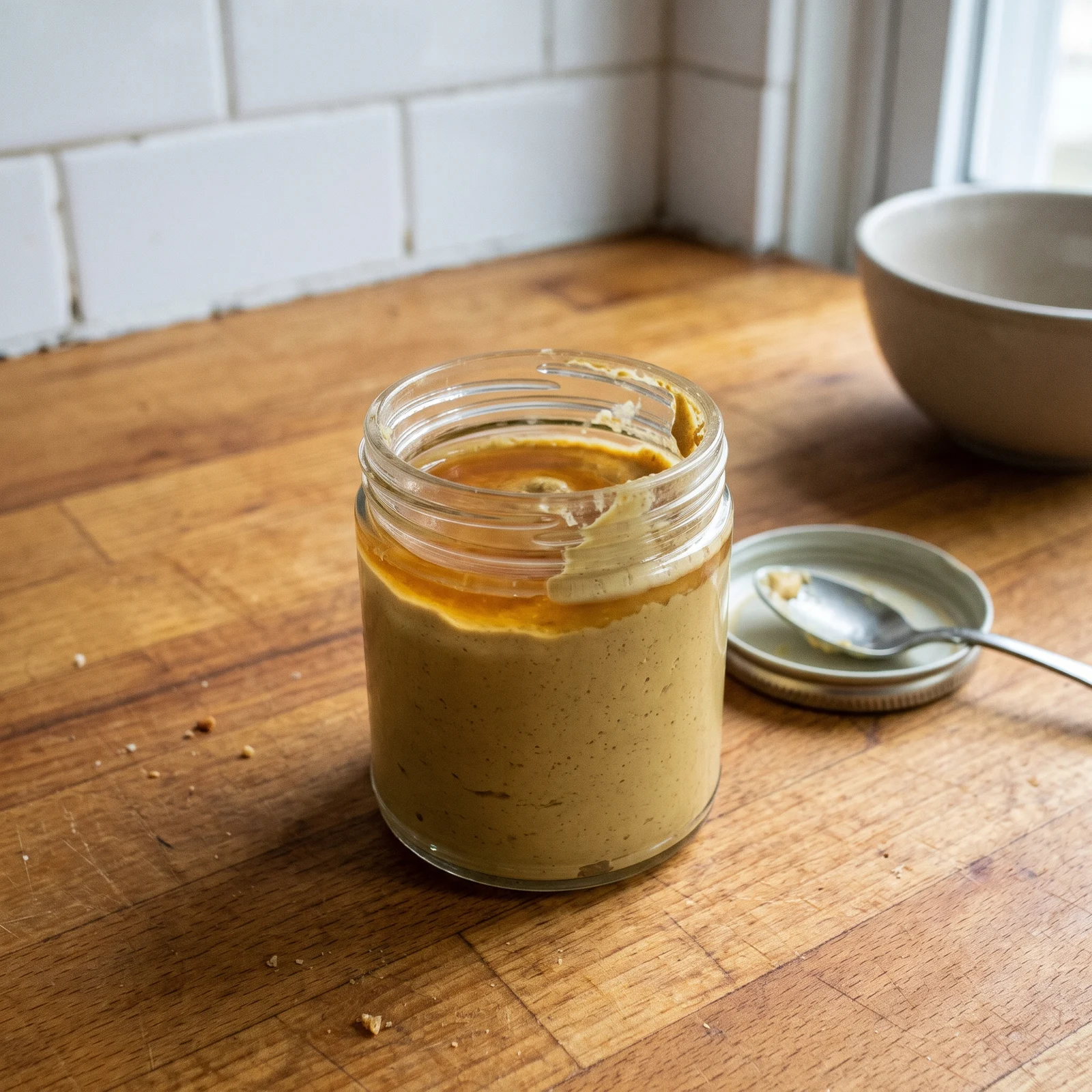
Verdict: stir it and use it
Dijon mustard with liquid on top
A thin watery layer sitting above the paste, usually in a jar that has stood still for weeks. Mustard is meant to be stirred before use, so fold the liquid back in and carry on. Taste it afterwards, though, since a jar that stays loose and watery after stirring is telling you something different.
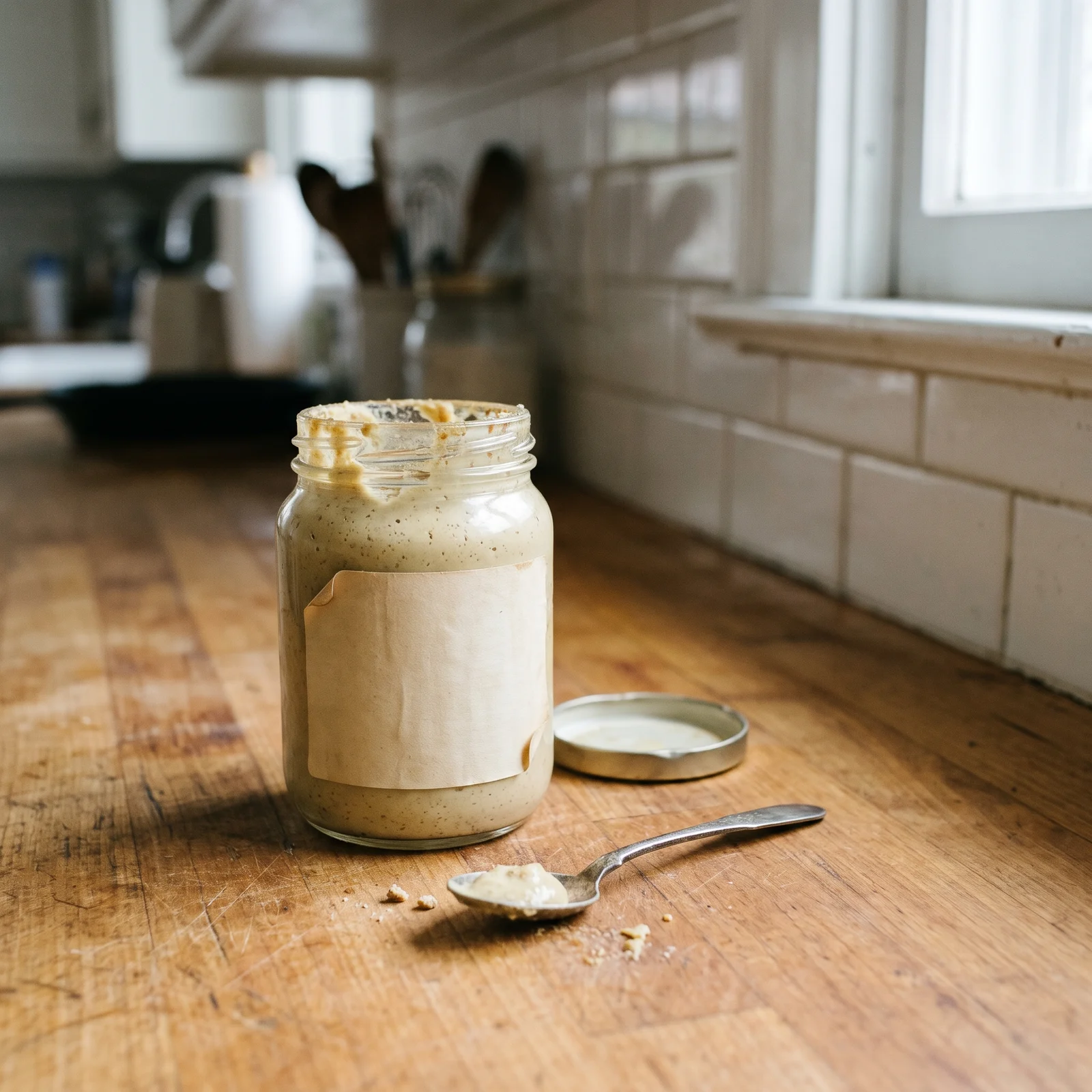
Verdict: cook with it
Flat, faded Dijon mustard
A jar that has lost its heat and tastes mostly of vinegar. Flavor fades well before safety does, so this one is past its best on a sandwich but still useful in a vinaigrette, a marinade or a glaze. Use a bigger spoonful than usual to make up the difference.
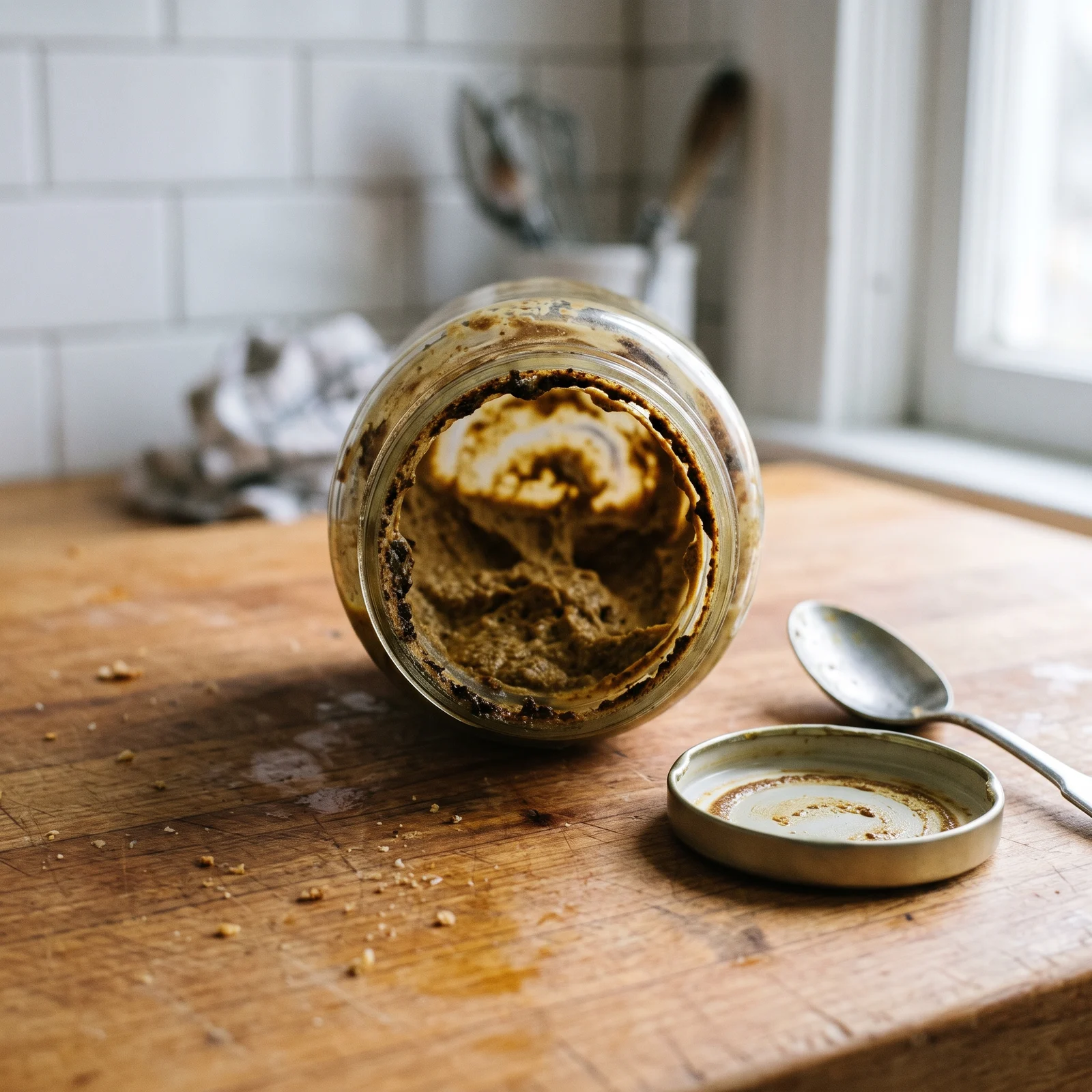
Verdict: throw it out
Darkened or clumped Dijon mustard
Mustard that has gone brown and dull, or set into clumps that will not stir smooth. A darkened or changed color is listed as an indication that a condiment has spoiled, and so is a significant change in texture. Drying at the rim of a badly sealed jar is the usual cause, so bin it rather than scraping past the crust.
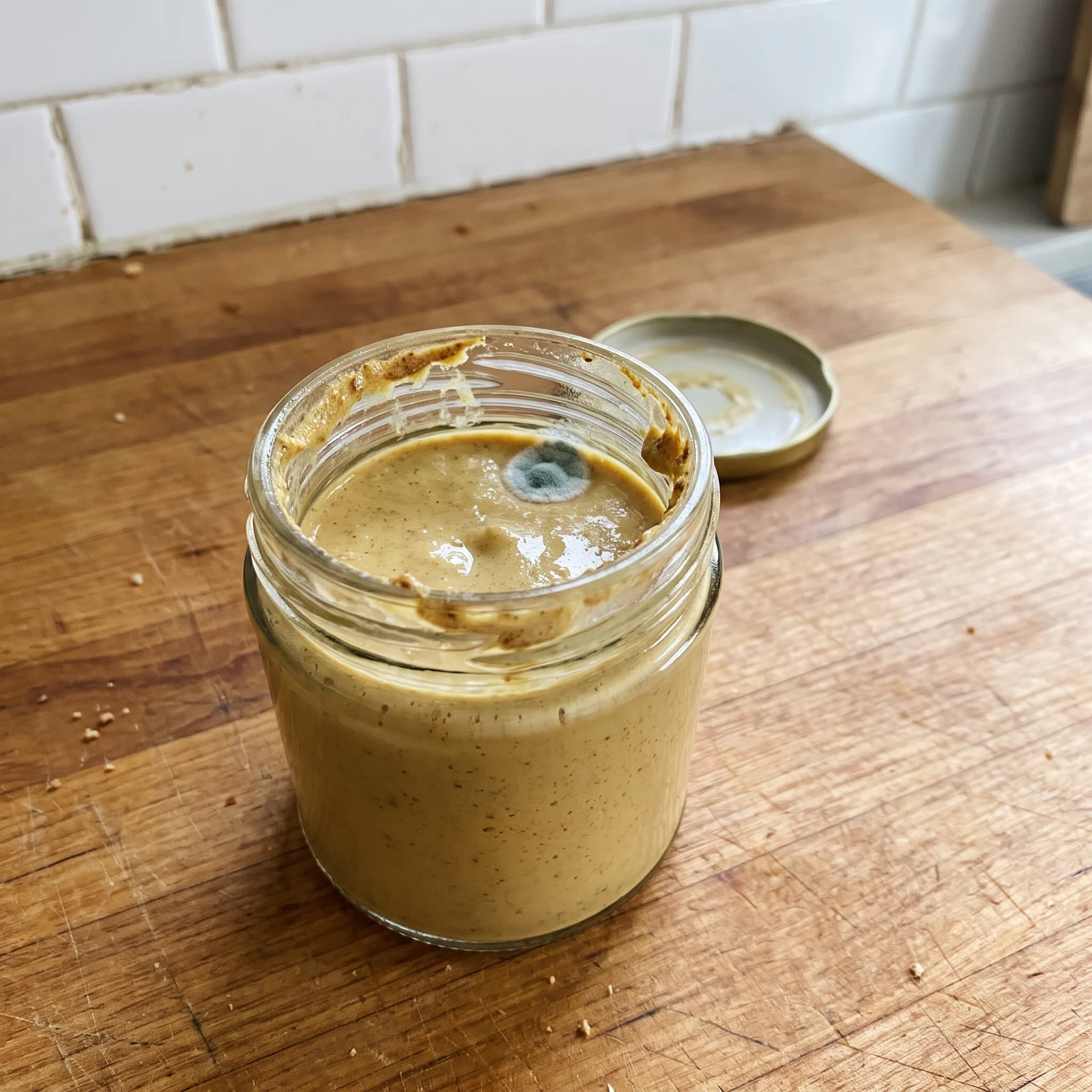
Verdict: throw it out
Moldy or bulging Dijon mustard
Fuzzy spots, a white dust, green or gray patches, a bulging lid, or a sour smell as the jar opens. Mold growth, bubbling, bulging lids and unpleasant odors all mean throw it out, and mold on a condiment counts as a clear sign of spoilage. So do not scrape the top off this one: the whole jar goes.
Is Dijon mustard safe past the date on the jar?
Usually yes, because best-by and use-by dates mark peak quality rather than a safety cutoff. A jar kept cold and capped is generally fine past the date, so judge it by smell, color and taste instead. When in doubt, throw it out. The honey guide covers another jar that routinely outlives its own label.
Dijon mustard substitutes
Out of Dijon, or did the jar finally darken on you? Then one of these will stand in.
Substitute
Works best in
What changes
Whole grain mustard
Dressings and sauces
The closest match, with seeds for texture.
Spicy brown mustard
Sandwiches and glazes
Nearer the heat of Dijon than yellow mustard is.
Yellow mustard
Sandwiches and potato salad
Milder and more sour, so use a little more.
Horseradish
Roast beef and dressings
Sharp in the same way, but far stronger, so start small.
Mistakes people make when they store Dijon mustard
These are the ways people store Dijon mustard that cost them the most, so each one has an easy fix.
Leaving the opened jar in a cupboard, when the fridge takes it from about 1 month to about 12.
Dipping in a knife that touched raw meat, which is the one thing that can overwhelm the acidity.
Throwing out a jar because liquid has risen to the top, when a stir puts that right.
Standing it beside the cooker, where heat and humidity shorten its life considerably.
Buying a catering tub you will not finish inside a year.
Reading the best-by date as a safety line, when it marks quality instead.
Leaving the lid loose, which dries and darkens the mustard at the rim.
Sources
Food Storage Guide FN579, Julie Garden-Robinson, NDSU Extension, reviewed January 2023, on prepared mustard keeping 1 to 2 years unopened and 1 year opened, and on stirring it before use.
Food Storage for Safety and Quality, Elizabeth L. Andress and Judy A. Harrison, University of Georgia Cooperative Extension publication FDNS-E-119, June 2011, on opened prepared mustard keeping 12 months refrigerated against 1 month in the cupboard, on the blank freezer column for mustard, and on discarding food that shows mold growth, bubbling, bulging lids or unpleasant odors.
What's Up with Condiments?, Barb Ingham, University of Wisconsin-Madison Division of Extension, Winnebago County, July 2020, on mustard measuring about pH 3.1, on Salmonella dying within an hour at both 40°F and 73°F, on refrigeration being for quality, and on contamination from brushes and knives that touched raw meat.
When to Say Goodbye to Your Condiments, Jaylana Miles, K-State Research and Extension Johnson County, April 2025, on mustard keeping 2 years unopened and 1 year opened, on darkened color, clumps and mold as spoilage signs, on dates marking quality, and on homemade condiments keeping about a week.
Refrigerated Condiment Safety Tips, Words on Wellness, Iowa State University Extension and Outreach, May 2019, on mustard keeping 1 year after opening, on labelling containers with the date they were opened, and on best-by dates indicating quality rather than safety.
Food Storage: Pantry, Pamela Schmutz and E.H. Hoyle, revised by Faith C Isreal, Clemson Cooperative Extension factsheet HGIC 3525, revised March 2020, on a cool dry pantry at 65 to 70°F, on keeping food away from oven ranges, hot water pipes and heating ducts, and on heat and humidity shortening storage time.
Every storage time, temperature and verdict on this page comes from the sources listed above, and none of it is made up. Food safety still depends on conditions we cannot see, so read the Disclaimer, and if in doubt, throw it out.
Other ingredient guides
Browse all guides

Share this guide
Never miss a guide
New ingredient guides when they go up, plus one storage tip worth knowing. Anything sponsored is labelled.

Emilly White