
12 months
Unopened, somewhere cool, dry and dark
6 to 12 months
Opened, with the cap screwed down
Indefinitely
Airtight, with half an inch of headspace
Has your maple syrup gone bad?
See all 5 stages ↓ Use itClear, glossy maple syrup
 Throw it outMaple syrup that smells or tastes off
Maple syrup does not go bad in a sealed bottle, which keeps about 12 months in a cool, dry cupboard. Once you open it, the bottle belongs in the fridge, where it keeps 6 months to a year, or in the freezer, where it keeps indefinitely. An opened bottle left somewhere warm grows mold.
Is it pure maple syrup or pancake syrup?
Pure maple syrup and pancake syrup are two different products, and they keep in different places, so the label decides where the bottle goes. Pure syrup is boiled tree sap and nothing else, which is why mold can grow in it once air gets to the surface. Pancake syrup is corn syrup with coloring, flavoring and preservatives in it.
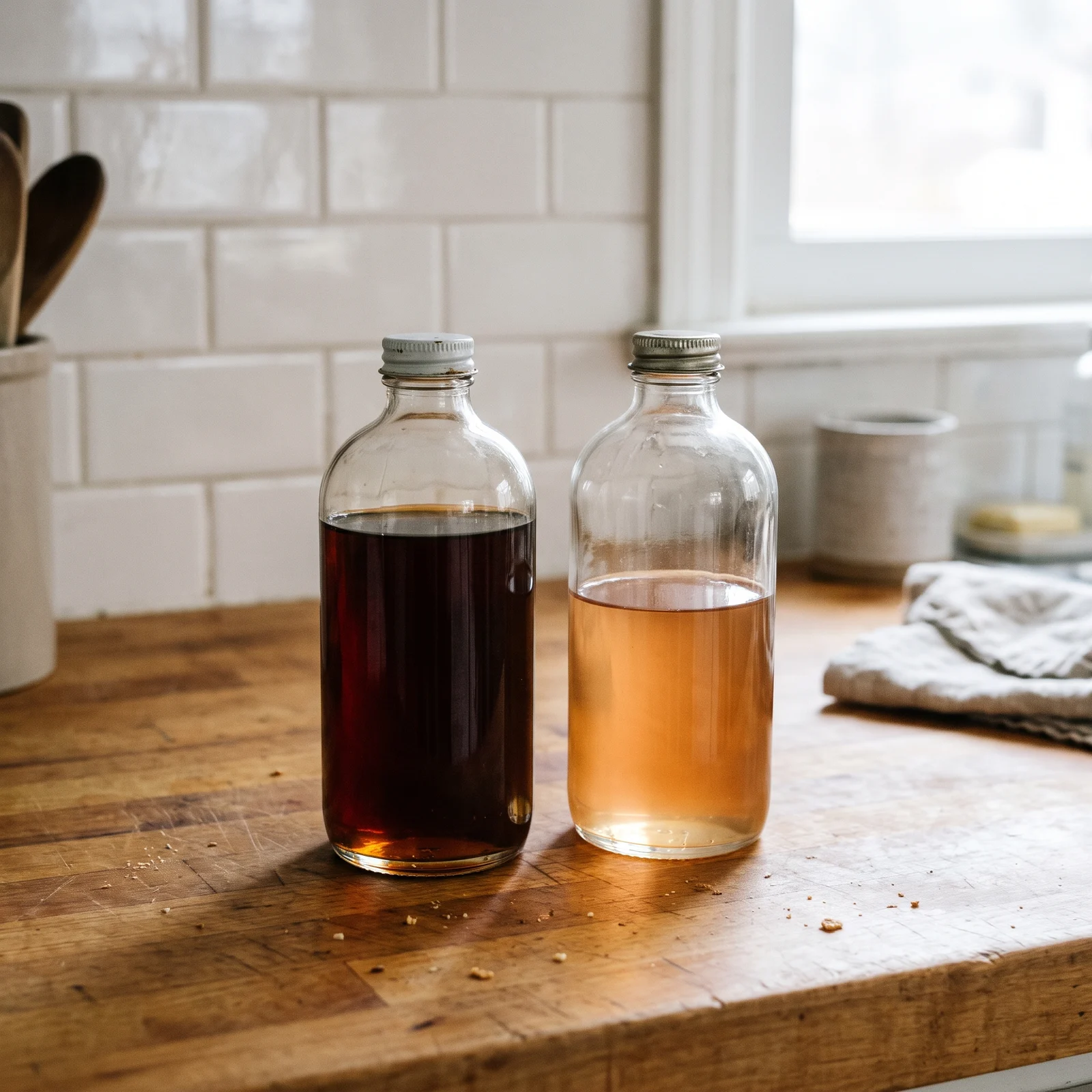
The label decides the shelf: pure syrup goes cold once it is open, pancake syrup is more forgiving.
Pure maple syrup carries no additives and no preservatives, so nothing in the bottle holds mold off once air reaches it. That is the whole reason a pure bottle moves to the fridge after opening.
Pancake syrup is a different thing, built from corn syrup or high-fructose corn syrup with coloring, flavoring and preservatives. One chart gives it 1 year unopened and 6 months in the fridge after opening, and it still says to refrigerate it once open.
Grade tells you about taste rather than keeping. Since 2015 every grade is Grade A, followed by a color and flavor description. So a bottle reads Golden Color and Delicate Taste, or Amber Color and Rich Taste. The darker ones read Dark Color and Robust Taste, or Very Dark Color and Strong Taste.
Density decides whether a bottle keeps at all. Syrup under 66 percent sugar can ferment or grow mold over time. Syrup over 68.9 percent, on the other hand, throws sugar crystals in the bottom of its container. So a home-boiled bottle carries more risk than a shop bottle does.
How to store maple syrup so it lasts
To store maple syrup so it lasts, keep the sealed bottle in a cool, dry cupboard and move it to the fridge the day you open it. Cold is what holds mold off after that, because mold on an opened bottle is the mark of a bottle that never went anywhere cold.
Where should you store maple syrup?
Keep maple syrup in a cool, dry place while the bottle stays sealed, then in the fridge or the freezer once it is open. That is the whole of how to store maple syrup, and the only real decision left is which of the two cold places suits the bottle. Screw the cap down between pourings, since air reaching the surface is what lets mold start.
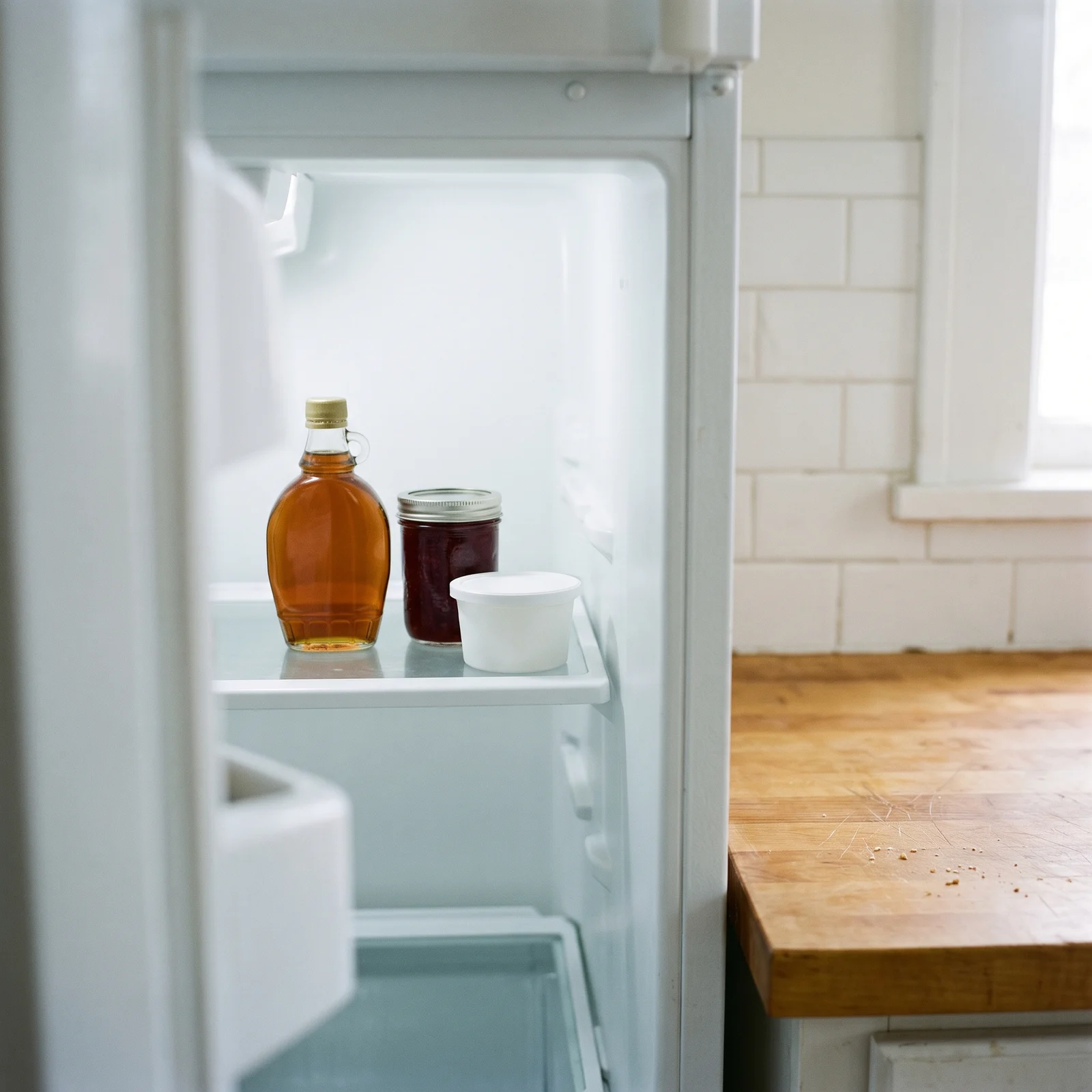
A sealed bottle keeps in the cupboard, while an open one belongs on a fridge shelf.
How long does maple syrup last?
A sealed bottle of maple syrup lasts about 12 months in the cupboard. An opened one lasts 6 months to a year in the fridge. Those two figures come from two different charts, however, and the maple sources we opened give no month count for an opened bottle at all. They simply say to refrigerate or freeze it, so treat 6 months as the point where the bottle is worth a look and a smell.
In other words, the date on the neck is not the thing that matters here. What matters is whether the bottle went somewhere cold the day you opened it, because that is the difference between a year and a patch of mold.
Does maple syrup need to be refrigerated?
Yes, maple syrup needs the fridge once you open it. That is the one firm rule in every source we opened, and the freezer does the same job. Mold that appears after opening usually traces back to a bottle that went into a warm cupboard instead. So the cold shelf is doing real work here, unlike the cupboard a sealed bottle is happy in.
Why does maple syrup grow mold?
Mold grows in maple syrup when air and warmth reach the surface of a bottle nobody kept cold. Bottling is the other half of the story. Syrup goes into its container hot, at 180 to 190°F, because that heat kills the bacteria, yeast and mold. Small glass bottles cool fast, however, so they act as a heat sink and give spoilage its best chance. A moldy bottle is therefore a bottling problem, so the producer will want to hear about it.
Can maple syrup sit out overnight?
Maple syrup can sit out overnight without turning unsafe. No source we opened gives it a counter time at all, however. Every one of them puts an opened bottle in the fridge or the freezer. So treat the table as a mealtime rather than as storage. Put the bottle back in the cold once breakfast is over, since mold forms on bottles that stay warm. The [[food left out overnight|/food-left-out-overnight/]] guide covers the rest of the table.
Can you freeze maple syrup?
Yes, you can freeze maple syrup, and the freezer holds its flavor and quality over an indefinite period. It never freezes solid either, because of the sugar in it, so a frozen bottle stays usable rather than turning into a block you have to thaw.
How do you freeze maple syrup?
Pour maple syrup into an airtight container and leave about half an inch of headspace, since the syrup expands as it freezes. Then take out the amount you need and put the rest back in the freezer, which is what makes this practical for a big bottle. About an hour at room temperature brings frozen syrup back to pouring consistency, and freezing a larger quantity in glass holds the flavor best.
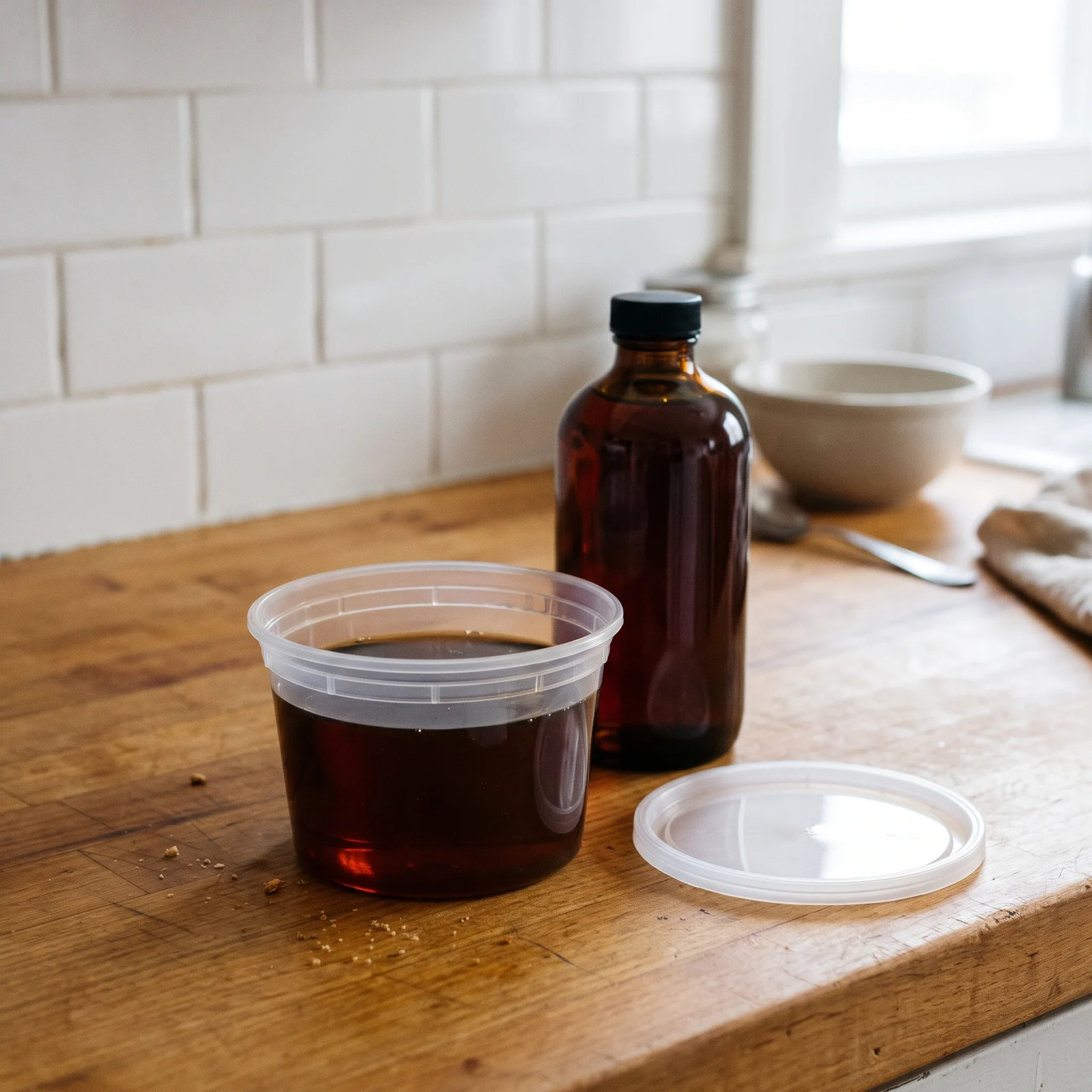
Syrup never freezes solid, so a frozen bottle pours again after about an hour out.
Does freezing change the taste of maple syrup?
Freezing holds the flavor and quality rather than changing them, which is why it is the one storage method with no time limit attached to it. Glass suits a large amount better than plastic, and that half inch of headspace keeps a full container from splitting as the syrup expands.
Why is my maple syrup crystallized?
Sugar crystals in the bottom of the bottle mean the syrup is dense rather than spoiled. Syrup boiled above 68.9 percent sugar forms crystals in the bottom of its storage container, so the crystals are the sugar coming out of a dense batch. Warming the bottle gently is the usual fix, although the charts give that instruction for crystallized honey rather than for syrup.
Does maple syrup go bad?
Maple syrup fails in one direction above all, and that is mold on the surface of a bottle nobody kept cold. Two of the five stages below are quality changes and three are bin jobs, and the mold stage takes the whole bottle rather than a skim off the top. Here is what each stage means.
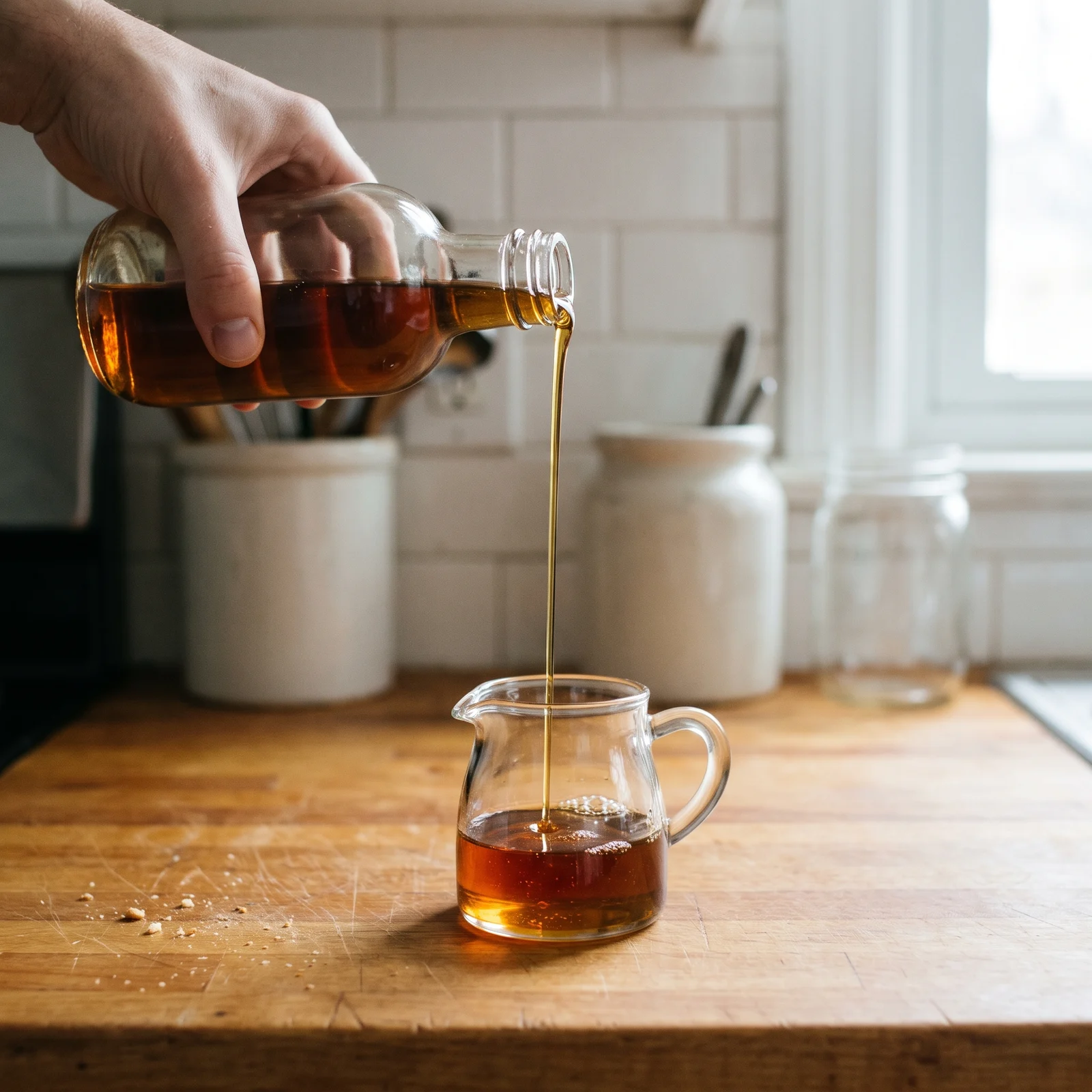
Verdict: use it
Clear, glossy maple syrup
The syrup pours clear and glossy, and it smells sweet and faintly woody. A sealed bottle like that keeps about 12 months in the cupboard, while an opened one keeps 6 months to a year on a fridge shelf. So use it, and screw the cap down after every pouring.
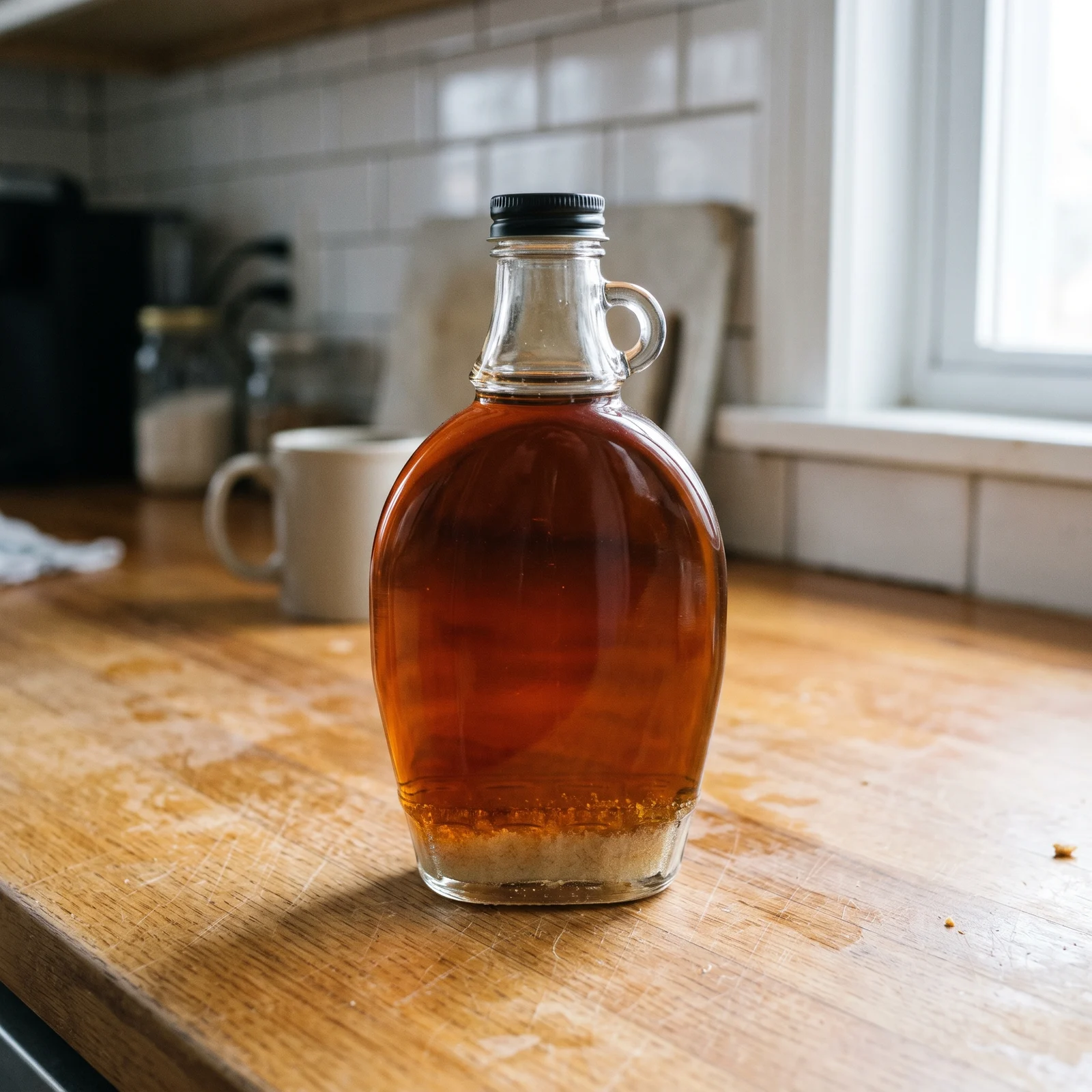
Verdict: use it
Crystallized maple syrup
Hard sugar crystals have settled in the bottom of the bottle, or a gritty layer has formed under the syrup. That is density rather than spoilage, because syrup boiled above 68.9 percent sugar throws crystals in its container. So warm the bottle gently and carry on using it.

Verdict: throw it out
Maple syrup that smells or tastes off
The syrup smells or tastes different from the way it did, or its appearance has changed. Syrup that develops an off odor, flavor or appearance should go, and that is a plain instruction in the charts rather than a judgment call. So pour it away instead of cooking with it.
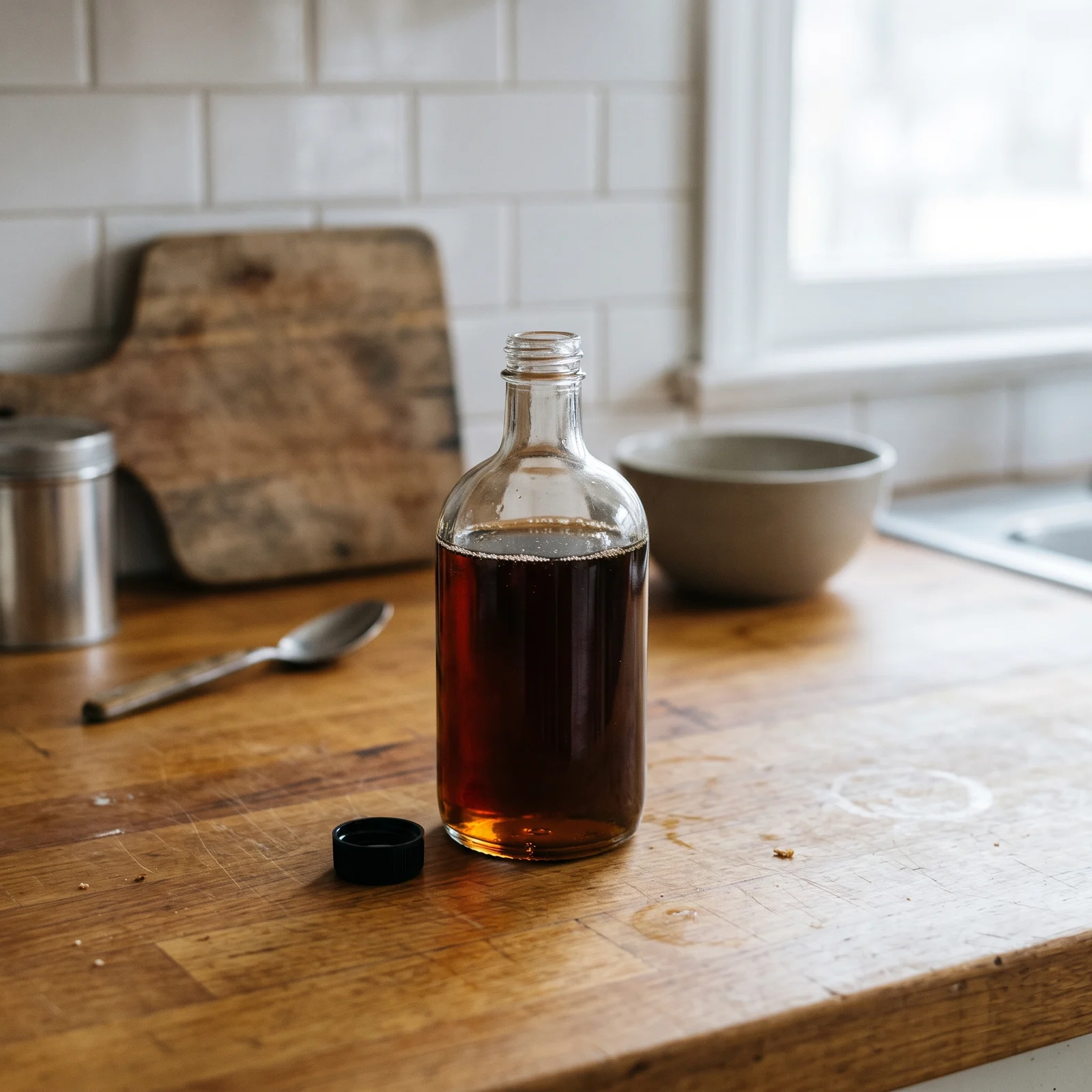
Verdict: throw it out
Fermented maple syrup
The syrup tastes winey or yeasty, or the bottle fizzes faintly when the cap comes off. Syrup under 66 percent sugar can ferment over time, which makes a home-boiled or thinned bottle the one this happens to. So throw it out, and keep the next batch at proper density.
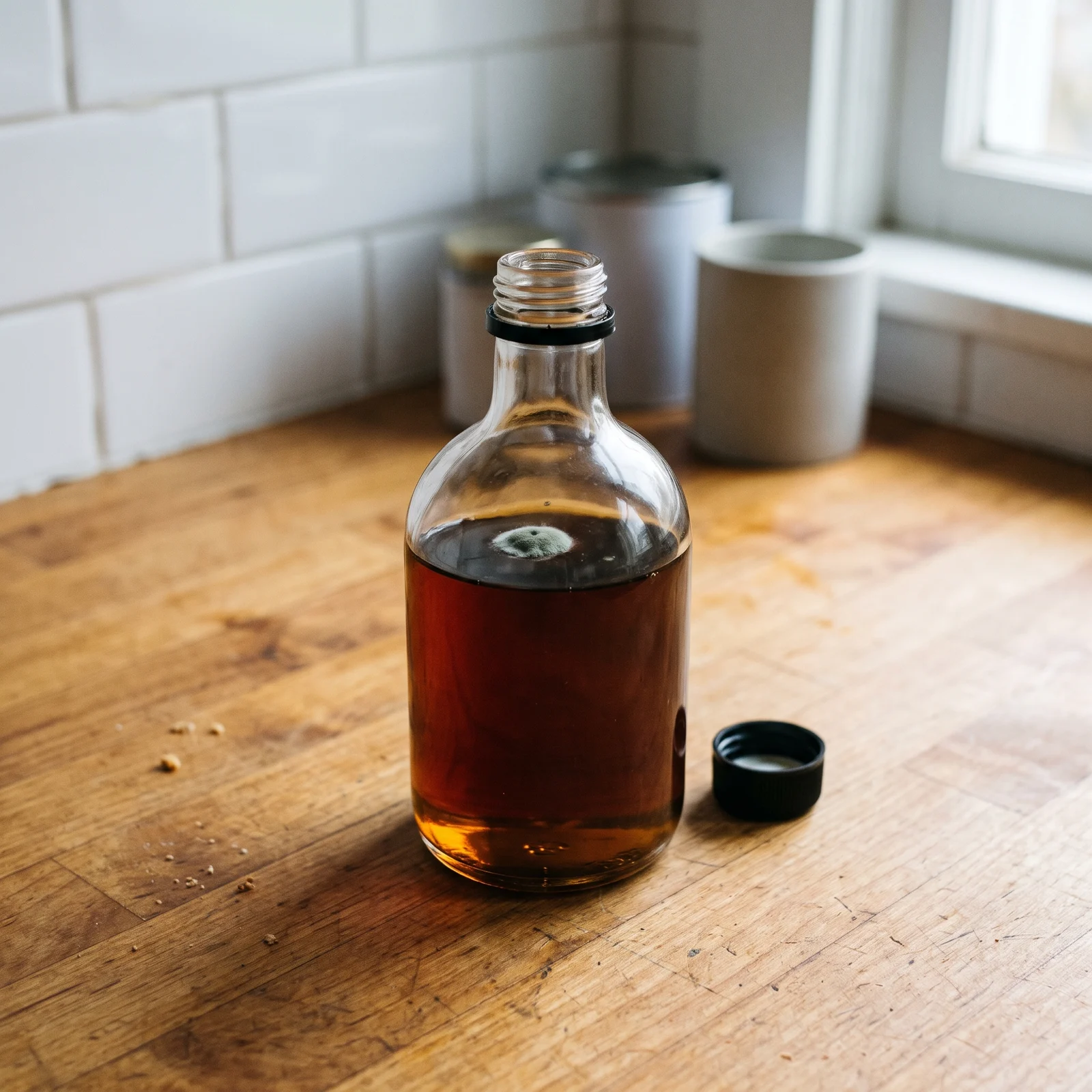
Verdict: throw it out
Moldy maple syrup
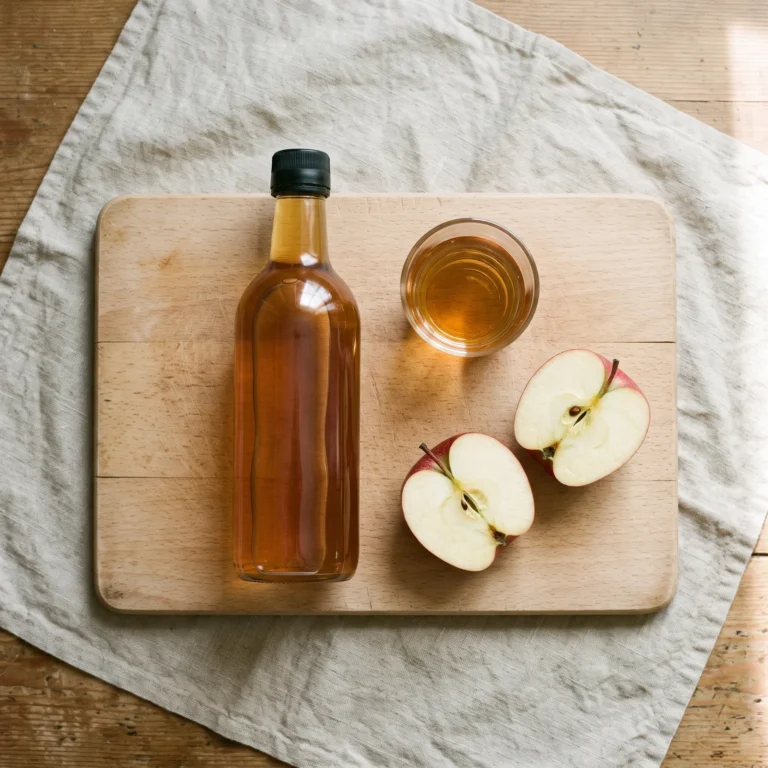
A fuzzy patch is floating on the surface, or clinging inside the neck of the bottle. Discard the syrup, bottle and all, because mycotoxins can develop in moldy syrup, they stay invisible to the eye, and boiling does not destroy them. Skimming the mold off and reboiling the rest was the old advice, and the specialists dropped it, since reboiling and filtering cannot fix the many problems that might be in the bottle. The apple cider vinegar guide draws the same line between a harmless film and real mold.
Does unopened maple syrup go bad?
An unopened bottle keeps about 12 months on the one pantry chart that gives syrups a figure. The maple sources give it no expiry at all, since they say only to keep it somewhere cool and dry. Hot packing is the reason a sealed bottle holds so well. Syrup goes into its container at 180 to 190°F, which is hot enough to kill what would otherwise spoil it. So an old sealed bottle is worth opening and smelling, rather than throwing out on a date.
Maple syrup substitutes
Out of maple syrup, or did a moldy bottle have to go? Then one of these will stand in.
Substitute
Works best in
What changes
Pancake syrup
Pancakes and waffles
Thinner and sweeter, and it gets 6 months in the fridge once open.
Corn syrup
Sauces and candy
Keeps up to 3 years in the cupboard, tightly covered.
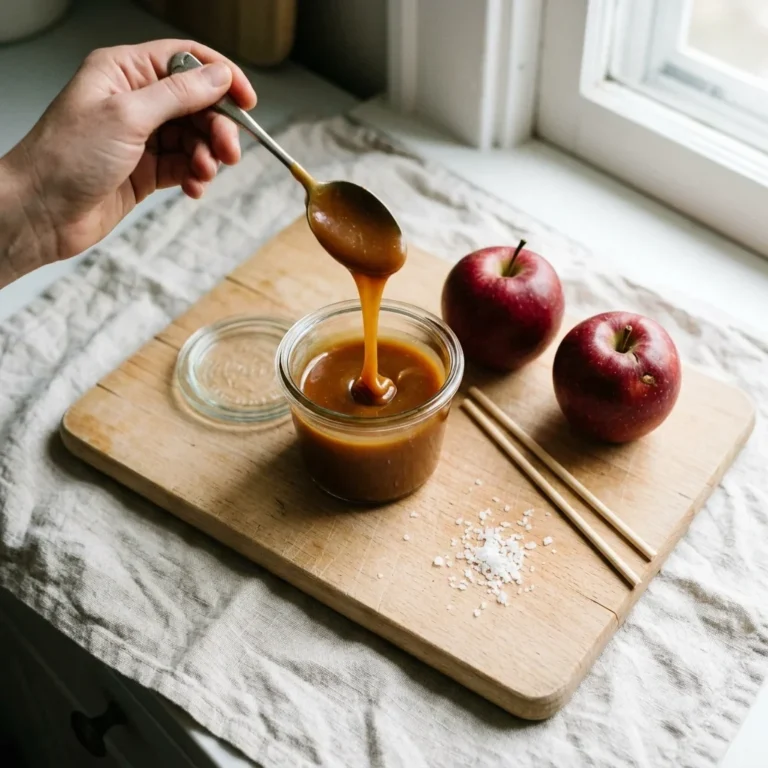
Caramel sauce
Ice cream and desserts
Richer, and not maple at all, so the caramel sauce guide covers that one.
Mistakes people make when they store maple syrup
These are the ways people store maple syrup that cost them the most, so each one has an easy fix.
Leaving an opened bottle in the cupboard, when the fridge or the freezer is where it belongs from the day you open it.
Skimming mold off the top and keeping the rest, although mycotoxins can run through the syrup and boiling does not destroy them.
Reboiling a moldy bottle, which was the old advice and is no longer what the maple specialists recommend.
Throwing out a crystallized bottle, when the crystals are only sugar coming out of a dense batch.
Trusting the sugar to preserve it, since a pure bottle carries no preservatives at all.
Filling a freezer container to the brim, because syrup expands and wants about half an inch of headspace.
Bottling a home batch into any old jar, when sterilized containers filled hot are what keep a batch from spoiling.
Sources
Bulletin #7036, How to Tap Maple Trees and Make Maple Syrup, Marvin Blumenstock, revised by Kathy Hopkins and updated by Jason Lilley, University of Maine Cooperative Extension, 2025, on canning syrup hot at 180 to 190°F to prevent spoilage, reheating to 180°F and no higher than 195°F, filling sterilized jars full, storing syrup in a cool, dry place, refrigerating a container once it has been opened, discarding syrup that molds after several months of storage, syrup below 66 percent sugar fermenting or molding, and syrup above 68.9 percent forming sugar crystals in the bottom of storage containers.
Maple Syrup: Fridge or Pantry?, Kate McCarty, University of Maine Cooperative Extension Food & Health, February 2026, on maple syrup needing refrigeration after opening to keep it from going bad, the risk of mold without it, discarding moldy syrup rather than removing the mold and boiling the rest, and mycotoxins surviving boiling and causing short-term illness and long-term health consequences.
Maple Research Guide: Grades, Nutrition & Recipes, University of Vermont Libraries, updated February 2026, on storing maple syrup in the freezer to retain flavor and quality over an indefinite period, syrup not freezing solid and needing about one hour at room temperature to reach pouring consistency, removing the amount required and returning the rest to the freezer, discarding syrup if mold forms on the surface after extended storage, and mycotoxins being invisible to the human eye and posing a food-safety risk.
Is maple syrup mold harmful?, answered by Mark Isselhardt, University of Vermont Extension Maple Specialist, Ask Extension question 546494, March 2019, on throwing out moldy syrup, reheating and skimming no longer being the recommendation because reboiling and filtering cannot fix the many potential problems, opened syrup needing refrigeration or freezing until used, mold forming after opening likely resulting from not refrigerating or freezing it, syrup not freezing solid because of its high sugar content, freezing larger quantities in glass to preserve flavor, and contacting the producer for a replacement if a container is moldy when opened.
Maple Syrup vs Pancake Syrup, Marcia Steed, AnswerLine, Iowa State University Extension and Outreach, December 2018 and reviewed May 2024, on opened maple syrup keeping six months to a year in the refrigerator, freezing keeping it safe indefinitely in an airtight container with about half an inch of headspace because it expands, discarding syrup that develops an off odor, flavor or appearance or molds, maple syrup containing no additives or preservatives while pancake syrup is made from corn syrup with added coloring, flavoring and preservatives, and the 2015 grade names.
Mapping the Sweet Spot: Understanding Bottling's Impact on Maple Syrup, Laura Hardie on the work of Mark Isselhardt, University of Vermont Food Systems Research Center and Proctor Maple Research Center, April 2024, on syrup needing to be between 180 and 190 degrees to kill bacteria, yeast or mold, hold time depending on container size and material, and small glass containers acting as a heat sink that cools syrup quickly so spoilage is more likely to show up in them.
Food Storage for Safety and Quality, Elizabeth L. Andress and Judy A. Harrison, University of Georgia Cooperative Extension publication FDNS-E-119, June 2011, on syrups keeping 12 months in a cupboard at 50 to 70°F and honey keeping 12 months.
Food Storage Guide, Julie Garden-Robinson, NDSU Extension publication FN579, reviewed January 2023, on pancake syrup keeping 1 year unopened and 6 months in the refrigerator once opened and needing refrigeration after opening, corn syrup keeping up to 3 years tightly covered, and honey keeping 2 years covered tightly and being warmed in a pan of hot water if it crystallizes.
Every storage time, temperature and verdict on this page comes from the sources listed above, and none of it is made up. Food safety still depends on conditions we cannot see, so read the Disclaimer, and if in doubt, throw it out.
Other ingredient guides
Browse all guides

Share this guide
Never miss a guide
New ingredient guides when they go up, plus one storage tip worth knowing. Anything sponsored is labelled.

Emilly White