
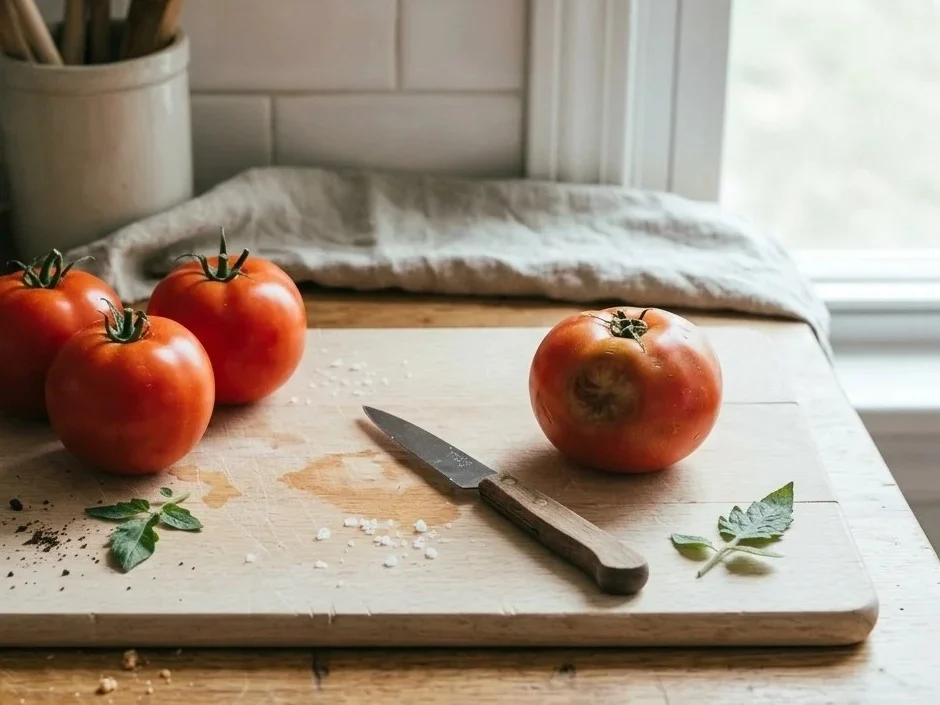
Until ripe
Above 55°F, out of direct sun, then eat within a day or two
Up to 3 days
Ripe tomatoes only. Warm them up before eating
For cooking
Peeled and cored, never for slicing
The short version: to store tomatoes well, ripen them on the counter out of the sun, eat them once they are ripe, and refrigerate only ripe tomatoes you cannot eat within a day or two.
Storage guidance from Nebraska Extension, Texas A&M AgriLife Extension and the UC Davis Postharvest Center.
On this page
How to choose tomatoes that store well
Ripeness decides everything that follows, so decide when you will eat them before you pick. That way you can buy a mix: ripe ones for tonight, and firmer ones for later in the week.
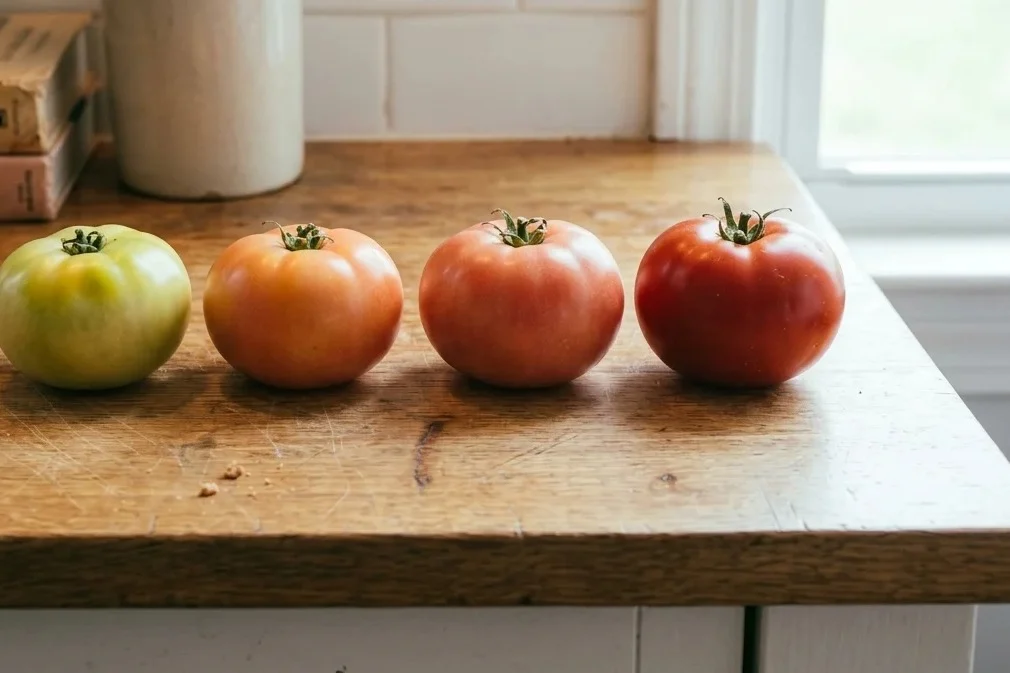
From breaker to ripe: the pale one keeps ripening on the counter, while the deep red one is ready to eat today.
Red and giving for today. Nebraska Extension describes a ripe tomato as red or reddish orange, yielding to slight pressure.
Starting to blush for later. According to Texas A&M AgriLife Extension, any tomato that has reached the breaker stage, where the bottom turns from green to yellow, keeps ripening off the vine.
Not fully green. Texas A&M adds that an entirely green tomato picked too early will never ripen, so save those for frying or relish.
Smooth, with no cracks or bruises. The UC Davis Postharvest Center grades tomatoes down for growth cracks, bruises and softness from overripeness.
How to store tomatoes so they last
To store tomatoes so they last, treat unripe and ripe tomatoes differently. Unripe ones need warmth to ripen, whereas a ripe one is on a clock, and a hot kitchen runs that clock faster than a fridge does.
How to store tomatoes on the counter
Keep them at room temperature, above 55°F, until they are fully ripe, as Nebraska Extension advises, and out of direct sunlight, which ripens them unevenly. Give them space: Texas A&M AgriLife Extension says to leave room between tomatoes so air can move, ideally in the mid-60s. Above 80°F they ripen fast, so check them every day.
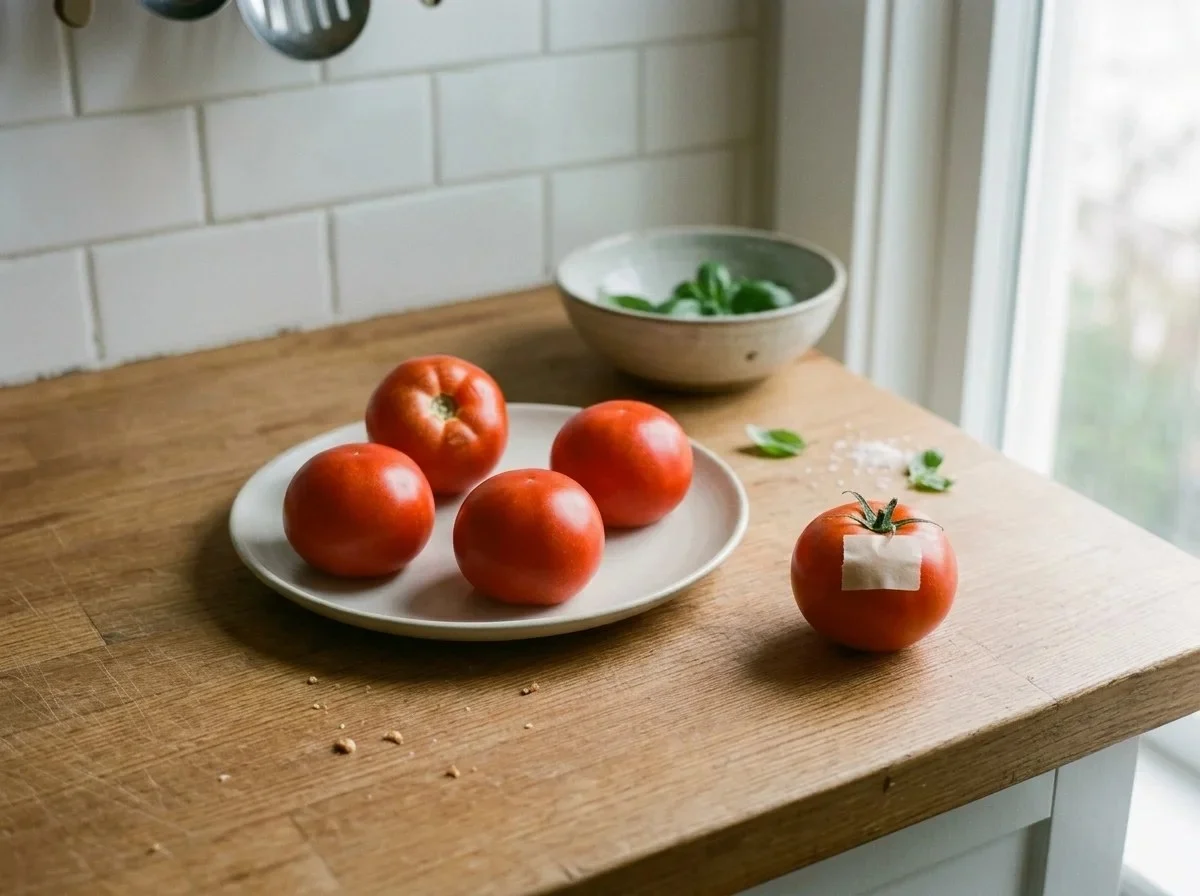
Ripe tomatoes stem side down with space between them, and one with tape over the stem scar, out of direct sun.
How long can you store tomatoes?
On the counter, until ripe, and then only a day or two more, since ripe tomatoes start to break down quickly in warm weather. In the fridge, a ripe tomato holds for a few days: the UC Davis Postharvest Center gives firm-ripe tomatoes 3 to 5 days at 44 to 50°F, although a home fridge runs colder. Cut tomatoes keep 3 to 4 days in the fridge, according to Colorado State University Extension.
In other words, a tomato keeps longest while it is still ripening. Once it is ripe, plan to eat it within a few days, wherever you keep it.
Should you store tomatoes in the fridge?
Not while they are unripe, because cold stops ripening. Once they are ripe, however, it depends on your kitchen. Texas A&M AgriLife Extension says not to refrigerate ripe tomatoes unless you cannot eat them, because cold affects taste and texture. On the other hand, a summer of blind tastings by Serious Eats found that ripe tomatoes kept in the fridge often beat ones left on a counter above about 80°F, and it cites a study that found no significant flavor loss after up to 3 days of cold storage. So if your kitchen is hot and the tomato is ripe, refrigerate it for up to 3 days, then let it come back to room temperature before you eat it.
How to store green tomatoes before frost
At the end of the season, pick the ones that are mature green: Colorado State University Extension describes them as shiny, with a white to light green star at the blossom end. Wash and dry them, then lay them 1 or 2 deep in a covered box, somewhere dark at 55 to 70°F. Near 70°F they ripen in a couple of weeks, while near 55°F they take about a month, but below 50°F they turn out bland. Check them every couple of days and take out any that are ripe or rotting.
How to store garden tomatoes after picking
Pick them once they reach the breaker stage, when the bottom turns from green to yellow, because Texas A&M AgriLife Extension says they keep ripening off the vine from there. That way they are safe from birds and splitting in heavy rain. Then treat them like store tomatoes: ripen them on the counter out of the sun, and eat them within a day or two once they are ripe. For the last green ones before frost, use the box method above.
How to store cut tomatoes
Put cut tomatoes in a covered container in the fridge and use them within 3 to 4 days, as Colorado State University Extension advises. Also keep them away from lettuce and other greens: the UC Davis Postharvest Center notes that ripening tomatoes give off ethylene, which is why the spinach guide keeps greens apart from them.
How to store canned tomatoes after opening
Move them out of the can into a covered container and refrigerate them. The USDA lists canned tomatoes as a high-acid food that keeps 5 to 7 days in the fridge once opened, compared with 12 to 18 months unopened on the shelf. So if you will not use them within a week, freeze them in portions for sauce.
Can you freeze tomatoes?
Yes, for cooking. The National Center for Home Food Preservation says frozen tomatoes are only for cooking or seasoning, because they are not solid once thawed. That makes the freezer the best way to store tomatoes you cannot eat fresh at the end of summer.
How to store tomatoes in the freezer
First, wash the tomatoes and dip them in boiling water for about 30 seconds to loosen the skins. Then core and peel them, and freeze them whole or in pieces, leaving 1 inch of headspace in each container, as the National Center for Home Food Preservation describes. Colorado State University Extension also cools them in ice water before peeling, which makes the skins slip off more easily.
How to store whole tomatoes in the freezer without blanching
You can skip the boiling water. Nebraska Extension washes and dries firm, ripe tomatoes, cuts away the stem scar, freezes them whole on a baking sheet and then moves them into freezer bags. Later, run a frozen tomato under warm water and the skin slips off, so it is ready for sauce, soup or cooked salsa. Nebraska suggests using frozen vegetables within about 8 months for the best quality.
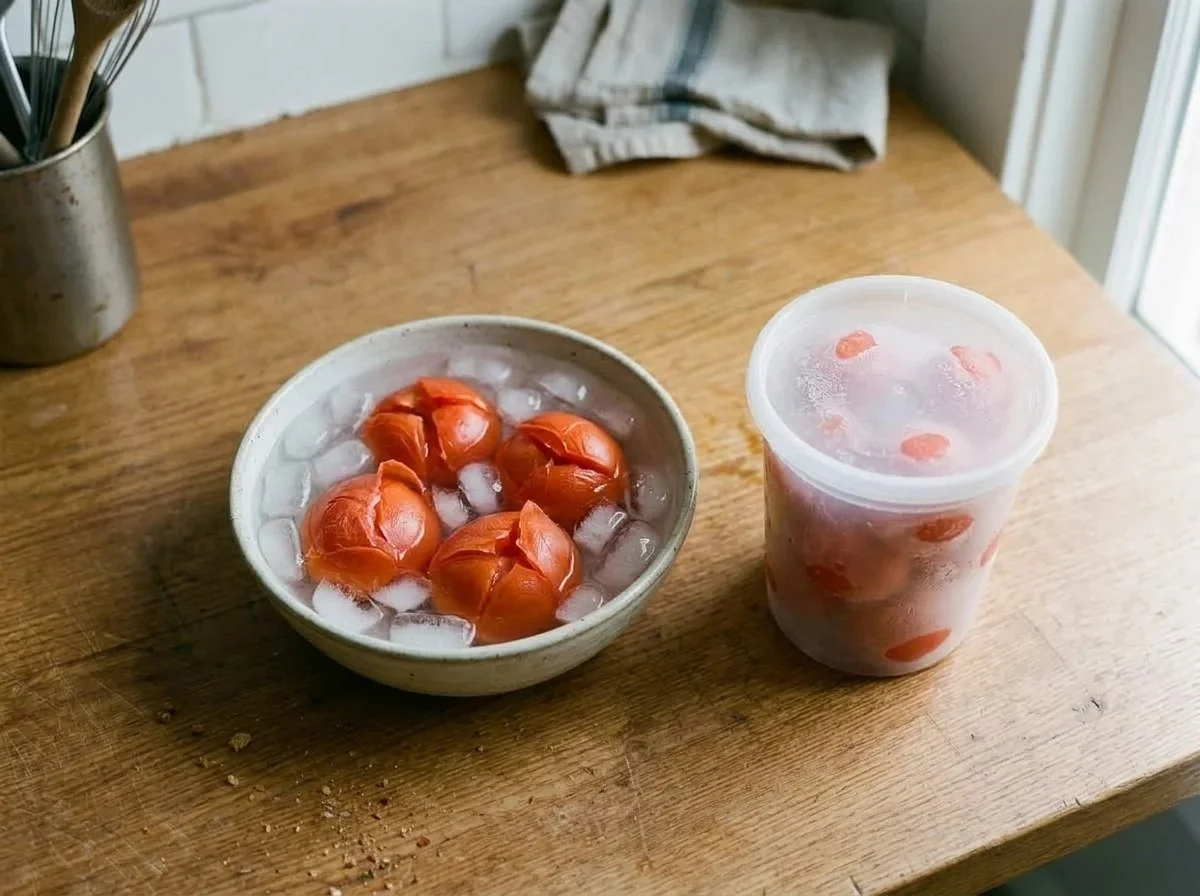
After a quick dip in boiling water and then ice water, the skins split and slip off, so the tomatoes are ready to core and freeze.
How to freeze stewed tomatoes
For stewed tomatoes, peel and quarter ripe tomatoes, then cover and cook them until tender, 10 to 20 minutes. After that, set the pan in cold water to cool it quickly, and pack the tomatoes into containers with headspace.
What happens to tomatoes you store in the freezer
Ice breaks the flesh, so thawed tomatoes are soft and watery. That is fine in sauce, soup, chili and curry, whereas a sandwich needs a fresh one. Frozen whole tomatoes can also go straight into a pot, since the skins slip off under warm water.
How to tell if a tomato has gone bad
However you store tomatoes, most of the ones people throw out are still good for cooking. A soft or wrinkled tomato is a sauce tomato, while a mushy, leaking or moldy one has gone. Here is what each stage means.
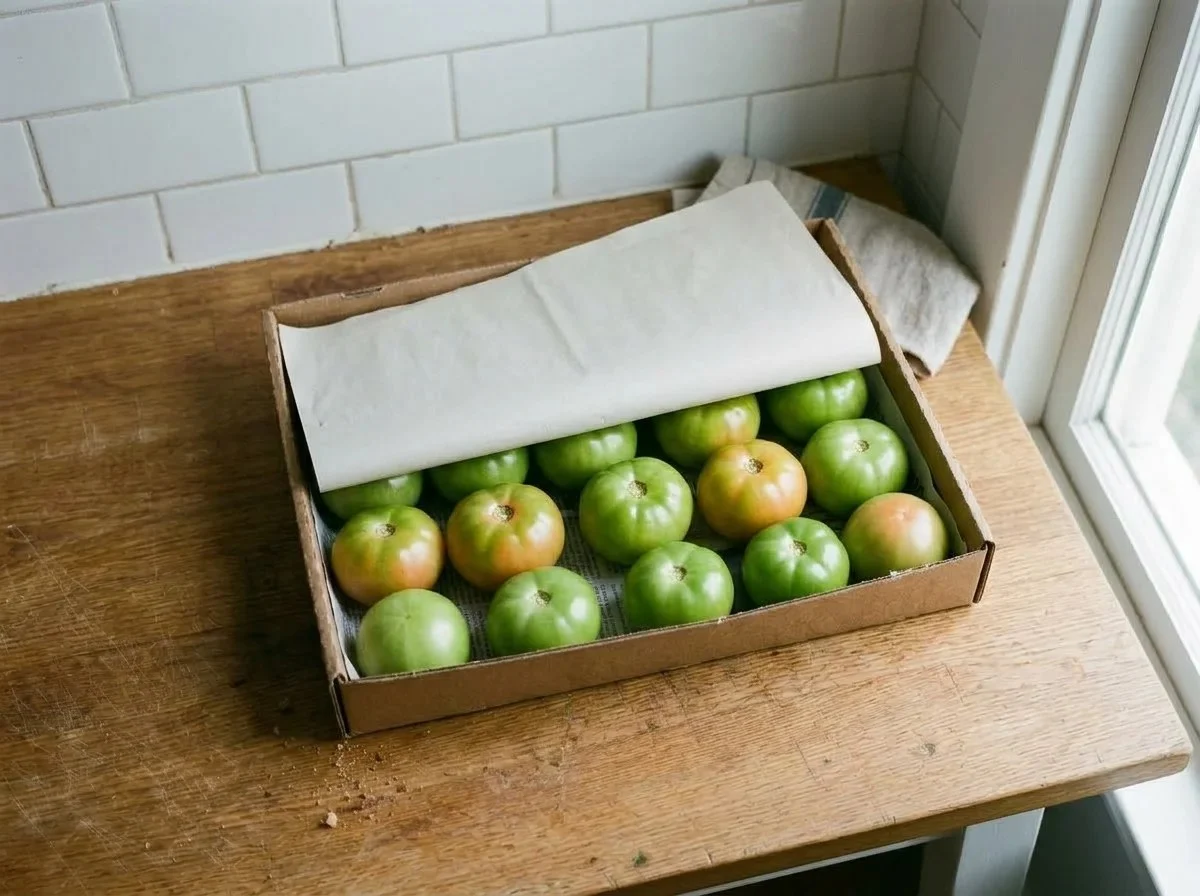
Verdict: wait
Pale or still-ripening tomatoes
A tomato that is still light red or blushing will keep ripening at room temperature. So leave it on the counter, out of the sun, rather than in the fridge.
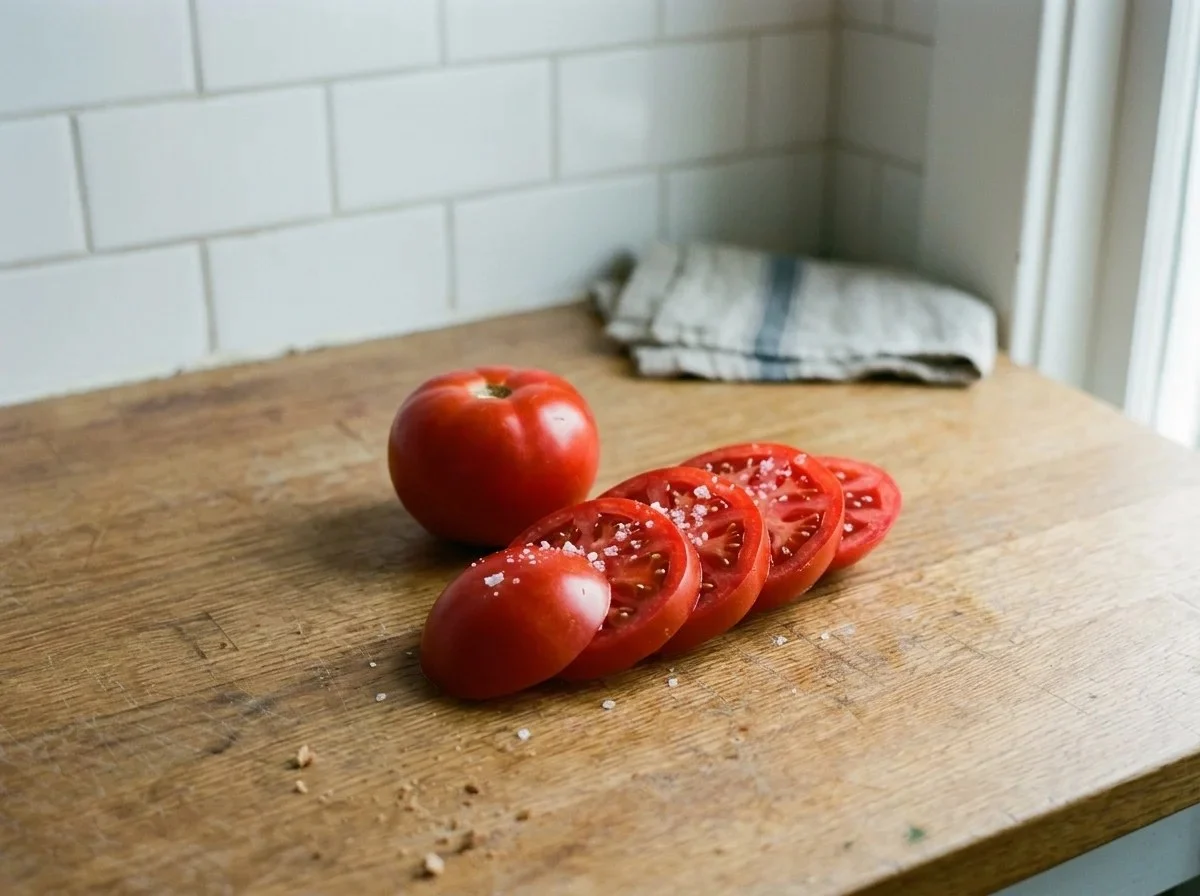
Verdict: use it
Ripe tomatoes
Fully red and giving slightly when pressed. This is the moment to eat it, or else refrigerate it for up to 3 days if the kitchen is hot.
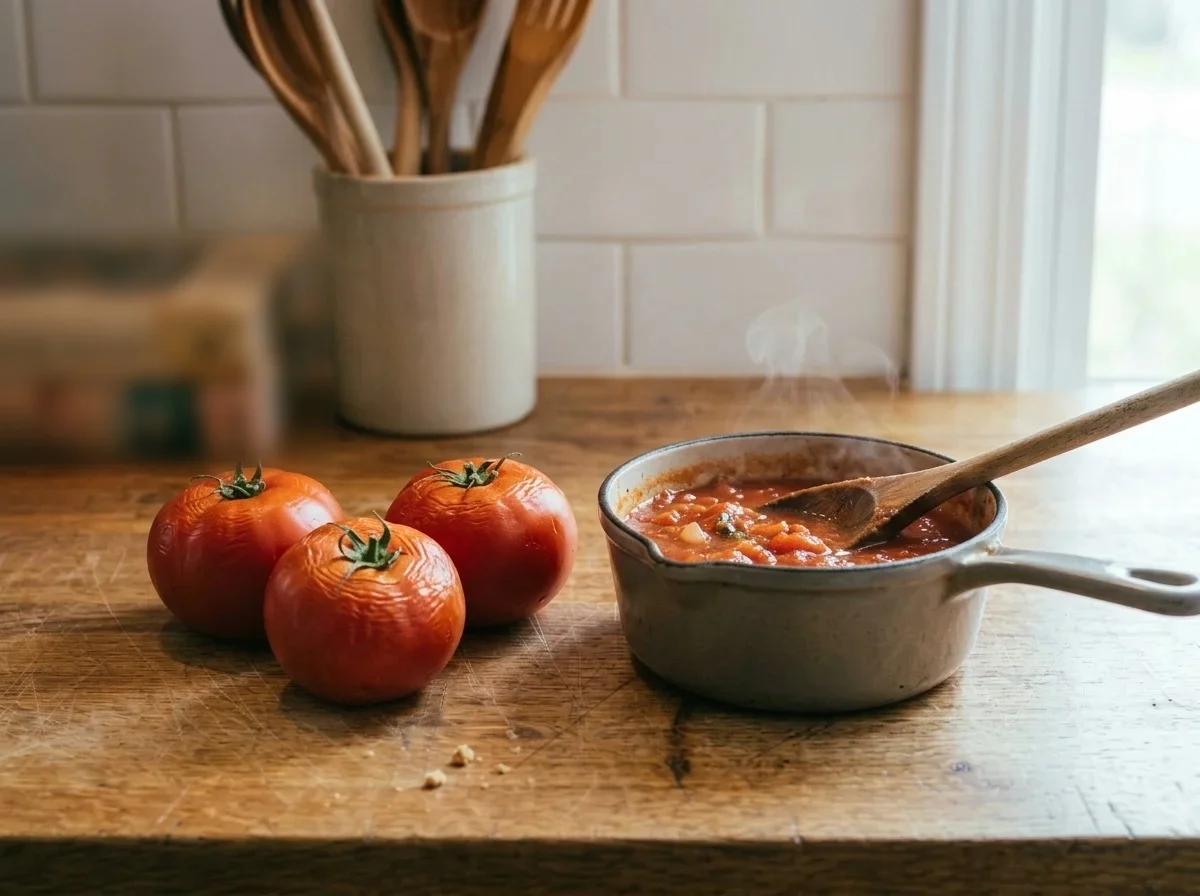
Verdict: cook with it
Wrinkled or soft tomatoes
Loose, wrinkled skin means the tomato is losing water. If it is still whole, with no leaks or mold, it is past its best for slicing but good for sauce, soup or roasting.
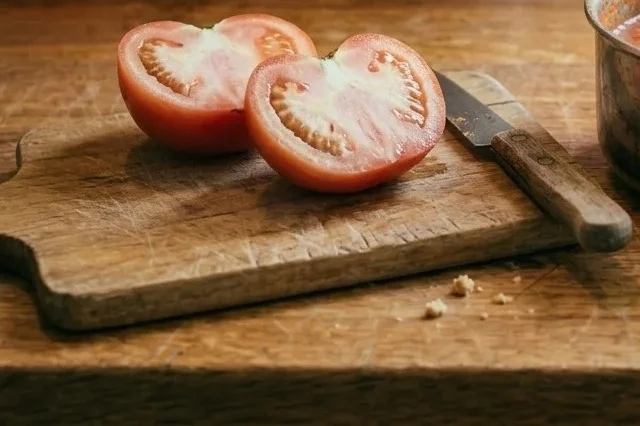
Verdict: cook with it
Mealy or pale tomatoes
A grainy, pale interior usually comes from cold, and it happens most to tomatoes that were underripe or low in quality to begin with, as Serious Eats found in its tests. It is safe, but it will not recover, so cook it.
Verdict: trim it, then use it
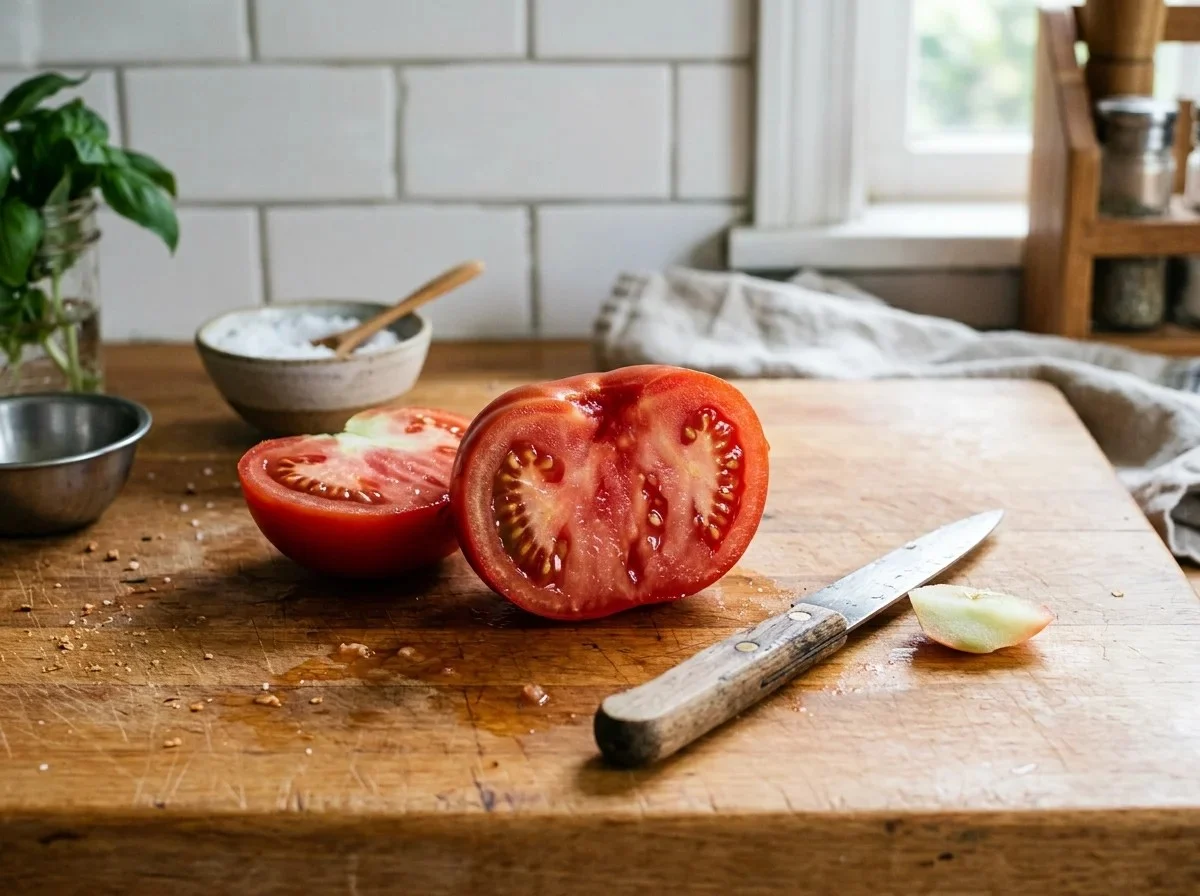
Tomatoes green or white inside
A red tomato with hard green or white patches inside, usually under the shoulders near the stem, is not spoiled. According to Nebraska Extension, these areas are often white or green inside when the shoulders ripened unevenly in hot weather, and the tomato is still edible once you trim the discolored part away. It will simply taste a little blander.
Verdict: use it today
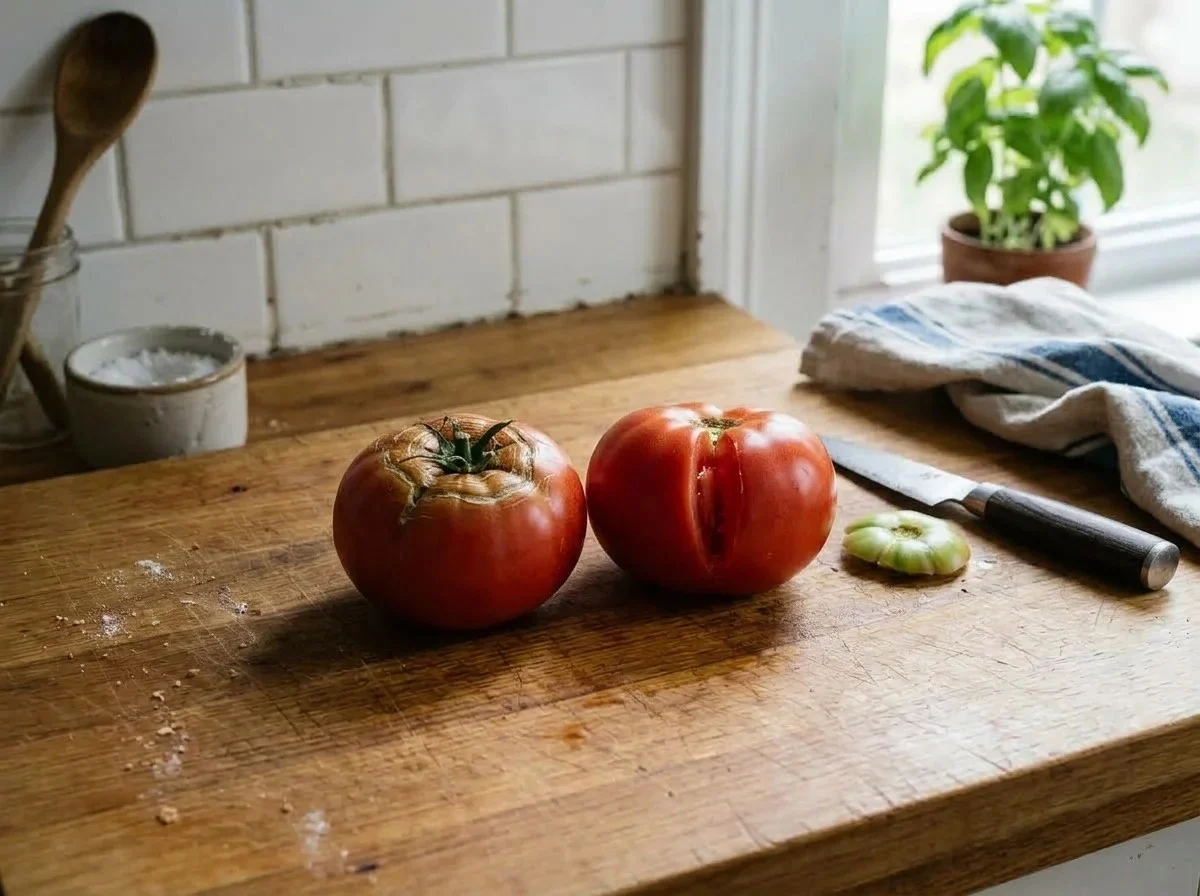
Cracked or split tomatoes
Tomatoes crack when they swell faster than the skin can stretch, often after heavy rain. Nebraska Extension says a cracked tomato is still edible once you trim the damaged sections, so use it today, since the open skin lets in rot. However, if the crack is oozing, moldy or smells sour, throw the tomato out.
Verdict: throw it out
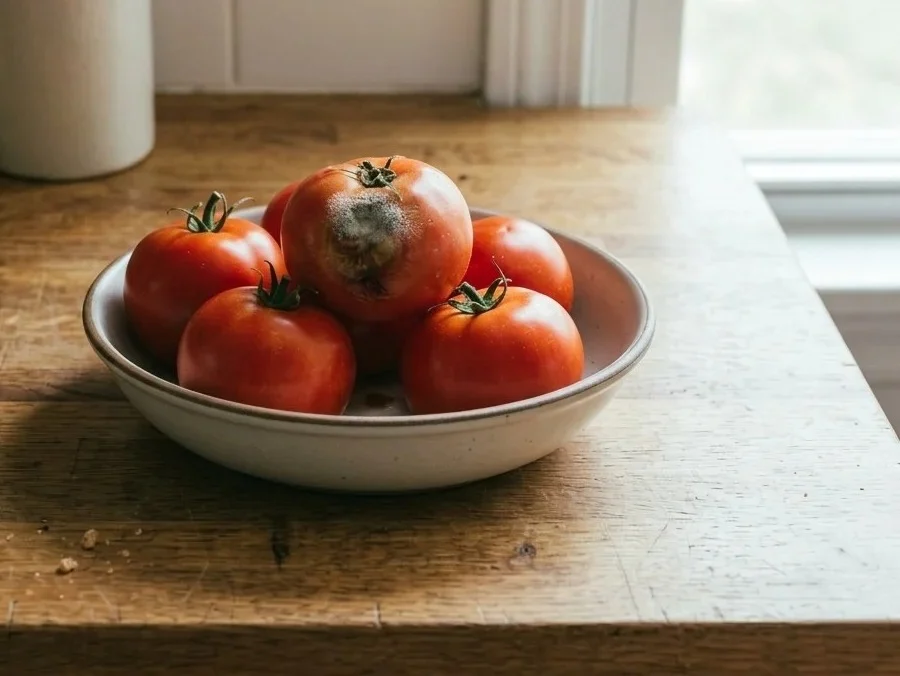
Mushy, leaking or moldy tomatoes
Texas A&M AgriLife Extension's horticulturist puts it simply: a tomato is garbage once it starts to turn mushy. Mold is the same: UConn Extension names tomatoes, along with strawberries, among the soft produce to discard whole rather than trim. Then check the tomatoes that were touching it.
Does taping the stem end really keep tomatoes fresh?
In two kitchen tests, yes. The Kitchn and Food & Wine each covered the stem scar with a small piece of tape, and in both the taped tomatoes lasted longest on the counter, 9 to 10 days, because the scar is where tomatoes lose moisture. Storing them stem side down came a close second. Nebraska Extension, however, passes on advice to store them stem side up, because the shoulders bruise easily, so the tape is a good middle ground.
Tomato substitutes
Out of fresh tomatoes, or had to throw the last one out? Then these will stand in.
Substitute
Works best in
What changes
Canned whole tomatoes
Sauces, soups and stews
Picked ripe, so often better than winter fresh ones.
Cherry or grape tomatoes
Salads and roasting
Sweeter, and they keep a little longer.
Tomato paste
Sauces and braises
Concentrated, so use a spoonful at a time.
Roasted red peppers
Sandwiches and dips
Sweet and smoky rather than tangy.
Mistakes people make when they store tomatoes
These are the ways people store tomatoes that cost them the most, and each one has an easy fix.
Refrigerating unripe tomatoes. Cold stops ripening, so leave them on the counter until they are red.
Leaving ripe tomatoes in a hot kitchen for days. Above about 80°F, a ripe tomato keeps better in the fridge for a day or two.
Eating them cold from the fridge. Let refrigerated tomatoes come back to room temperature, since flavor comes back with warmth.
Setting them in a sunny window. Direct sun ripens them unevenly, so choose a shady spot instead.
Piling them up. Crowded tomatoes bruise and ripen faster, so give each one some space.
Throwing out soft tomatoes. If there is no mold or leaking, turn them into sauce.
Freezing them for salads. Frozen tomatoes are soft once thawed, so freeze them for cooking only.
Sources
How to Store Tomatoes, Nebraska Extension, reviewed 2022, on ripening above 55°F, sunlight, the fridge and storing stem side up.
How to store tomatoes, Joe Masabni, Texas A&M AgriLife Extension, June 2024, on the breaker stage, room temperature, the fridge and mushy tomatoes.
Tomato, Trevor Suslow and Marita Cantwell, UC Davis Postharvest Research and Extension Center, May 1997, on storage temperatures by ripeness, chilling injury and ethylene.
How to Use Tomatoes, Food Smart Colorado, Colorado State University Extension, on cut tomatoes and freezing.
Ripening Tomatoes Indoors, Denyse Schrenker, Colorado State University Extension, October 2023, on mature green tomatoes, temperatures and ripening times.
Freezing Tomatoes, National Center for Home Food Preservation, University of Georgia, on freezing raw and stewed tomatoes for cooking.
How to Store Tomatoes (and Whether to Refrigerate Them), Daniel Gritzer, Serious Eats, updated May 2026, on blind tastings of refrigerated and counter tomatoes.
We Tried 5 Methods for Storing Tomatoes, Rachel Dolfi, The Kitchn, July 2023, on a 10-day test of fridge, stem-down and taped tomatoes.
I Tested 8 Ways to Store Tomatoes, Adam Dolge, Food & Wine, August 2026, on a 9-day test that the taped stem won.
Handling Food with Mold, UConn Extension, April 2024, on discarding soft produce such as tomatoes when moldy.
Tomato Fruit Problems: Can I Still Eat This Tomato?, Sarah Browning, Nebraska Extension in Lancaster County, July 2021, on cracks and green or white shoulders.
How to Freeze Tomatoes, Nebraska Extension, updated 2026, on freezing whole tomatoes without blanching.
Shelf-Stable Food Safety, Food Safety and Inspection Service, U.S. Department of Agriculture, on opened high-acid canned foods such as tomatoes.
Storage times and safety advice on this page come from the sources above. Food safety depends on conditions I cannot see, so read the Disclaimer, and if in doubt, throw it out.
Other ingredient guides
Browse all guides
Share this guide
Never miss a guide
New ingredient guides when they go up, plus one storage tip worth knowing. Anything sponsored is labelled.

Emilly White