
Not at all
Treat it like milk: back in the fridge (Clemson)
1 to 2 weeks
Covered, below 40°F (NDSU, Clemson)
Up to 3 months
For cooking only, since it turns grainy (NDSU)
The short version: to store buttermilk, keep it covered in the fridge below 40°F and use it within 1 to 2 weeks. NDSU says it keeps several days past the carton date. If it separates, shake it, since the flavor is unaffected. You can freeze it for cooking for up to 3 months, although it turns grainy. Throw it out if you see mold or it smells wrong.
Storage times here come from NDSU Extension, Clemson Cooperative Extension and the USDA's FoodKeeper data, with freezing advice from NDSU Extension and mold guidance from the USDA.
On this page
What to check before you store buttermilk
Two things decide how long buttermilk keeps: the date on the carton and how cold your fridge runs. Everything else is handling, so check those two before it goes back on the shelf.
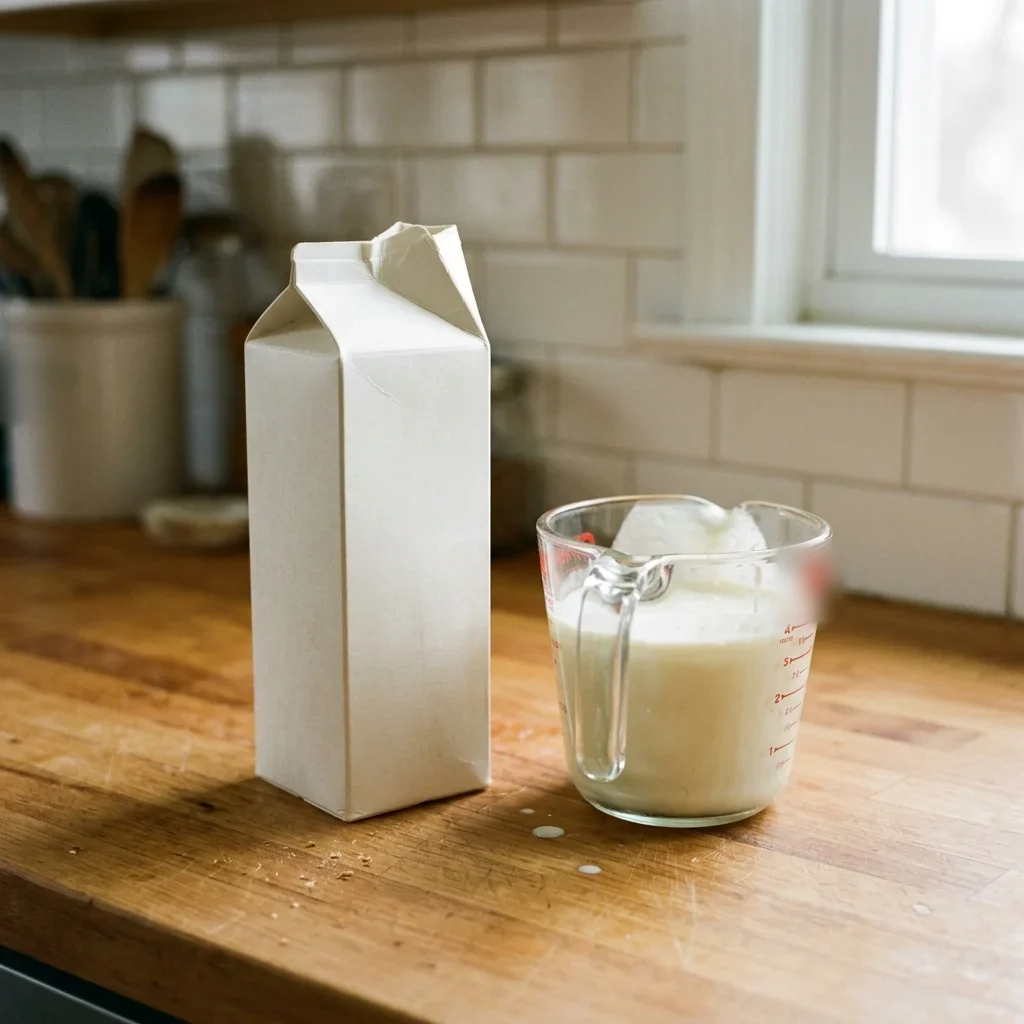
Glass, a lid that seals, and a spoon that is properly dry.
Start with the date. NDSU Extension says to check the date on the carton, and adds that buttermilk will keep several days after that date. So a carton a day or two past it is not automatically finished.
Then check the cold. Clemson Cooperative Extension says buttermilk needs the same precautions as regular fluid milk, which it asks you to keep below 40°F. It also says milk stored above 40°F starts to sour and curdle sooner.
Next, look at the carton itself. A clean pour spout and a tight cap keep fridge smells and stray drips out. So wipe the spout after pouring, and close it before it goes back.
Finally, expect it to look different from milk. Buttermilk is thick, tangy and sometimes separated, so the usual sniff test for milk is less useful here. The yogurt guide deals with the same problem for another cultured dairy food.
How to store buttermilk so it lasts
To store buttermilk so it lasts, keep it cold, covered and away from the door. It already has a head start on souring, so the colder and cleaner you keep it, the longer the carton lasts.
How do you store buttermilk in the fridge?
Buttermilk keeps best tightly covered in the fridge below 40°F, according to NDSU Extension and Clemson Cooperative Extension. NDSU's instruction is simply to cover it tightly. Clemson asks for the same handling as fluid milk, which means a cold shelf rather than the door. So pour what you need, cap it, and put it straight back.

Sealed, cool and dark, and nowhere near the cooker.
How long does buttermilk last in the fridge?
Buttermilk lasts 1 to 2 weeks in the fridge, according to NDSU Extension and the USDA's FoodKeeper data, while Clemson Cooperative Extension gives it 2 weeks. NDSU Extension runs its fridge chart at 32 to 40°F. It also says buttermilk keeps several days after the date on the carton.
So use the shorter figure, 1 week, for a carton that has been opened often or left out during cooking. The full 2 weeks suits a carton that has gone straight back into a cold fridge every time.
Why does buttermilk separate?
Buttermilk separates into a watery layer and a thicker one as it sits, and the flavor is not affected, according to NDSU Extension. NDSU's advice is simply to remix it before serving. So shake the carton well, or stir it in a jug, before you measure it out.
Can you use buttermilk after the date on the carton?
Buttermilk can usually be used for several days after the carton date, according to NDSU Extension, as long as it has been kept cold and shows no signs of spoilage. Clemson gives fluid milk one to five days past its sell-by date. So a few days past is fine for baking, whereas a week past is the point to look and smell carefully.
Can you leave buttermilk out on the counter?
Buttermilk should not be left out, because Clemson Cooperative Extension says it needs the same precautions as fluid milk, and that milk should not be left at room temperature. Bring it out to measure, then put it back. If a recipe wants it at room temperature, measure only what you need and leave that cup out.
Can you freeze buttermilk?
Buttermilk can be frozen for up to 3 months for cooking, according to NDSU Extension, although Clemson Cooperative Extension says not to freeze it. NDSU Extension gives it 3 months in the freezer. By contrast, Clemson Cooperative Extension lists it as one to keep out of the freezer. The difference is about texture rather than safety, so freeze it only for baking and cooking.
How do you freeze buttermilk?
Buttermilk freezes most usefully in recipe-sized portions, such as an ice cube tray or half-cup containers, for up to 3 months, as NDSU Extension allows. Leave a little space at the top of each container, since liquids expand as they freeze. Then label each one with the amount and the date, so you can take out exactly what a recipe needs.
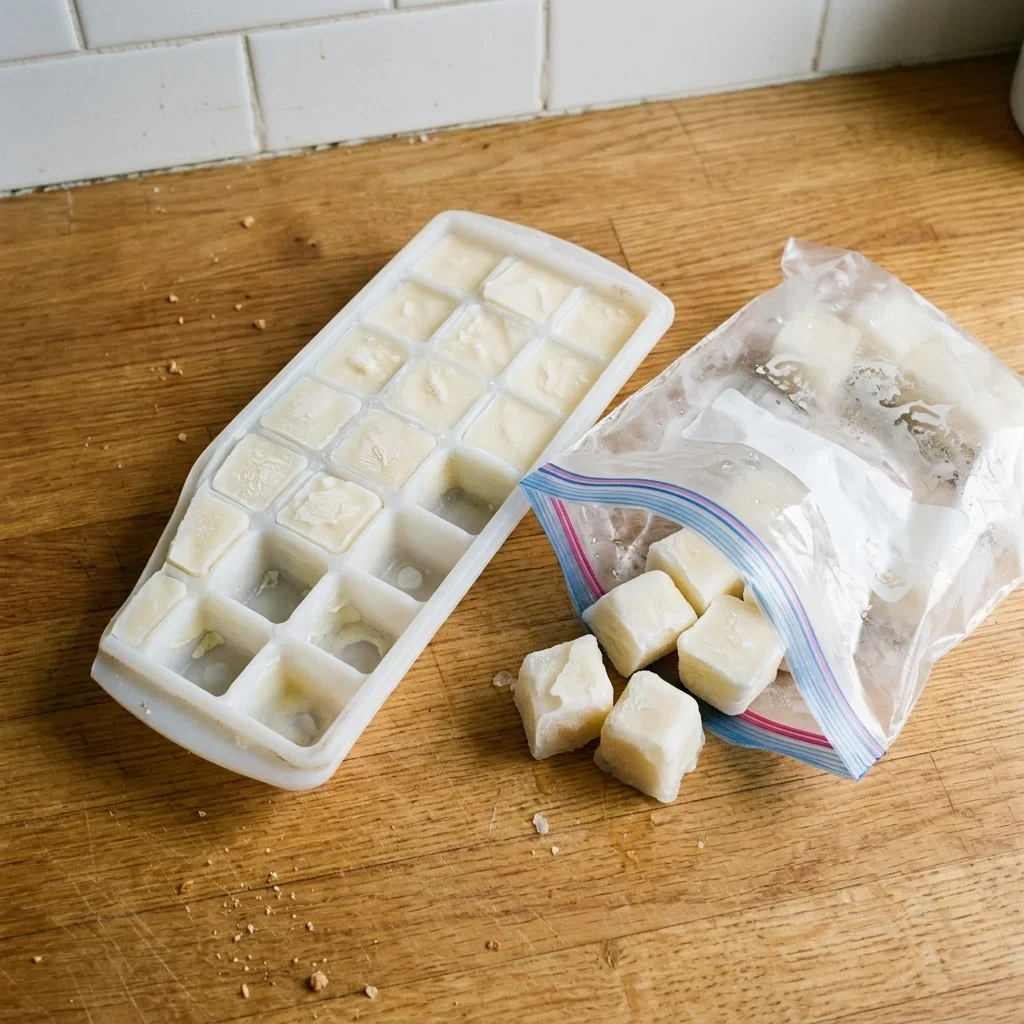
Below 41 degrees it keeps for years, but it barely pours.
How do you thaw frozen buttermilk?
Frozen buttermilk should thaw in the fridge, then be used soon and not refrozen, according to NDSU Extension guidance for frozen dairy. Once thawed, whisk it hard to bring it back together. It will still be a little grainy, so use it in pancakes, biscuits or marinades.
What happens to buttermilk you freeze?
Frozen buttermilk loses its smooth texture and turns grainy, and it may separate out its water, according to NDSU Extension. NDSU says that happens to all the cultured, soured dairy products. It adds that they can still be used for cooking, which is why freezing suits baking but not a glass to drink.
How to tell if buttermilk has gone bad
Buttermilk is already sour and thick, so sourness alone tells you very little. The signs that matter are mold, an off smell beyond its usual tang, and a carton far past its date. The USDA Food Safety and Inspection Service says to discard its close relatives, yogurt and sour cream, at the first sign of mold. Here is what each stage means, then.

Verdict: use it
Fresh buttermilk
Smooth, pourable and evenly pale, with a clean, tangy smell. This is buttermilk inside its 1 to 2 weeks in the fridge. So use it as the recipe says, and put the carton straight back.
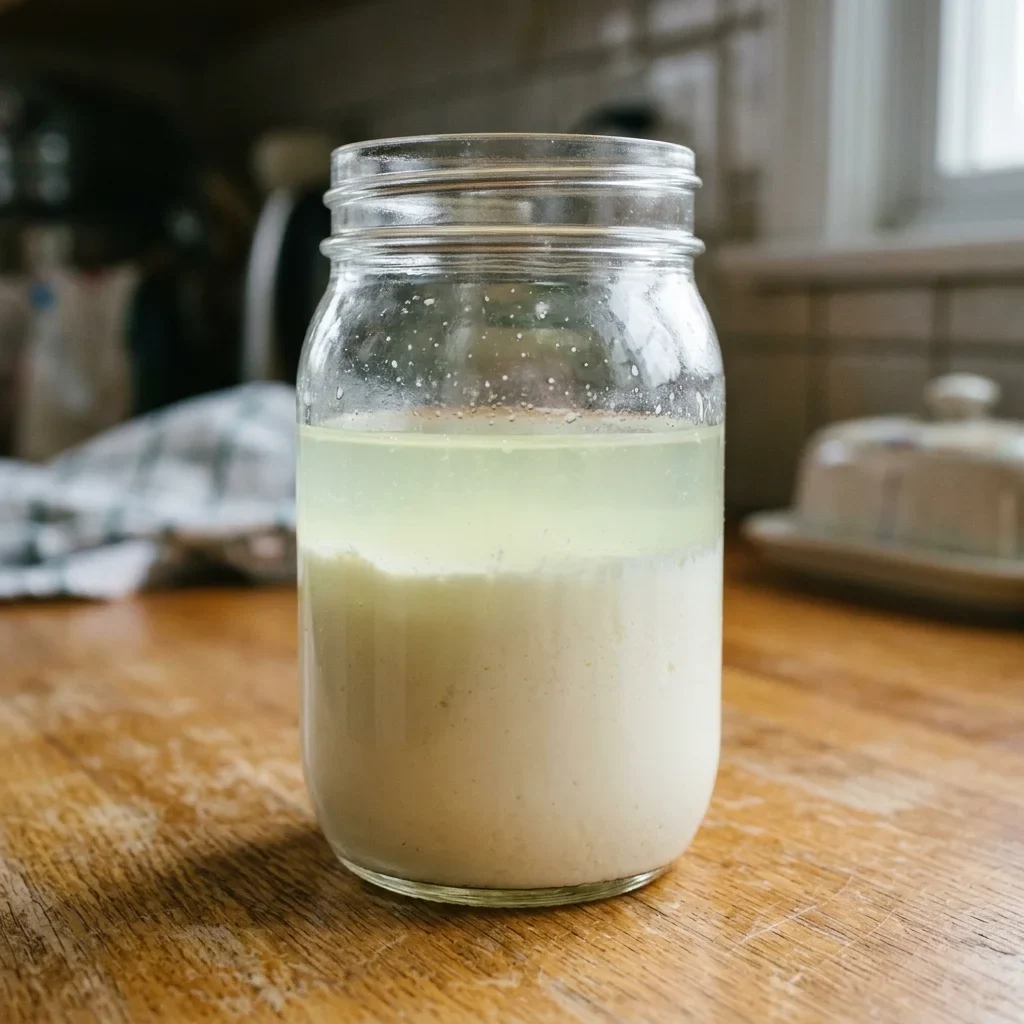
Verdict: shake it and use it
Separated buttermilk
A thin, watery layer on top or at the bottom, with thicker buttermilk under it. NDSU Extension says the flavor is not affected if buttermilk separates. So shake or stir it back together before you measure.

Verdict: cook with it
Grainy buttermilk after freezing
Thawed buttermilk that looks grainy or curdled, even after whisking. That is what freezing does to cultured dairy, as NDSU explains, and it can still be used for cooking. So bake with it, but do not drink it.

Verdict: throw it out
Buttermilk that smells off or looks discolored
A smell that is sharper, yeasty or rotten rather than tangy, or a pink, yellow or grey tint. Penn State Extension lists a foul odor and unnatural colors among the signs of spoilage. So bin it, even if it is still within its dates.

Verdict: throw it out
Moldy buttermilk
Fuzzy spots on the surface or around the spout. USDA Food Safety and Inspection Service guidance for yogurt and sour cream is to discard them, because foods with high moisture can be contaminated below the surface. Buttermilk is wetter still. So throw out the whole carton, and do not sniff it.
Is buttermilk left out overnight safe?
Buttermilk left out overnight should be thrown out, because Clemson Cooperative Extension asks for the same precautions as fluid milk and says milk should not be left at room temperature. Its sourness does not protect it. For the rest of the table, see the food left out overnight list.
Buttermilk substitutes
Out of buttermilk, or did the carton turn? Then one of these will stand in for baking.
Substitute
Works best in
What changes
Sour cream, thinned
Biscuits and cakes
Richer, so thin it with milk or water.
Milk with lemon juice
Pancakes and batters
Thinner than buttermilk, but it does the same job in a batter.
Kefir
Marinades and dressings
Also cultured and tangy, so it brings a similar flavor.
Mistakes people make when they store buttermilk
These are the ways people store buttermilk that cost them the most, and each one is easy to fix.
Throwing it out because it separated. NDSU says the flavor is not affected, so shake it and use it.
Binning it the day after the date. NDSU says buttermilk keeps several days past the carton date when kept cold.
Leaving it on the counter while you bake. Clemson says to treat it like milk, so measure it and put it back.
Keeping it in the fridge door. Store it on a cold shelf, below 40°F, as Clemson asks for fluid milk.
Freezing it to drink later. NDSU says cultured dairy turns grainy, so freeze it only for cooking.
Freezing the whole carton. Freeze it in recipe-sized portions instead, so you only thaw what you need.
Pouring off mold and using the rest. USDA guidance for yogurt and sour cream is to discard them, and buttermilk is wetter still.
Sources
Food Storage Guide, Julie Garden-Robinson, NDSU Extension publication FN579, reviewed January 2023, on buttermilk at 1 to 2 weeks in a refrigerator at 32 to 40°F and 3 months frozen, covering it tightly, remixing it if it separates because the flavor is not affected, and keeping it several days after the carton date.
Food Freezing Basics: Freezing Dairy Products, Eggs and Other Foods, Julie Garden-Robinson, NDSU Extension publication FN616, reviewed September 2022, on cultured dairy products turning grainy and separating when frozen but still being usable for cooking, and thawing dairy in the refrigerator without refreezing.
Safe Handling of Milk & Dairy Products, Pamela Schmutz, D.T. Vines and E.H. Hoyle, Clemson Cooperative Extension, revised March 2007, on handling buttermilk like fluid milk, cultured buttermilk at 2 weeks in the refrigerator and not freezing it, keeping milk below 40°F, not leaving milk at room temperature, and milk keeping one to five days past its sell-by date.
FoodKeeper App, Food Safety and Inspection Service, U.S. Department of Agriculture, whose published FoodKeeper data lists buttermilk at 1 to 2 weeks refrigerated and 3 months frozen.
Molds on Food: Are They Dangerous?, Food Safety and Inspection Service, U.S. Department of Agriculture, on discarding moldy yogurt and sour cream because high-moisture foods can be contaminated below the surface, and not sniffing moldy food.
Signs of Food Spoilage, Samantha Zlotorzynski, Penn State Extension, May 2025, on a foul odor, sliminess and unnatural colors as signs of spoilage.
Storage times and safety advice on this page come from the sources above. Food safety depends on conditions I cannot see, so read the Disclaimer, and if in doubt, throw it out.
Other ingredient guides
Browse all guides
Share this guide
Never miss a guide
New ingredient guides when they go up, plus one storage tip worth knowing. Anything sponsored is labelled.

Emilly White