
3 to 7 days
Cooled, then covered (USDA FoodKeeper)
Not recommended
It dries them out and makes them stale (USDA FoodKeeper)
2 to 3 months
Wrapped well; Clemson allows up to 12 (USDA FoodKeeper)
The short version: to store muffins, let them cool completely, then cover them and keep them on the counter. The USDA's FoodKeeper data gives homemade muffins 3 to 7 days there. Skip the fridge, because it makes them stale. For longer, wrap them well and freeze them for 2 to 3 months. Throw them out at the first sign of mold.
Storage times here come from the USDA's FoodKeeper data, with freezing advice from K-State Research and Extension and Clemson Cooperative Extension, and mold guidance from the USDA.
On this page
Should muffins cool before you store them?
Muffins should cool completely before you cover them, because K-State Research and Extension says warm baked goods give off moisture that condenses and makes them soggy. So give them time on a rack first.
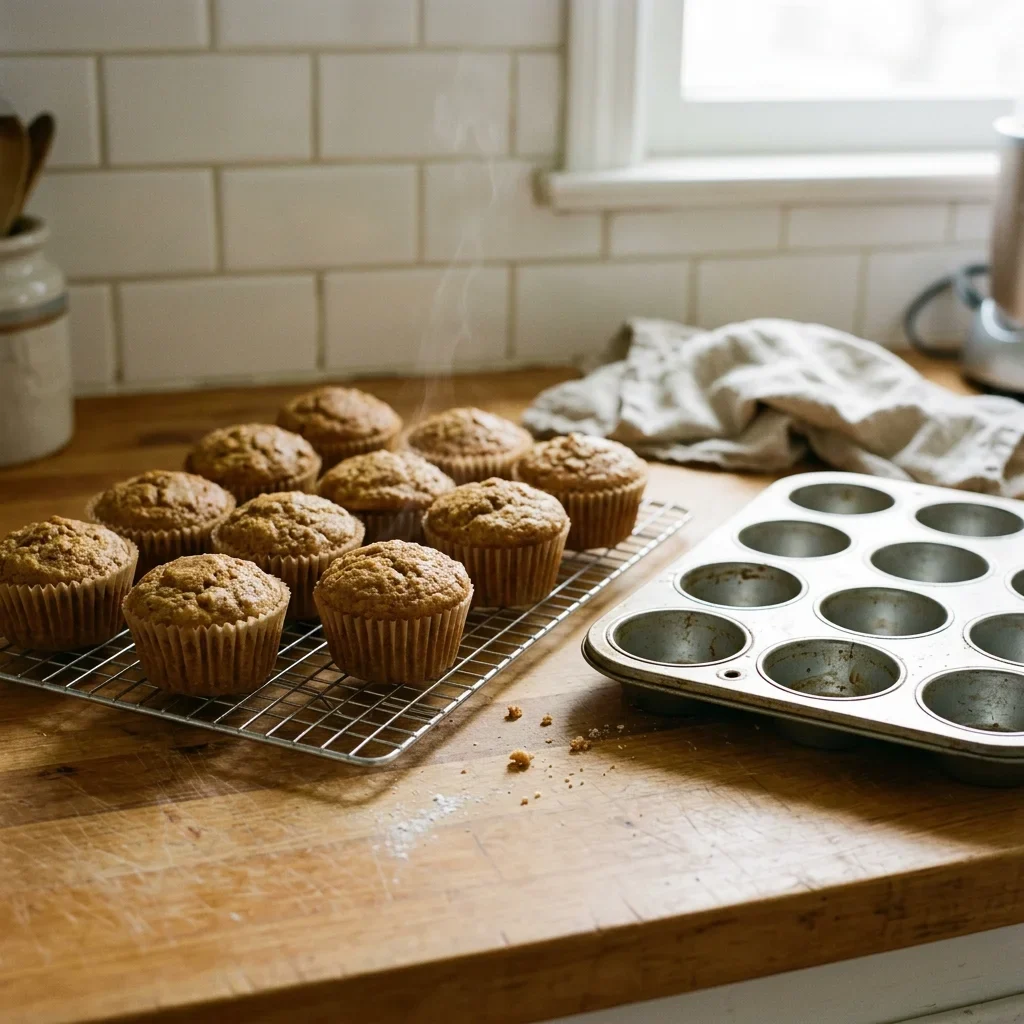
Glass, a lid that seals, and a spoon that is properly dry.
First, take them out of the pan. Muffins left in a hot tin keep steaming against the metal. As a result, the bottoms and sides go damp before you even store them.
Then let them cool on a wire rack, where air reaches the tops and the bottoms. Once they feel cool all the way through, they are ready to cover. If they are still warm in the middle, give them longer.
Next, check what is in them. FoodKeeper's 3 to 7 days covers plain homemade muffins, including bran, blueberry, banana, corn and chocolate chip. Store-bought muffins should follow the date and directions on the pack.
Finally, decide what you will eat this week. Freeze the rest on the first day, while they are still at their best, instead of on the day they start to dry out. The same rule works for bread.
How to store muffins so they stay soft
To store muffins so they stay soft, keep them covered at room temperature and out of the fridge. Air dries them out, while trapped steam makes them sticky, so the aim is a cool muffin in a closed container.
How do you store muffins on the counter?
Muffins keep 3 to 7 days on the counter in a covered container once fully cooled, according to the USDA's FoodKeeper data. So use an airtight container or a closed bag. Then keep it in a cool spot, away from the stove and sunny windowsills.
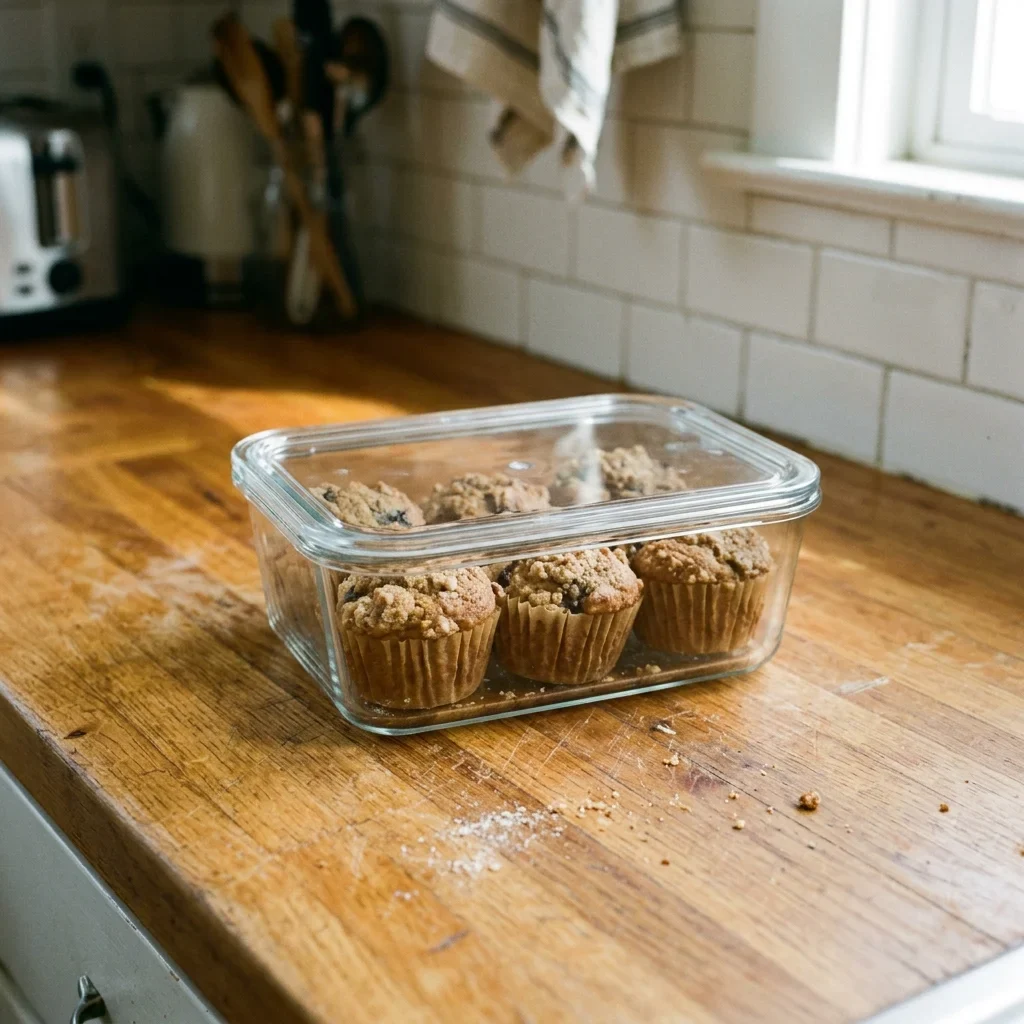
Sealed, cool and dark, and nowhere near the cooker.
How long do muffins last at room temperature?
Homemade muffins last 3 to 7 days at room temperature, according to the USDA's FoodKeeper data, which gives commercially packaged muffins the same 3 to 7 days. The range depends on the recipe and on how well the container seals.
So plan on the shorter end for very moist muffins, such as banana or blueberry, or for a warm, humid kitchen. Drier muffins in a well-sealed container can reach the longer end.
Should you refrigerate muffins?
Muffins should not be refrigerated, because the USDA's FoodKeeper data says a muffin in the fridge will quickly dry out and become stale. So keep them on the counter for the first few days. After that, the freezer is the better choice.
How do you store store-bought muffins?
Store-bought muffins keep the same 3 to 7 days at room temperature as homemade ones, according to the USDA's FoodKeeper data, and 3 months in the freezer. So keep them in their sealed pack, or move them to a container once it is open. Also, follow any label that tells you to refrigerate them.
Why do muffins get sticky after storing?
Muffins get sticky when they are covered while still warm, because K-State Research and Extension says moisture from warm food condenses and makes baked goods soggy. That moisture settles on the tops. So wait until they are cool all the way through before the lid goes on.
Can you freeze muffins?
Muffins freeze well for 2 to 3 months, according to the USDA's FoodKeeper data, while Clemson Cooperative Extension allows 6 to 12 months. By contrast, K-State Research and Extension gives muffins 2 to 4 months. The difference is about quality rather than safety, so aim to eat them within 3 months.
How do you freeze muffins?
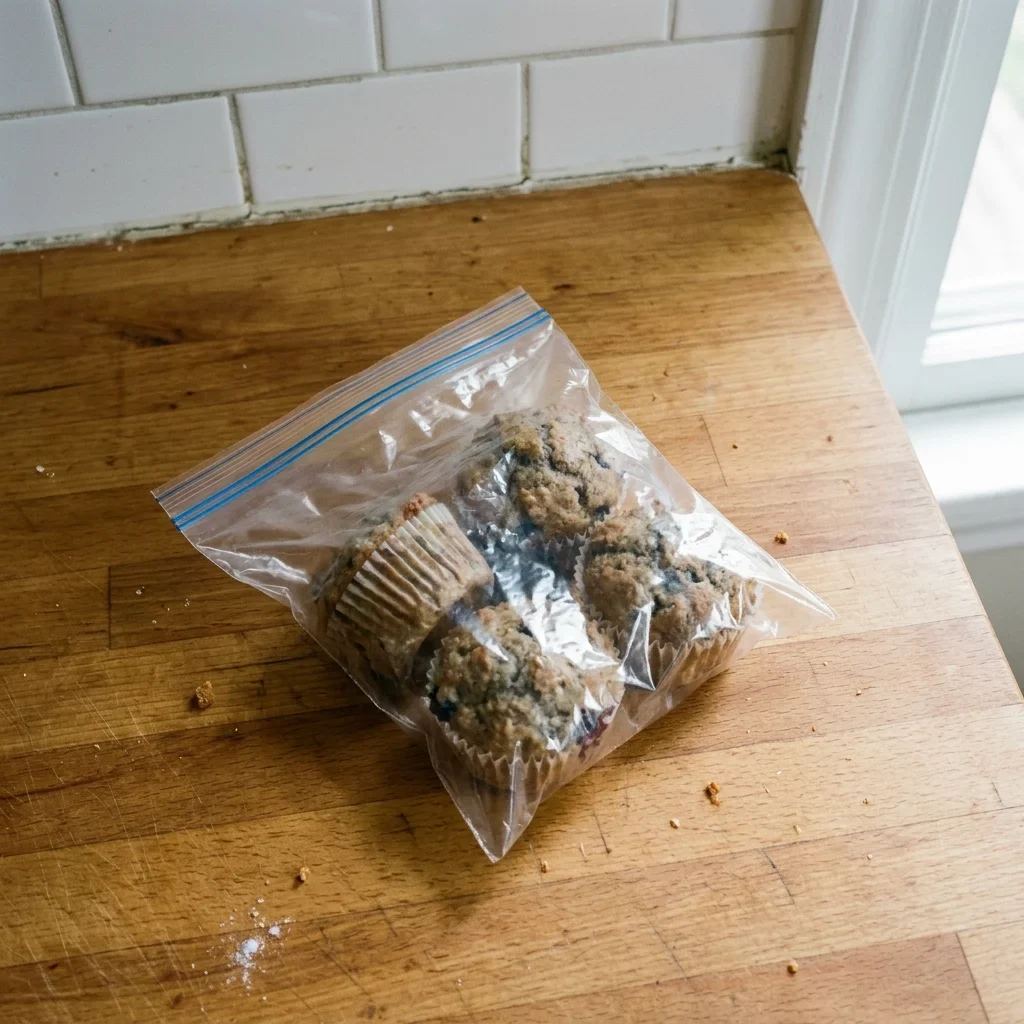
Muffins freeze best fully cooled, wrapped well and sealed with the air pressed out, for 2 to 3 months, as the USDA's FoodKeeper data suggests. K-State Research and Extension asks for moisture-proof wraps or freezer bags at 0°F. Then label the bag with the date, so the oldest ones get eaten first.
Below 41 degrees it keeps for years, but it barely pours.
How do you thaw frozen muffins?
Frozen muffins thaw in their wrapping at room temperature in about 1 hour, according to Clemson Cooperative Extension. Clemson also says you can heat them straight from frozen at 300°F for 15 to 20 minutes. So leave them in their wrapping until they have thawed.
Should you freeze muffin batter instead?
Muffins should be frozen after baking rather than as batter, because Clemson Cooperative Extension says unbaked muffins are likely to have poor texture. So bake the whole batch first. Then freeze the muffins you will not eat in the next few days.
How to tell if muffins have gone bad
Most old muffins are simply stale, which is a texture problem rather than a safety one. The signs that matter are mold and a sour or off smell. The USDA Food Safety and Inspection Service says to discard moldy baked goods, because porous foods can be contaminated below the surface. Here is what each stage means, then.
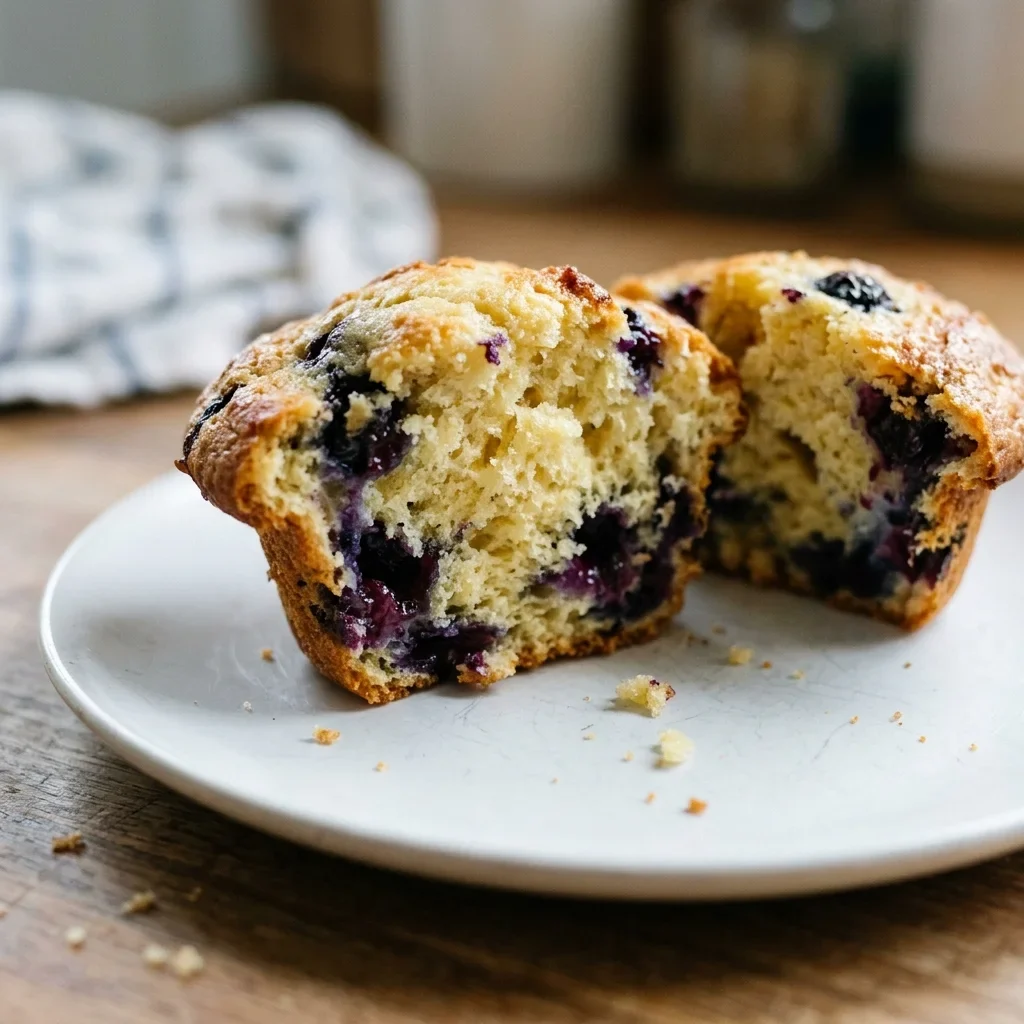
Verdict: eat them
Fresh muffins
Domed, soft tops and a moist, springy crumb that smells of butter and fruit. This is a muffin inside its 3 to 7 days on the counter. So enjoy it, and keep the rest covered.
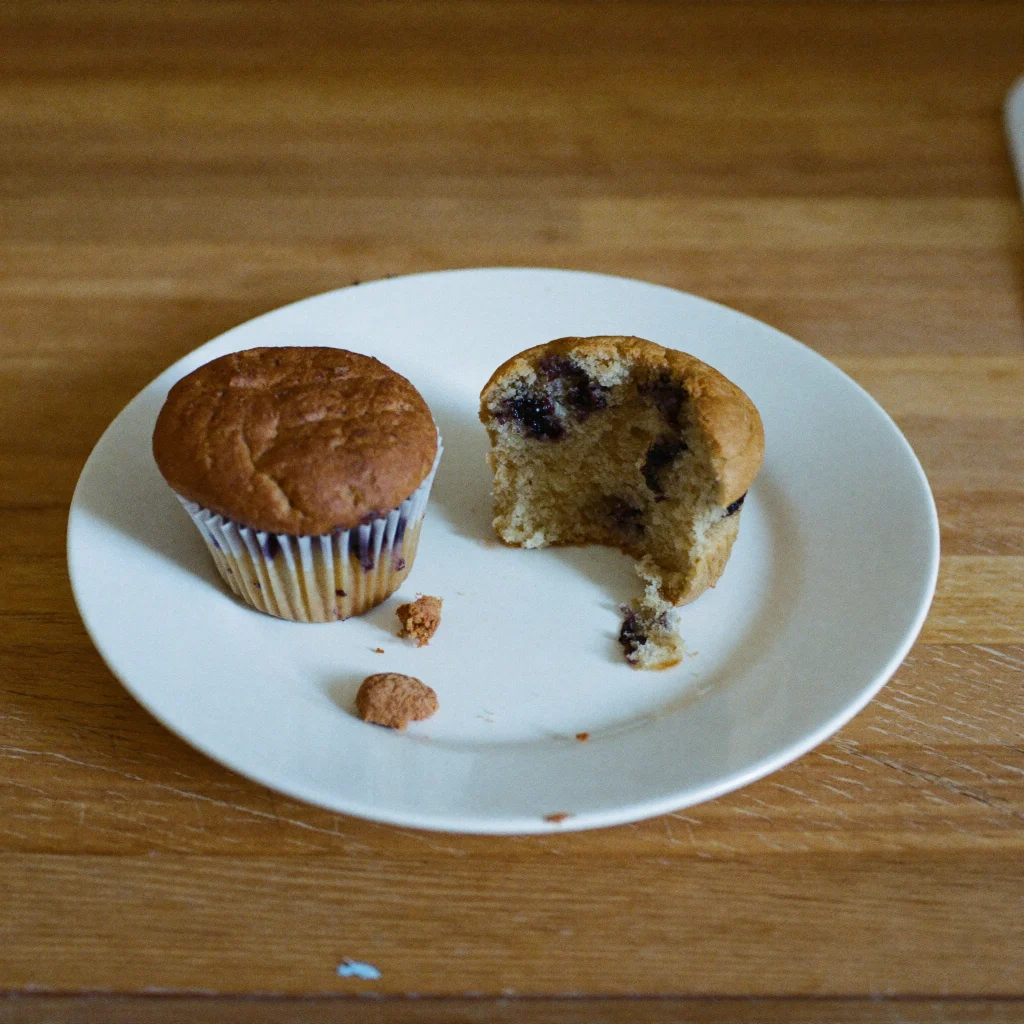
Verdict: warm them up
Dry, stale muffins
A firm, crumbly texture and a dull top, often after a few days or a night in the fridge. The USDA's FoodKeeper data says the fridge makes muffins dry out and turn stale. So split and toast them, or warm them in the oven, since they are dry rather than spoiled.
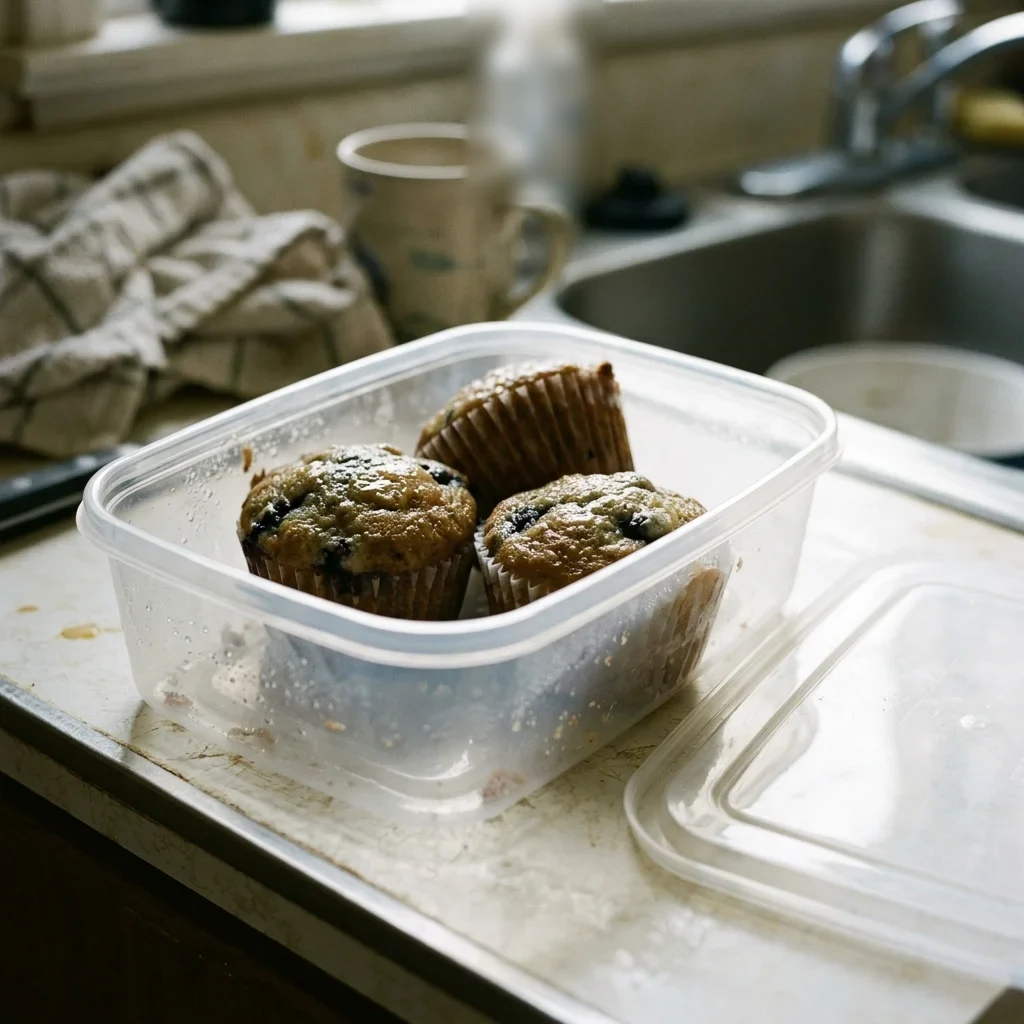
Verdict: eat them, then cool the next batch longer
Sticky or soggy muffin tops
Tacky, damp tops and paper liners that peel away wet. That is trapped moisture from covering them while warm, which K-State says makes baked goods soggy. So eat them soon, and let the next batch cool fully first.
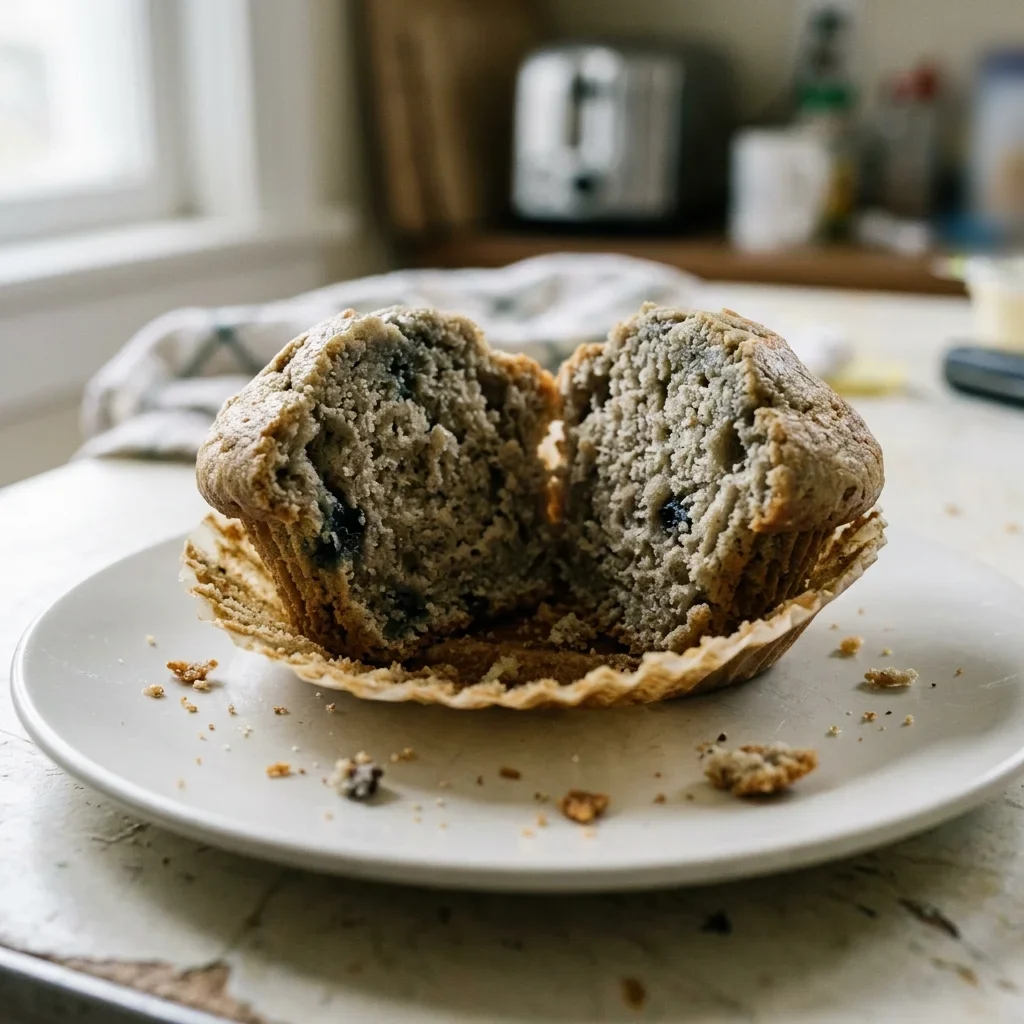
Verdict: throw them out
Muffins that smell sour or off
A sour, yeasty or musty smell instead of a sweet, buttery one. Penn State Extension lists a foul odor among the signs of spoilage. So bin them, even if you see no mold yet.
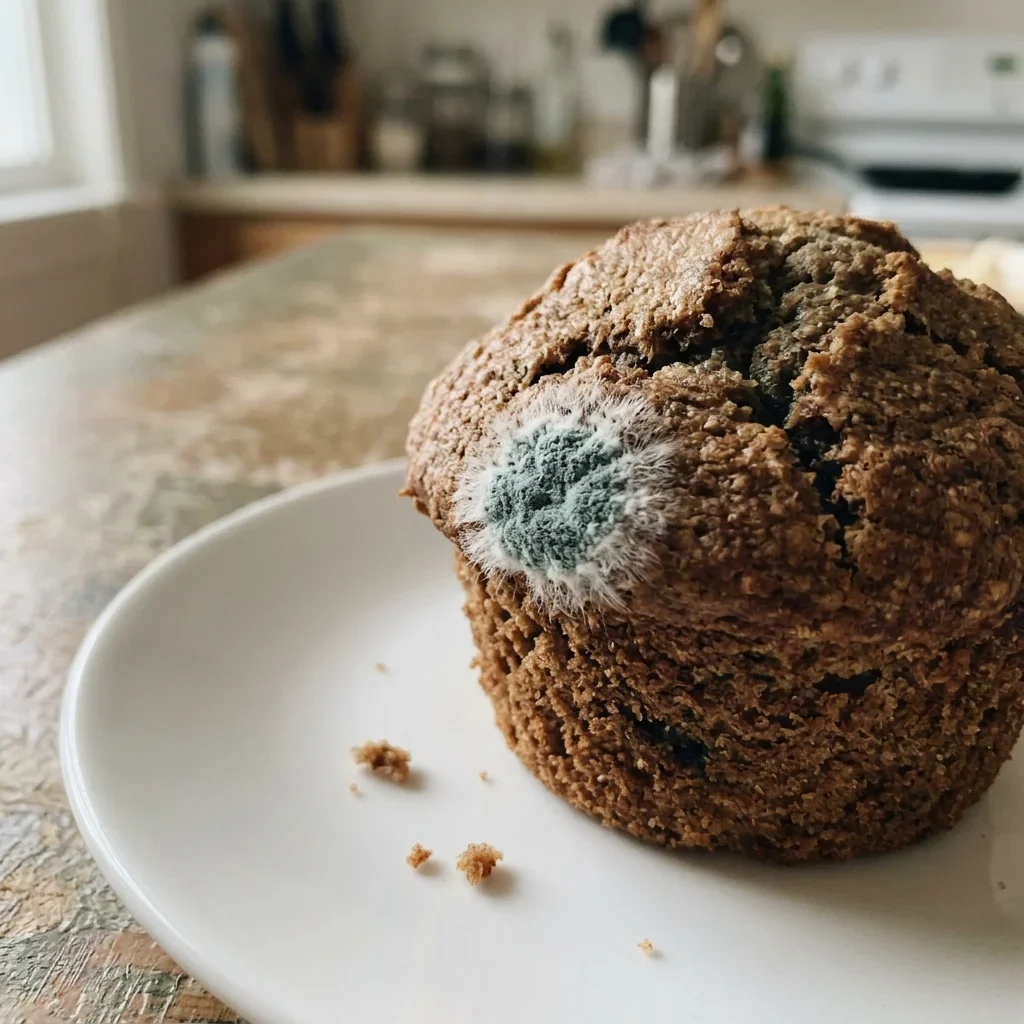
Verdict: throw them out
Moldy muffins
Fuzzy white, green or blue spots on the top, the sides or the paper liner. The USDA Food Safety and Inspection Service says to discard bread and baked goods with mold, because porous foods can be contaminated below the surface. So throw out the whole muffin, and do not sniff it.
Are muffins left out overnight safe?
Plain muffins left out overnight are fine, because the USDA's FoodKeeper data keeps homemade muffins at room temperature for 3 to 7 days. Cover them in the morning, though, since a night uncovered dries them out. For everything else on the table, see the food left out overnight list.
What to store muffins in
The right container keeps air out without trapping steam. Here is what each one suits.
Substitute
Works best in
What changes
Airtight container
The counter, 3 to 7 days
Keeps them soft; let them cool fully first.
Zip-top bag
The counter, a few at a time
Press out the air, but leave tall tops room.
Freezer bag, air pressed out
The freezer, 2 to 3 months
K-State asks for moisture-proof bags at 0°F.
Heavy-duty foil
The freezer, then reheating
Clemson suggests foil for quick breads you plan to reheat.
Mistakes people make when they store muffins
These are the ways people store muffins that cost them the most, and each one is easy to fix.
Covering them while warm. K-State says the condensation makes baked goods soggy, so let them cool first.
Leaving them in the hot pan. They keep steaming against the metal, so move them to a rack.
Putting them in the fridge. FoodKeeper says they dry out and turn stale, so keep them on the counter.
Leaving them uncovered. Air dries the crumb, so use a container or a closed bag.
Freezing them on day five. Freeze extras on the first day, while they are still soft.
Freezing the batter. Clemson says unbaked muffins are likely to have poor texture, so bake them first.
Picking off the mold. USDA guidance is to discard moldy baked goods, because the mold reaches below the surface.
Sources
FoodKeeper App, Food Safety and Inspection Service, U.S. Department of Agriculture, whose published FoodKeeper data lists homemade muffins at 3 to 7 days in the pantry and 2 to 3 months frozen, commercially packaged muffins at 3 to 7 days and 3 months frozen, and says refrigeration is not recommended because a muffin will quickly dry out and become stale.
Freezing Baked Goods, Linda K. Beech, Ellis County Extension, K-State Research and Extension, on cooling baked goods completely to prevent condensation that makes them soggy, moisture-proof wraps and freezer bags at 0°F, pressing out the air, and quick breads and muffins at 2 to 4 months, thawed wrapped at room temperature.
Freezing Prepared Foods, Pamela Schmutz and E.H. Hoyle, revised by Kimberly A. Baker and Adair Hoover, Clemson Cooperative Extension, updated April 2012, on muffins at 6 to 12 months at 0°F, thawing them in their wrapping at room temperature for 1 hour or heating them unthawed at 300°F for 15 to 20 minutes, unbaked muffins having poor texture, and foil for reheating quick breads.
Molds on Food: Are They Dangerous?, Food Safety and Inspection Service, U.S. Department of Agriculture, on discarding moldy bread and baked goods because porous foods can be contaminated below the surface, and not sniffing moldy food.
Signs of Food Spoilage, Samantha Zlotorzynski, Penn State Extension, May 2025, on a foul odor, sliminess and unnatural colors as signs of spoilage.
Storage times and safety advice on this page come from the sources above. Food safety depends on conditions I cannot see, so read the Disclaimer, and if in doubt, throw it out.
Other ingredient guides
Browse all guides

Share this guide
Never miss a guide
New ingredient guides when they go up, plus one storage tip worth knowing. Anything sponsored is labelled.

Emilly White