
Up to 2 weeks
Cooled and airtight; longer risks rancidity (NC State, Oregon State)
10 to 14 days
In an airtight container (UMaine Extension)
Up to 3 months
In a freezer-safe container (NC State Extension)
The short version: to store roasted pumpkin seeds, let them cool completely, then seal them in an airtight container. NC State Extension gives homemade seeds up to 2 weeks on the counter, while UMaine Extension keeps them 10 to 14 days in the fridge. Freeze them for up to 3 months. Throw them out if they smell rancid, musty or moldy.
Storage times here come from NC State Extension, University of Maine Cooperative Extension, University of Alaska Fairbanks Extension and the USDA's FoodKeeper data, with rancidity guidance from Oregon State University Extension, Illinois Extension and Colorado State University Extension.
On this page
Should roasted pumpkin seeds cool before you store them?
Roasted pumpkin seeds should cool completely before they go into a container, according to NC State Extension. So spread them out on the tray until they are cool to the touch. Then check a few more things before you seal them.
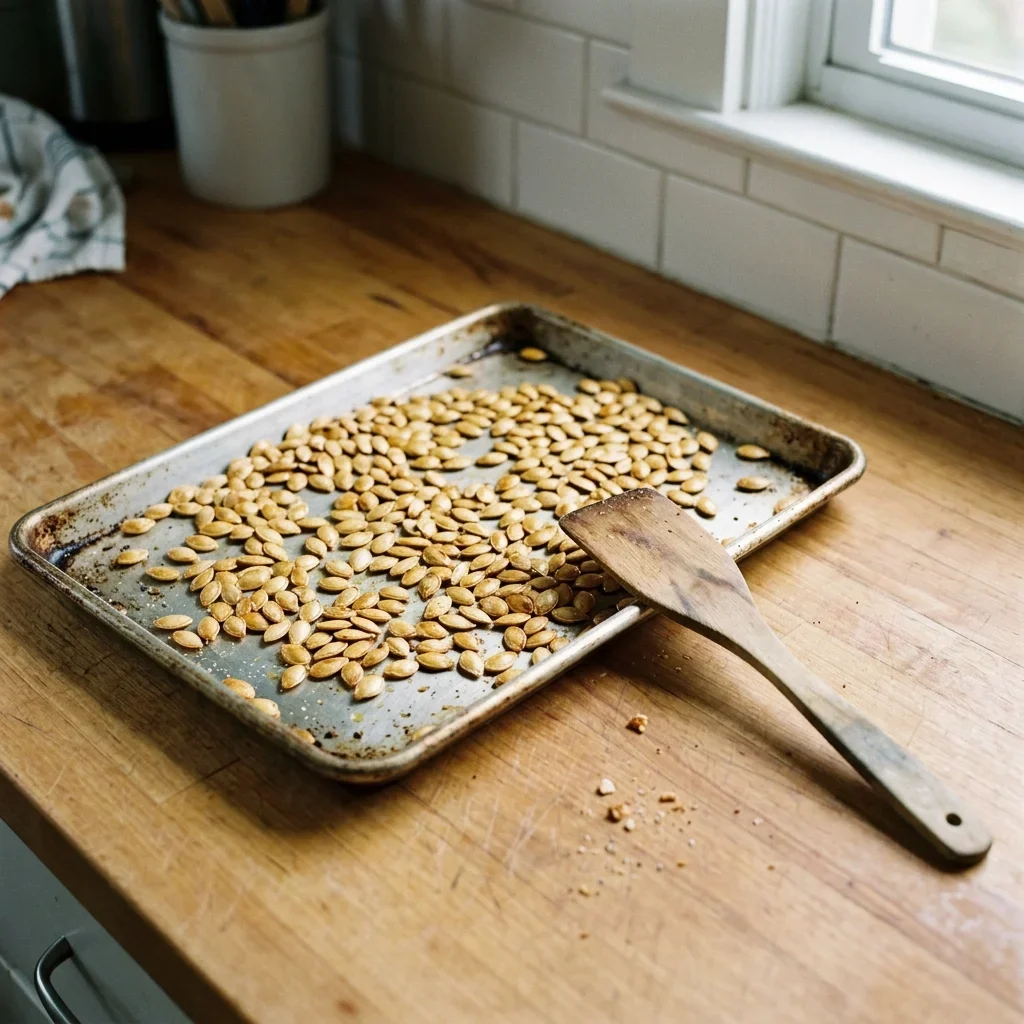
Glass, a lid that seals, and a spoon that is properly dry.
First, make sure they were dry before roasting. University of Maine Cooperative Extension rinses the seeds, then shakes or pats them dry before tossing them in oil and salt.
Then check that they are fully roasted. UMaine roasts them at 350°F for 20 to 30 minutes, flipping halfway, until golden brown. So give pale seeds a few more minutes before they come out.
Next, decide whether they are homemade or store-bought. The 2-week figures here are for seeds you roast yourself. Packaged seeds follow the date on the bag, which the USDA's FoodKeeper data puts at about 6 months.
Finally, plan for the batch. Keep what you will snack on this week in a jar, and freeze the rest straight away. If the seeds came from a carved pumpkin, the pumpkin guide explains why to scoop and cook them right after carving.
How to store roasted pumpkin seeds so they stay crunchy
To store roasted pumpkin seeds so they stay crunchy, keep them cool, dry and sealed. Air and moisture soften them, while warmth turns their oil rancid, so an airtight container in a cool spot handles all three.
How do you store roasted pumpkin seeds?
Roasted pumpkin seeds keep up to 2 weeks in an airtight container once fully cooled, according to NC State Extension. So use a jar with a tight lid or a zip-top bag with the air pressed out. Then keep it somewhere cool and out of direct sun.
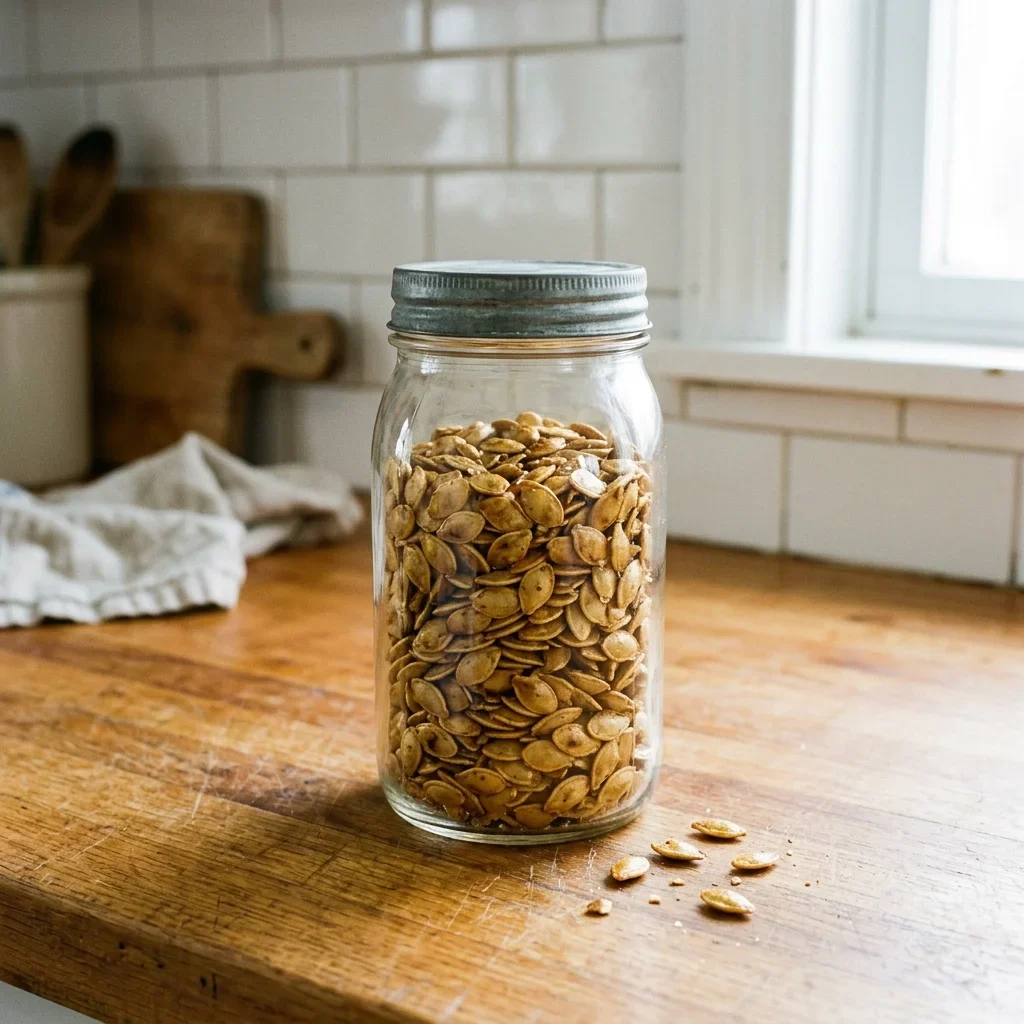
Sealed, cool and dark, and nowhere near the cooker.
How long do roasted pumpkin seeds last?
Homemade roasted pumpkin seeds last about 2 weeks, according to NC State Extension, which keeps them on the counter, and UMaine Extension, which keeps them 10 to 14 days in the fridge. By contrast, the USDA's FoodKeeper data gives roasted pumpkin seeds 6 months in the pantry.
The difference is homemade against packaged. Sealed, store-bought seeds follow their date, while a home batch is best eaten within 2 weeks. After that, freeze them.
Should you refrigerate roasted pumpkin seeds?
Roasted pumpkin seeds can be refrigerated for 10 to 14 days in an airtight container, according to University of Alaska Fairbanks Extension and UMaine Extension. Illinois Extension adds that cold storage slows how quickly the fats turn rancid. So the fridge suits a warm kitchen or a big batch.
How do you store store-bought pumpkin seeds?
Store-bought roasted pumpkin seeds keep about 6 months in the pantry, according to the USDA's FoodKeeper data, which adds that unsalted ones do not need the fridge. Illinois Extension says to follow the storage advice on the package. So reseal the bag tightly once it is open.
Do roasted pumpkin seeds go rancid at room temperature?
Roasted pumpkin seeds go rancid if kept at room temperature for long periods, according to Oregon State University Extension. That is why it sends them to the fridge or freezer for long-term storage. So treat the counter as a short-term spot, for a week or two at most.
Can you freeze roasted pumpkin seeds?
Roasted pumpkin seeds freeze well for up to 3 months in a freezer-safe container, according to NC State Extension. UMaine and Alaska Extension also send them to the freezer for anything longer than 10 to 14 days. So the freezer is the place for most of a big batch.
How do you freeze roasted pumpkin seeds?
Roasted pumpkin seeds freeze best fully cooled, in a freezer-safe container or bag, for up to 3 months, as NC State Extension advises. Press out as much air as you can before sealing. Then label it with the date, so you know when the 3 months are up.

Below 41 degrees it keeps for years, but it barely pours.
How do you use frozen pumpkin seeds?
Frozen pumpkin seeds are best taken out a handful at a time, so the rest stay sealed in the freezer. Reseal the bag straight away and put it back. Before eating, check that they do not smell rancid or musty, as Alaska Extension advises.
Does freezing stop pumpkin seeds going rancid?
Freezing slows rancidity rather than stopping it, according to Illinois Extension, which says cold storage slows how quickly the fats in nuts and seeds turn rancid. So frozen seeds still have a limit. Use them within NC State's 3 months.
How to tell if pumpkin seeds have gone bad
Pumpkin seeds usually go bad by turning rancid rather than by growing mold. Colorado State University Extension says rancid fats give nuts a paint-like smell and a bad taste. The USDA says moldy nuts and legumes should be discarded. Here is what each stage means, then. Almond butter fails the same way, which the almond butter guide covers.

Verdict: eat them
Fresh roasted pumpkin seeds
Golden, dry and crunchy, with a toasted, nutty smell. These are seeds inside their first 2 weeks, stored airtight. So snack on them, and close the jar straight after.

Verdict: eat them soon
Soft or chewy pumpkin seeds
Seeds that bend instead of snapping, often after being sealed warm or left with the lid loose. They have picked up moisture. So eat them soon, and cool the next batch fully before it goes in the jar.

Verdict: throw them out
Rancid pumpkin seeds
A sharp, paint-like or bitter smell, and a sour or bitter aftertaste. Colorado State University Extension says that is what rancid fats do to nuts and seeds. So throw them out, since rancid seeds taste bad.

Verdict: throw them out
Musty-smelling pumpkin seeds
A damp, musty or earthy smell instead of a toasted one. Alaska Extension says to check that seeds do not smell rancid or musty. Colorado State adds that seeds can pick up molds during improper storage, so bin them.

Verdict: throw them out
Moldy pumpkin seeds
Fuzzy white, green or grey spots on the seeds or inside the container. The USDA Food Safety and Inspection Service says to discard moldy nuts and legumes. So throw out the whole batch, do not sniff it, and wash the container.
Can you leave roasted pumpkin seeds out overnight?
Roasted pumpkin seeds left out overnight are fine to eat, because NC State Extension keeps cooled seeds on the counter for up to 2 weeks. Left uncovered, though, they can soften. So seal them in the morning. For everything else from the party, see the Halloween leftovers guide.
What to store pumpkin seeds in
The right container keeps out air and moisture. Here is what each one suits.
Substitute
Works best in
What changes
Glass jar with a tight lid
The counter, up to 2 weeks
Seal it only once the seeds are fully cool.
Zip-top bag
The fridge, 10 to 14 days
Press out the air; UMaine allows 10 to 14 days.
Freezer-safe container
The freezer, up to 3 months
NC State's choice for longer storage.
The original package
Store-bought seeds
Follow its date; reseal it tightly once open.
Mistakes people make when they store pumpkin seeds
These are the ways people store pumpkin seeds that cost them the most, and each one is easy to fix.
Sealing them while warm. NC State says to cool them completely before storing them.
Roasting them wet. UMaine pats the seeds dry before tossing them in oil.
Leaving them on the counter for weeks. Oregon State says they go rancid at room temperature.
Using a bowl with no lid. Air and moisture soften them, so use an airtight container.
Freezing them in a loose bag. Use a freezer-safe container with the air pressed out.
Treating homemade seeds like store-bought ones. A home batch keeps about 2 weeks, not 6 months.
Eating seeds that smell like paint. Colorado State says that smell means the fats have turned rancid.
Sources
Roasted Pumpkin Seeds Recipe, Adam Coulter, N.C. Cooperative Extension, Buncombe County Center, September 13, 2024, on storing cooled seeds on the counter in an airtight container for up to two weeks and freezing them in a freezer-safe container for up to three months.
Pumpkin Seeds, Roasted, University of Maine Cooperative Extension, on rinsing and drying the seeds, roasting them at 350°F for 20 to 30 minutes until golden brown, storing them in an airtight container in the refrigerator for no more than 10 to 14 days, and freezing them for longer storage.
Pumpkin Seeds, Julie Cascio, University of Alaska Fairbanks Cooperative Extension Service, reviewed July 2024, on storing dried or roasted seeds airtight in the refrigerator for no more than 10 to 14 days, freezing them for longer, and checking that seeds do not smell rancid or musty.
FoodKeeper App, Food Safety and Inspection Service, U.S. Department of Agriculture, whose published FoodKeeper data lists roasted pumpkin seeds at 6 months in the pantry and says refrigeration is not necessary for unsalted pumpkin seeds.
Preserving pumpkins and winter squash, Nellie Oehler and Jared Hibbard-Swanson, Oregon State University Extension publication SP 50-767, revised November 2024, on pumpkin seeds becoming rancid at room temperature and storing them in the refrigerator or freezer for the long term.
Nuts need food safety too, Caitlin Mellendorf, Illinois Extension, November 12, 2025, on storing nuts and seeds in airtight containers, refrigerating or freezing them to slow how quickly their fats turn rancid, and following the storage advice on the package.
Nuts and Seeds, Food Smart Colorado, Colorado State University Extension, on unsaturated fats turning rancid and giving nuts a paint-like smell and bad taste, and nuts and seeds picking up molds during improper storage.
Molds on Food: Are They Dangerous?, Food Safety and Inspection Service, U.S. Department of Agriculture, on discarding moldy peanut butter, legumes and nuts, and not sniffing moldy food.
Storage times and safety advice on this page come from the sources above. Food safety depends on conditions I cannot see, so read the Disclaimer, and if in doubt, throw it out.
Other ingredient guides
Browse all guides


Share this guide
Never miss a guide
New ingredient guides when they go up, plus one storage tip worth knowing. Anything sponsored is labelled.

Emilly White