
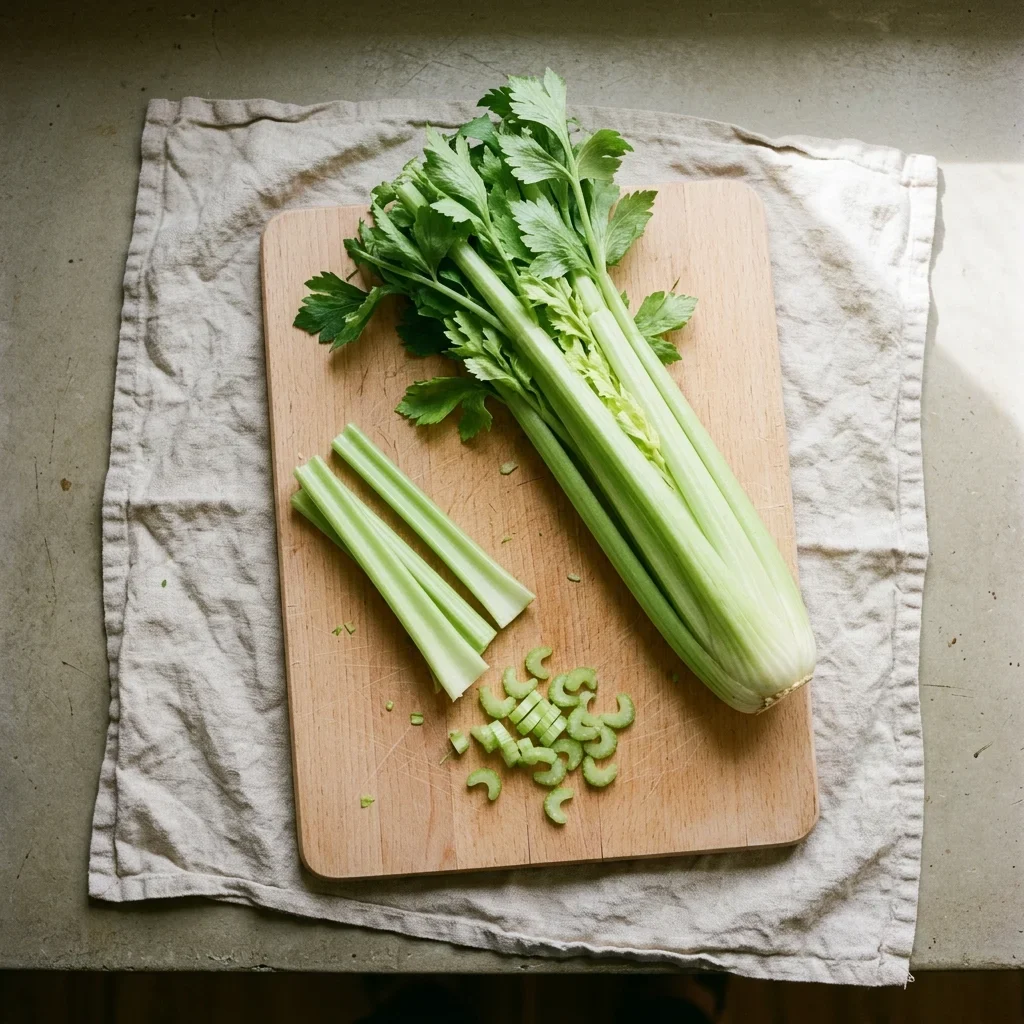
Not the place for it
Celery is a fridge vegetable. Keep it at 40°F or below
1 to 2 weeks
Whole bunch, wrapped, in the crisper and away from fruit
Yes, for cooking
Blanch it 3 minutes first. It will not be crisp again
The short version: to store celery well, keep the bunch whole and wrapped in the crisper. Wash it only when you are about to use it. Limp stalks go in cold water rather than the bin.
Storage times from Utah State University Extension, University of Minnesota Extension and UMass Extension.
On this page
What to look for before you store celery
Celery does not ripen after it is cut. So the bunch you carry home is as good as it will ever be. That is why the pick matters more here than it does with fruit. A few days on the counter cannot rescue a bad bunch of celery.
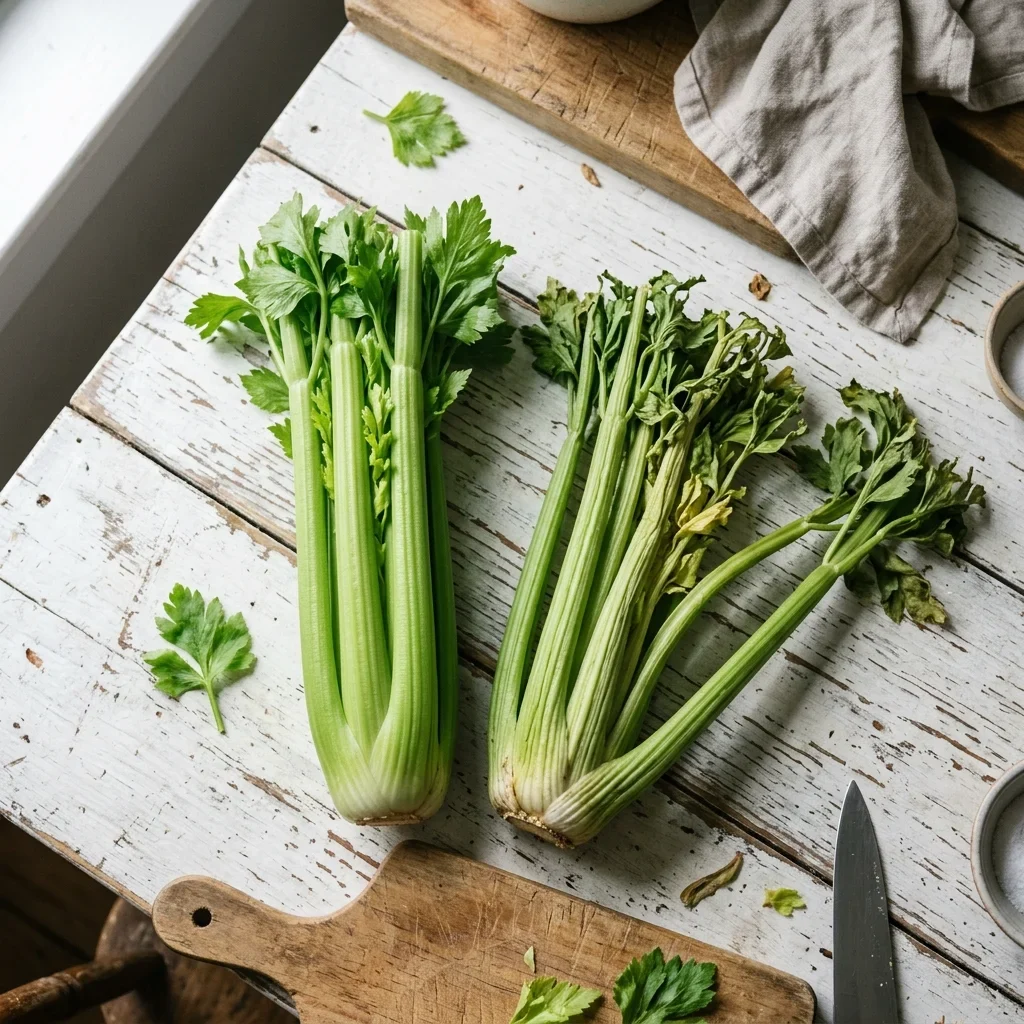
Compact, upright and pale green on the left. Limp and spread out on the right.
Light green, not white. Utah State University Extension says to choose celery that is light green but not white in color. The leaves should be fresh, with no sign of wilting.
A bunch that squeaks. Utah State University Extension also says celery should feel heavy for its size. It should squeak, too, when you squeeze the plant gently.
Stalks held together, not splayed. University of Minnesota Extension looks for celery that is straight and firm with fresh leaves. Utah State University Extension, meanwhile, says to avoid stalks that are limp, bendable and spread out.
Leaves with no yellow in them. UMass Extension wants compact bunches whose stalks are not falling out of the bundle. Leaves can run from pale to bright green, although never yellowing or browning.
How to store celery so it lasts
To store celery so it lasts, keep the bunch whole, keep it wrapped and keep it cold. UMass Extension points out that cut stalks lose moisture faster than uncut ones. So the head you break apart on Monday is the one you throw out on Friday. However, the wrap itself is where the three extension services on this page stop agreeing.
How to store celery in the fridge
Keep the whole bunch in the crisper drawer, because 40°F or below is what perishable produce needs. Clemson Cooperative Extension and the FDA both give that temperature. Utah State University Extension bags celery and puts it in the crisper. University of Minnesota Extension and UMass Extension wrap the whole head in aluminum foil instead. Either way, do not wash it first. Clemson says to wash produce under running water just before eating, cutting or cooking. That drawer is also where the carrots guide ends up, so the two can share it.
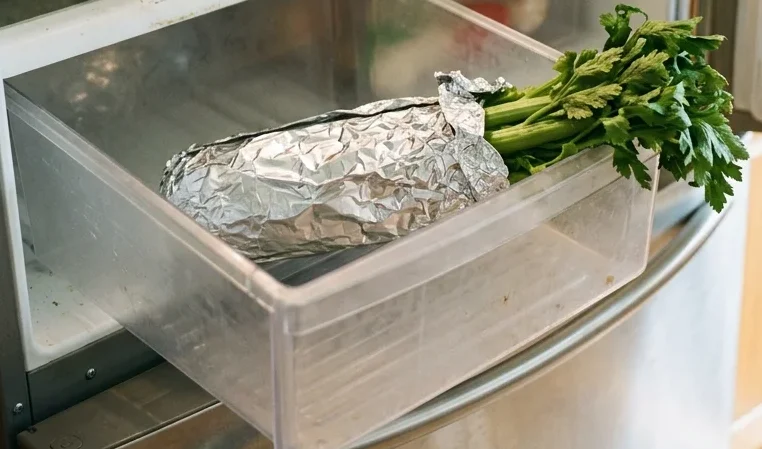
Whole head, wrapped, in the crisper. Two of three extension services prefer foil.
How long can you store celery?
One to two weeks is the figure an extension service will stand behind. In particular, Utah State University Extension gives 1 to 2 weeks in a plastic bag. University of Minnesota Extension also gives up to two weeks, although it uses foil. UMass Extension goes further still, up to 4 weeks in foil in the crisper. Since two of the three stop at two weeks, this guide plans for two weeks too.
In other words, the four-week promise at the top of the search results comes from one extension service. Plan for two weeks, then judge the bunch rather than the calendar. When the fridge itself has been off, the food after a power outage page covers what to do next.
Should you store celery in foil or a plastic bag?
Two of the three extension services say foil. UMass Extension argues that a plastic bag traps the ethylene celery gives off, so it spoils faster. That is why UMass Extension gets 4 weeks from foil in the crisper. University of Minnesota Extension also wraps celery in foil, although it only claims two weeks. Utah State University Extension, on the other hand, bags celery and still gets 1 to 2 weeks. None of the three published a side-by-side test I could read. So treat foil as the better bet rather than the only one. Use foil when you have it, because a bag in the crisper clearly works too.
How to store celery you have already cut
Put cut ribs in a container, cover them with water and seal the lid, as UMass Extension advises. Because the water keeps them hydrated, the ribs stay crisp. Clemson Cooperative Extension also says pre-cut produce belongs in the fridge within two hours. Change the water once it clouds, then work through those ribs within a few days. No source I opened gives a day count for cut celery, so a few weeks is too long to trust.
Why you should store celery away from apples
Utah State University Extension says to keep celery away from fruit, because fruit nearby makes it spoil early. Ripening fruit is the problem, so the apples guide keeps apples away from other produce too. Give celery its own corner of the crisper, or at least its own drawer.
Can you freeze celery?
Yes, but only for cooking. In fact, the National Center for Home Food Preservation says celery loses its crispness when frozen. The frozen product, it adds, is suitable only for cooked dishes. Utah State University Extension calls freezing the best home method for celery, although it says the same about texture.
How to store celery in the freezer
Wash the stalks and cut them into 1-inch lengths. Because the National Center for Home Food Preservation starts with crisp, tender stalks, pick ones free from coarse strings. Then water blanch the pieces for 3 minutes. Cool them promptly and drain them. Pack them with no headspace, then seal and freeze.
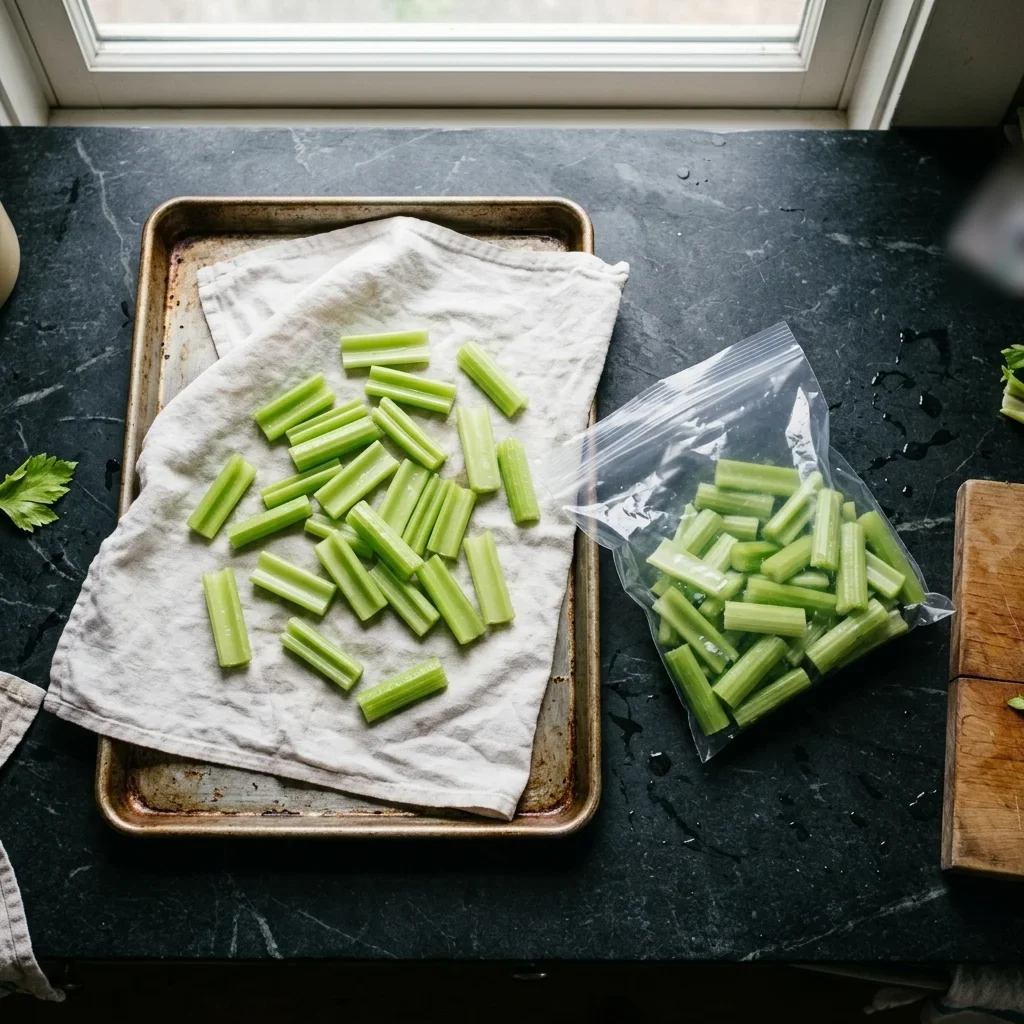
One-inch pieces, blanched 3 minutes, cooled and drained before they are packed.
What to do before you store celery in the freezer
Blanching is the step people skip, and it is the one that matters. In fact, the National Center for Home Food Preservation gives celery a full 3 minutes in boiling water. That is longer than many vegetables get. Cool it promptly afterwards, because the blanching clock only stops once the celery is cold.
What happens to celery you store in the freezer
It goes soft. Ice breaks the cell walls, so thawed celery is limp rather than crunchy. That is why the National Center for Home Food Preservation sends it to cooked dishes only. None of that matters in soup, stock, or the mirepoix Utah State University Extension describes. For a stalk with peanut butter on it, however, you need a fresh one.
How to tell if celery has gone bad
Most of the celery people throw out is not spoiled at all, just thirsty. A limp stalk is usually a fixable stalk, while a slimy one is not. Here is what each stage means, and what to do about it.
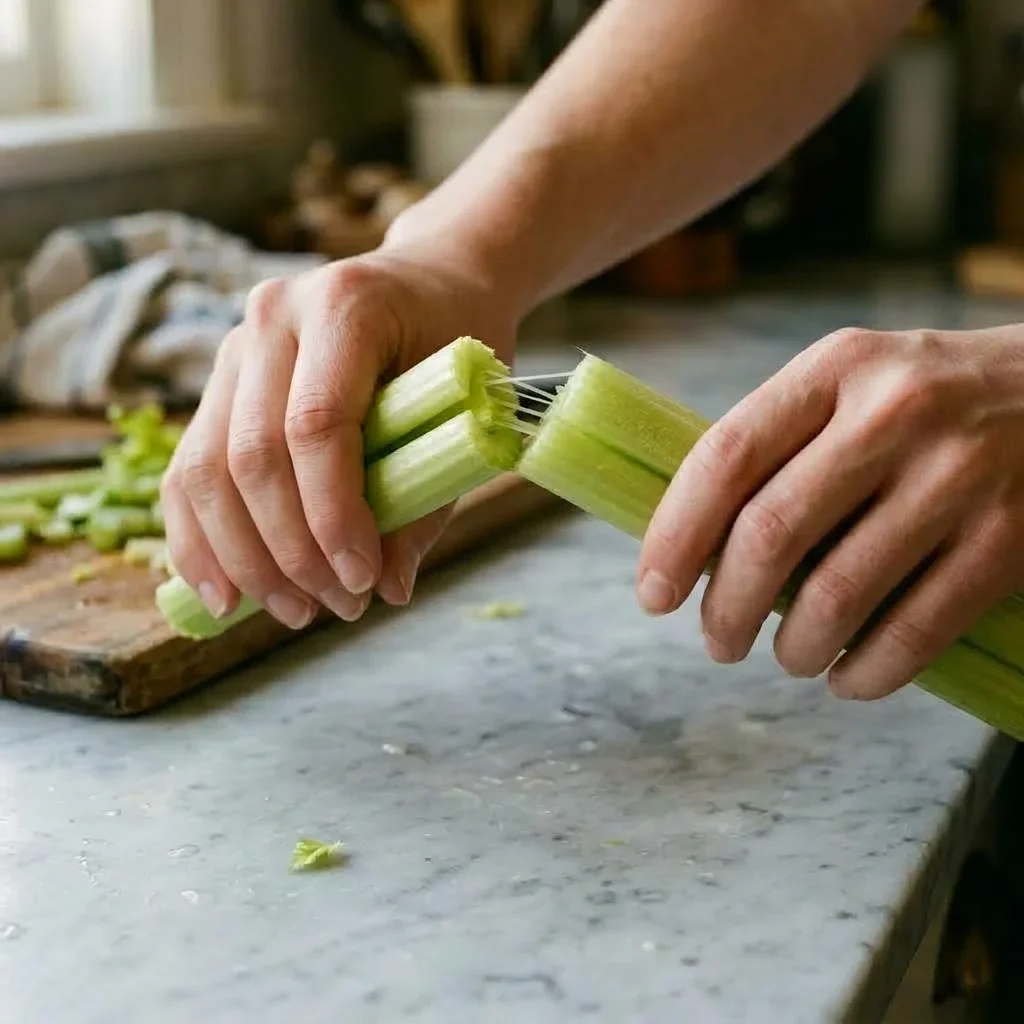
Verdict: use it
Crisp celery
Pale green stalks that snap, with leaves still fresh and no yellow in them. Utah State University Extension says good celery squeaks when you squeeze it. So trust the sound as much as the look.
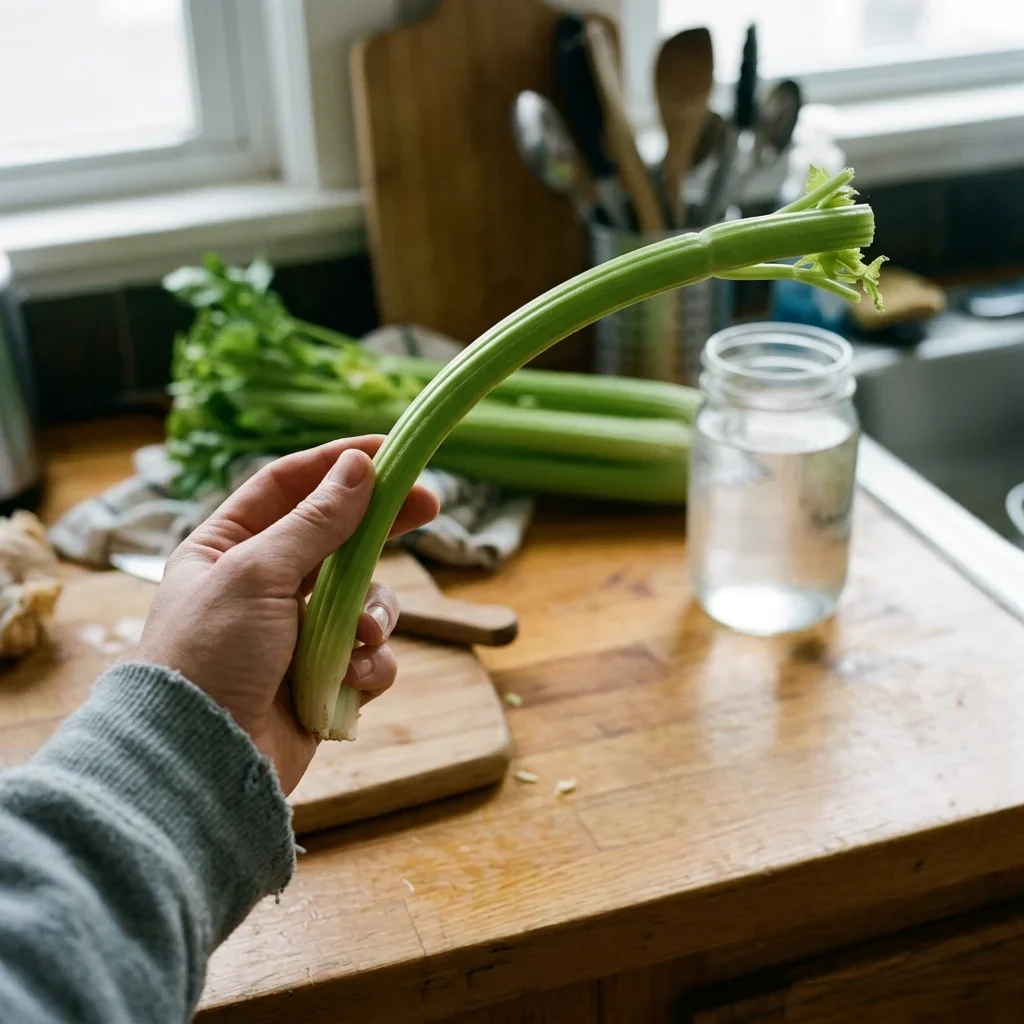
Verdict: revive it
Limp celery
Stalks that bend instead of snapping have lost water, not safety. UMass Extension sits cut, washed celery in a sealed container of water to keep it crisp. The same method, it says, revives limp, dry celery. So stand the stalks in cold water in the fridge before you give up on them.
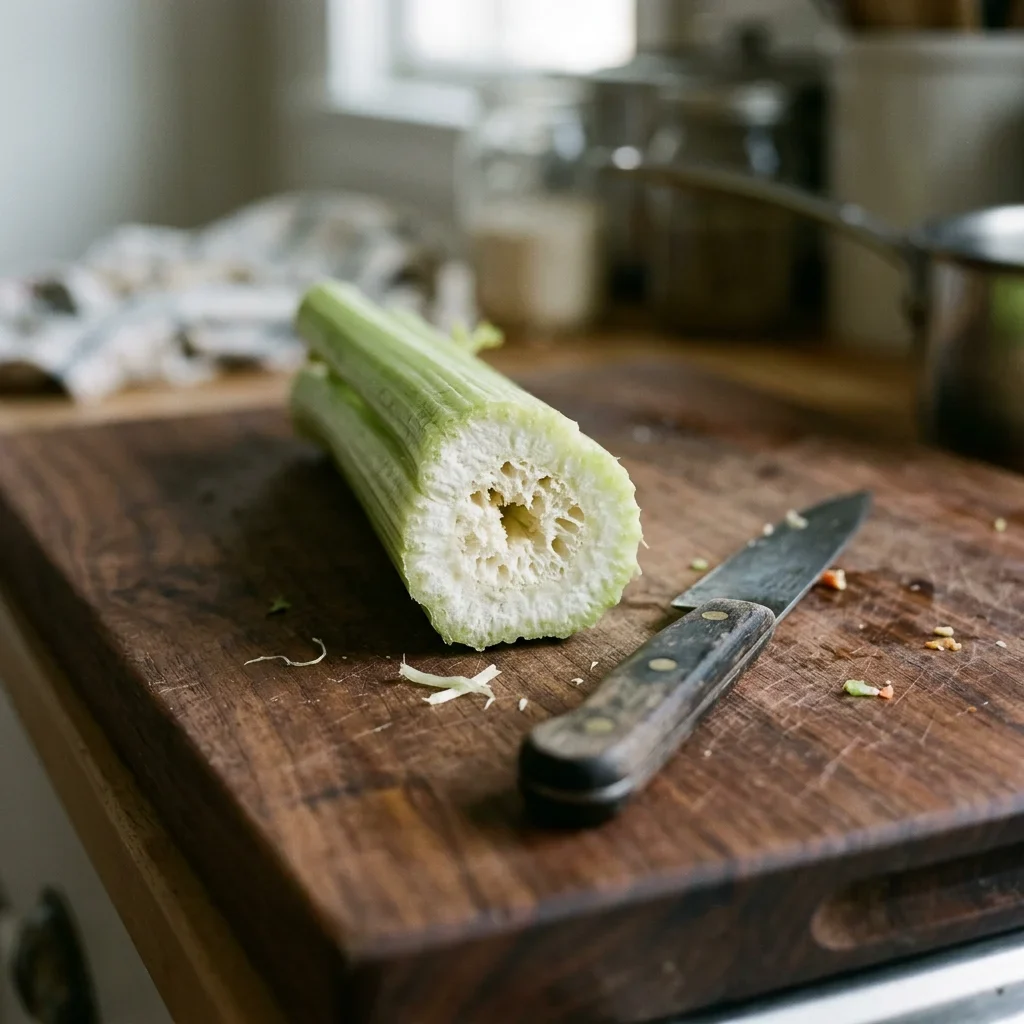
Verdict: cut it out
White, spongy celery
Sometimes the inside of a stalk turns white and spongy rather than solid. No source I opened explains what causes that, so this guide will not guess. What the sources do say is narrower. Utah State University Extension picks celery light green but not white, while University of Minnesota Extension avoids spongy celery. The FDA, meanwhile, says to cut away damaged areas before eating. So cut the spongy part out, then use the rest.
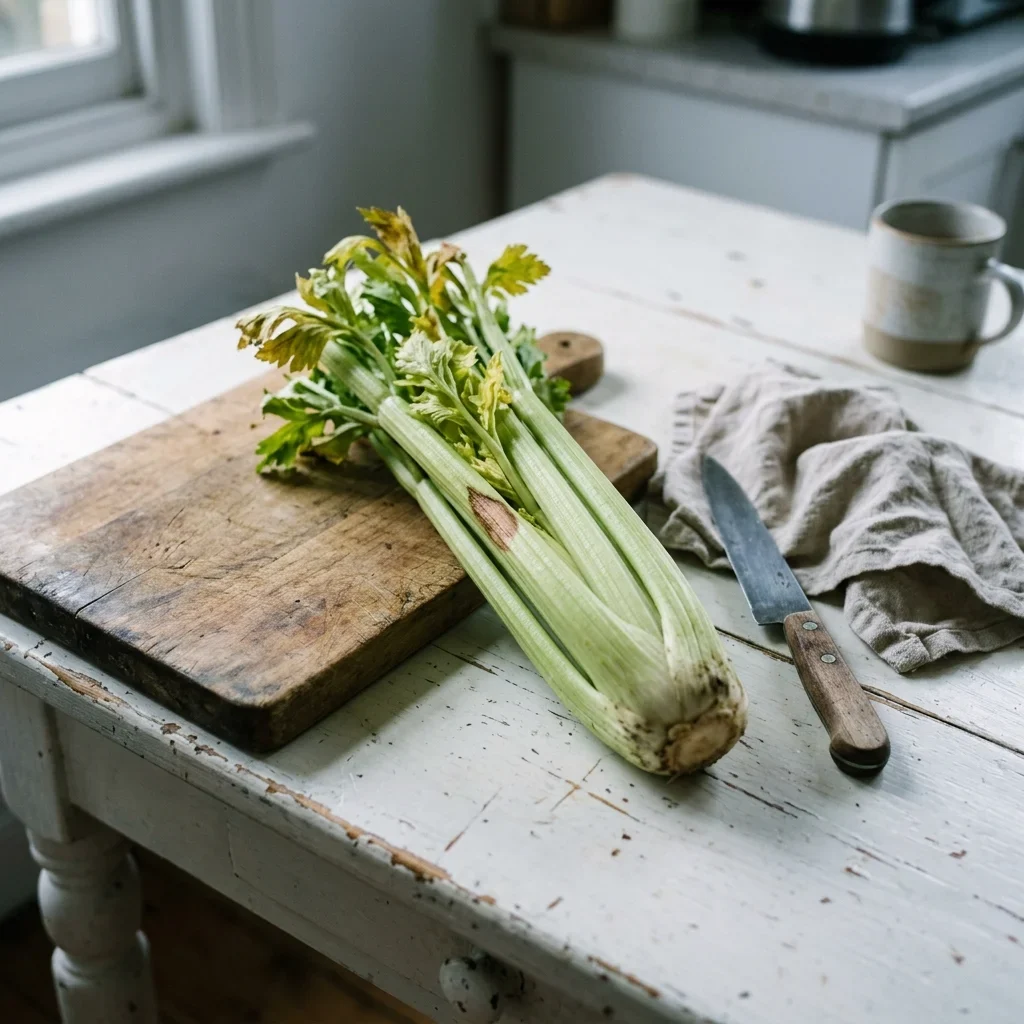
Verdict: cook the rest
Yellow or browning celery
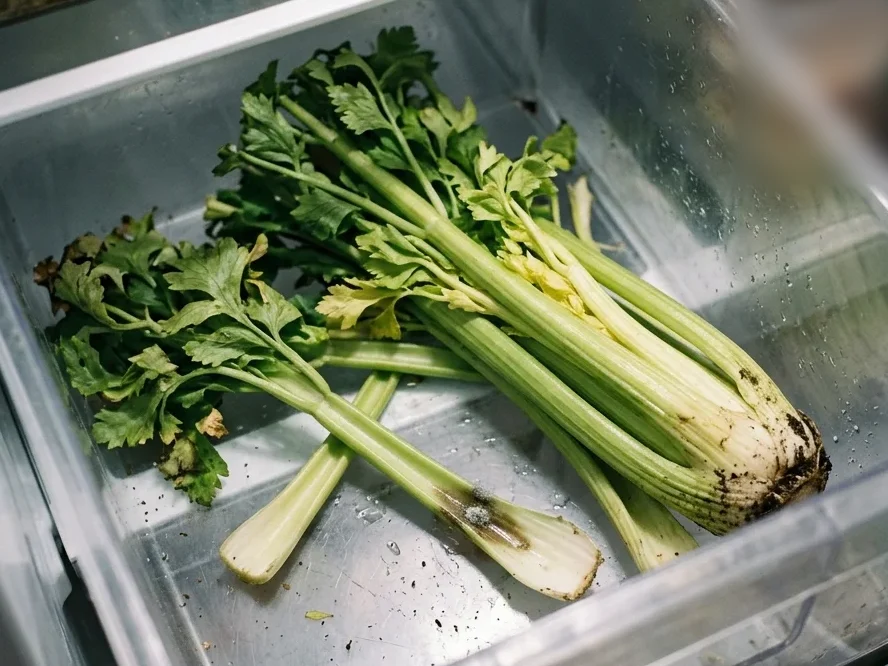
Yellowed leaves, or stalks with brown patches, are past their best rather than dangerous. The FDA says to cut away damaged or bruised areas before you eat produce. So trim the brown off and keep the rest for stock or soup. If the whole bunch has gone yellow and soft, though, it belongs in the bin.
Verdict: throw it out
Slimy or moldy celery
Slippery, wet stalks or fuzzy growth mean the bunch is finished. That is the same slimy end the lettuce guide describes. UConn Extension splits moldy produce in two. On firm vegetables such as cabbage, peppers and carrots, cut an inch around and below the mold. Soft ones such as strawberries, however, get discarded whole. Celery is on neither list, so once it is slimy, take the FDA line and throw it away. Then check whatever was touching it in the drawer.
Can you store celery in water?
Yes, and it is the fix for limp stalks. In particular, UMass Extension puts cut and washed celery in a sealed container, submerged in water. That keeps it hydrated and crisp, and the same method revives limp, dry celery. Even so, water is not how you keep a whole bunch for two weeks. UMass Extension still wraps whole heads in foil for that. Use water for the ribs you are working through this week, and foil or a bag for the rest.
Celery substitutes
Out of celery, or had to throw a bunch out? Then these will cover most of what celery does in a dish.
Substitute
Works best in
What changes
Celery leaves and tops
Stock, soup and stews
Usually thrown away, and they carry plenty of flavor.
Fennel stalks
Mirepoix and braises
Similar crunch, with a faint aniseed note.
Green bell pepper
Soups and stews
Crunchy but sweeter, so use a little less.
Celery salt or celery seed
Soups, brines and dressings
Flavor only, and no crunch. Watch the salt.
Mistakes people make when they store celery
These are the ways people store celery that cost them the most, although each one has an easy fix.
Breaking the bunch apart on day one. Cut stalks lose moisture faster, so keep the head whole until you need it.
Washing it before it goes in the fridge. Clemson says to wash produce just before eating, cutting or cooking, so rinse at the last minute.
Throwing out limp stalks. Cold water brings them back, so give them a few hours before you give up.
Leaving it loose in the drawer. Unwrapped celery dries out, so wrap the bunch in foil or bag it.
Parking it next to the fruit. Utah State University Extension says fruit nearby spoils celery early, so move one of them.
Freezing it for snacks. Frozen celery thaws limp, so freeze it only for cooking.
Shortening the blanch. Three minutes in boiling water is what the National Center for Home Food Preservation asks for. So do not cut it down.
Sources
Fruit and Vegetable Guide Series: Celery, Marie Stosich and Hilari Holmgren, Utah State University Extension, February 2023, on selecting and cleaning celery, storing it in a plastic bag for 1 to 2 weeks, keeping it away from fruit and freezing it.
Celery, Real Life Good Food, University of Minnesota Extension, on choosing straight, firm celery, wrapping it in foil in the crisper and getting up to two weeks.
Produce Spotlight: Celery, Center for Agriculture, Food and the Environment, UMass Amherst, on foil for up to 4 weeks, cut stalks kept in water and reviving limp celery.
Freezing Celery, National Center for Home Food Preservation, University of Georgia, from So Easy to Preserve, 6th edition, 2014, on 1-inch pieces, a 3-minute water blanch and freezing celery for cooked dishes only.
Safe Handling of Fresh Fruits & Vegetables, Pamela Schmutz, revised by Angela Fraser, Clemson Cooperative Extension Home & Garden Information Center, November 2009, on washing produce under running water and refrigerating it at 40°F or below.
Selecting and Serving Produce Safely, U.S. Food and Drug Administration, March 2024, on washing produce, cutting away damaged areas and throwing away produce that looks rotten.
Handling Food with Mold, Austin Goldberg, Daniela Avelino and Valerie Duffy, UConn Extension, April 2024, on trimming mold from firm vegetables and discarding soft produce whole.
Storage times and safety advice on this page come from the sources above. Food safety depends on conditions I cannot see, so read the Disclaimer, and if in doubt, throw it out.
Other ingredient guides
Browse all guides



Share this guide
Never miss a guide
New ingredient guides when they go up, plus one storage tip worth knowing. Anything sponsored is labelled.

Emilly White