
Months
Cold, damp and dark, near 32°F at 95% humidity or higher
1 to 2 weeks
Whole and unwashed in the crisper, with the outer leaves left on
Blanched, for cooking
Water-blanch shreds or wedges, then pack with half an inch of headspace
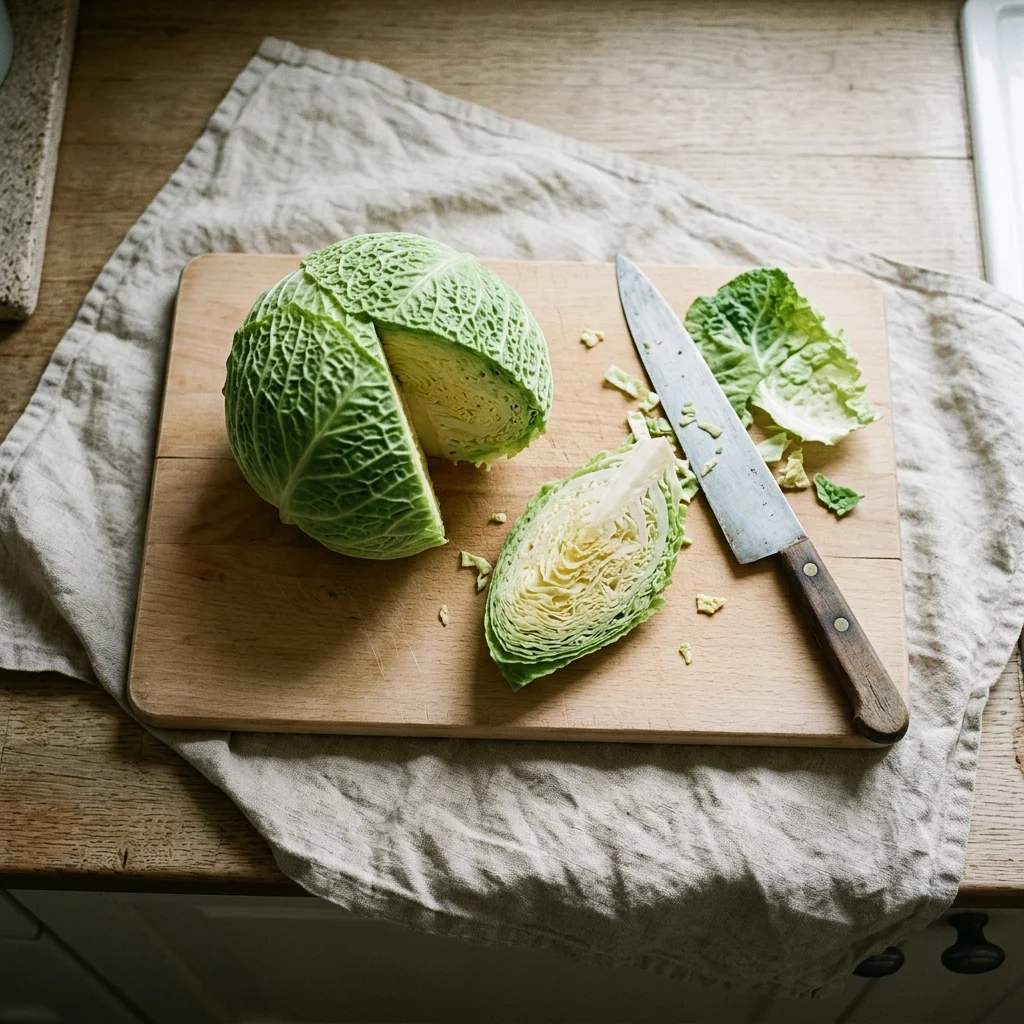
The short version: to store cabbage well, keep the head whole and unwashed in the crisper drawer. Leave the outer leaves on, since they take the damage instead of the head. Then wrap any cut face tightly and use it within a few days.
Storage guidance from UC Davis, Cornell Cooperative Extension and UMass Extension.
On this page
How to choose cabbage that stores well
A head of cabbage is mostly armour, so the layers you are tempted to tear off are the ones doing the work. That is why weight and tightness matter more here than colour.
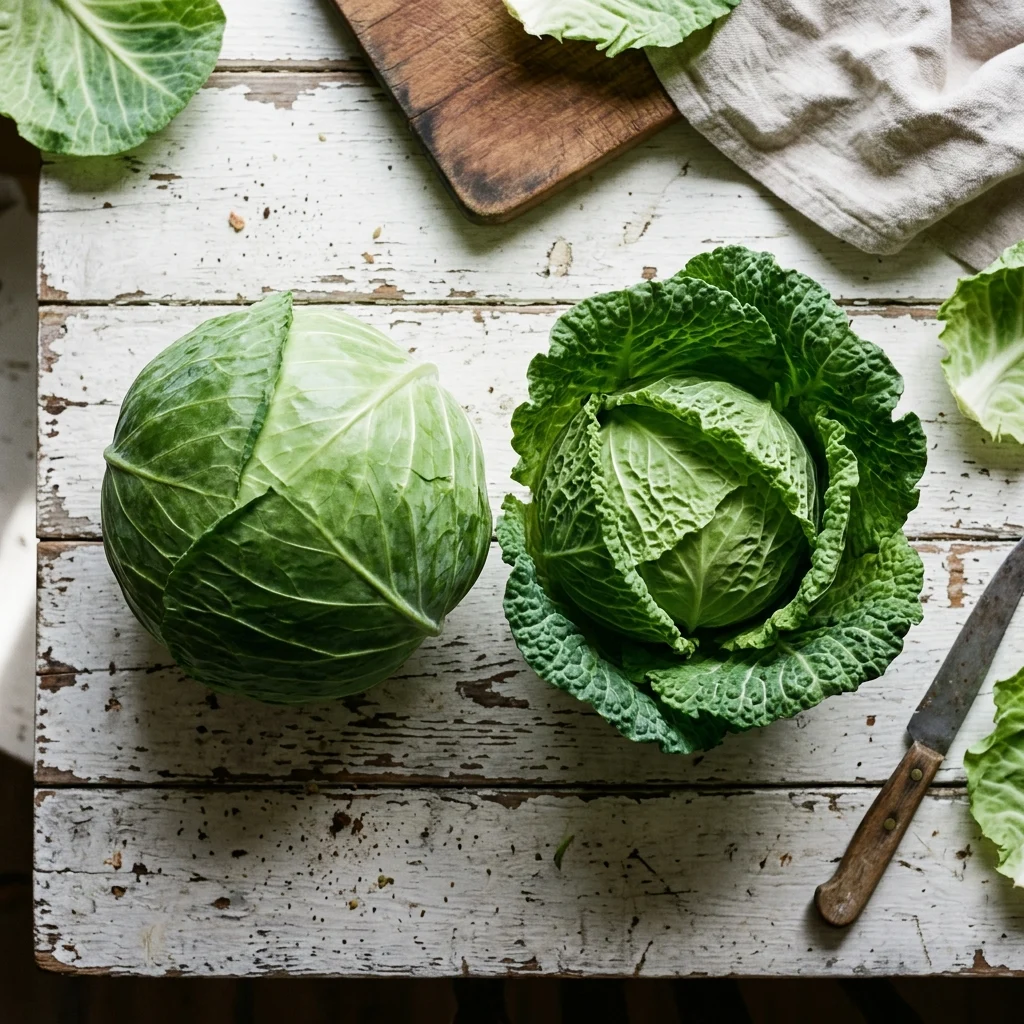
Tight, heavy and squeaky keeps. Loose leaves mean an older head.
Heavy for its size, and also with no loose leaves. Iowa State University Extension looks for cabbage that is crisp, firmly packed and heavy for its size.
A compact, firm head rather than a loose one. University of Minnesota Extension harvests cabbage when the heads are compact and firm, and a loose head is usually older.
Outer leaves that are still intact, especially around the base. According to Purdue University, wrapper leaf damage reduces shelf life, so a scuffed head will go first.
Nothing split at the top, because a split is an open wound. Purdue University notes that splitting comes from stem and leaf growth after the head matures, especially after rain.
How to store cabbage so it lasts
To store cabbage so it lasts, give it three things: cold, damp air and darkness. That is the opposite of what an onion wants, so the cupboard is the wrong place entirely.
Where to store cabbage in the fridge
Put the whole head in the crisper drawer, unwashed, with its outer leaves still on. Clemson Cooperative Extension says to store all harvested cabbage in the refrigerator. Food Smart Colorado names the vegetable drawer, because cabbage wants a cold, moist place. Keep it away from fruit as well. UMass Extension rates cabbage as highly sensitive to ethylene, which promotes leaf yellowing, wilting and abscission. Purdue University says the same thing more bluntly: ethylene in the storage area will cause yellowing and abscission of leaves. So keep apples and pears in another drawer, in the way the carrots guide describes.
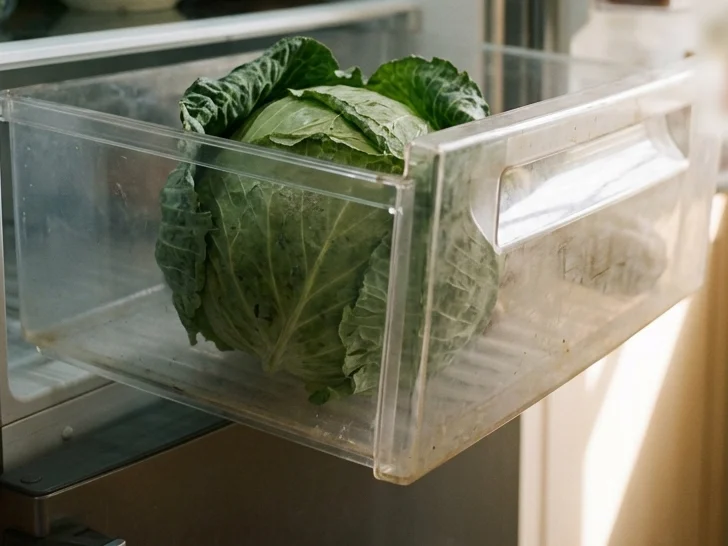
Whole, unwashed, outer leaves on, and away from the fruit.
How long can you store cabbage?
In a kitchen fridge, plan on a week or two. The published figures, however, run from days to months. Iowa State University Extension gives up to one week in the produce drawer. Clemson Cooperative Extension and Utah State University Extension both give 1 to 2 weeks. The long numbers belong to cold stores instead. Cornell Cooperative Extension gives early cabbage 3 to 6 weeks and late cabbage 3 to 4 months at 32°F and 95% humidity. UC Davis agrees, at 3 to 6 weeks and 5 to 6 months. So the variety and the temperature decide, and a 40°F fridge is the short end of that range.
In other words, late-season cabbage in a cold cellar keeps for months, while a supermarket head in a warm fridge keeps for weeks. Either way, it still beats almost everything else in the drawer.
Should you store cabbage washed or unwashed?
Unwashed, and it is not a close call. UC Davis puts cabbage on a short Do Not Wash list for storage, alongside melons, peas and peppers. South Dakota State University Extension gives the general rule: produce will keep longer if it is not washed before storage. Clemson Cooperative Extension says the same, since moisture on the surface invites mold and rot. Wash it when you cook instead. Iowa State University Extension removes the wilted, discoloured and thicker outer leaves at that point. Then it rinses the head under cool running water. The lettuce guide follows the same order for the same reason.
How to store cabbage you have cut
Wrap the cut face tightly, refrigerate it, and use it within a few days. Iowa State University Extension wraps cabbage tightly in plastic even when the head is whole. A cut face loses water fast, so the wrap matters more once you have halved it. The FDA also asks for cut produce to be refrigerated, and for perishable produce to sit at 40°F or below. If a bowl of slaw stood out through the evening, the food left out overnight guide covers that instead.
How to store cabbage in a cellar or garage
Cold, damp and dark is what a cellar does best. University of Minnesota Extension puts cold and moist storage at 32 to 40°F with 95% relative humidity. It gives cabbage five months there. South Dakota State University Extension gives 32 to 36°F at 95 to 98% humidity, for 1 to 6 months. It adds a gardener's trick as well. Cabbage stores better if you lift the whole plant and set the roots in moist sand. Utah State University Extension buries the plant instead. It pulls the wrapper leaves around the head, then inverts it with the root above ground. One warning comes with all of it, because Cornell Cooperative Extension says stored produce must never be allowed to freeze.
Can you freeze cabbage?
Yes, but only for cooking afterwards. The National Center for Home Food Preservation says frozen cabbage is suitable for use only as a cooked vegetable. Clemson Cooperative Extension puts it the same way, allowing 12 months in the freezer and warning that it is otherwise soggy. So freeze it for soup and braises, not for slaw.
How to store cabbage in the freezer
Start with freshly picked, solid heads, then trim the coarse outer leaves off. The National Center for Home Food Preservation cuts the head into medium to coarse shreds or thin wedges, or separates it into leaves. Water-blanch for 1 and a half minutes, then cool it promptly, drain it and pack it with half an inch of headspace. Food Smart Colorado gives about 2 minutes instead, and cools it in ice water. Either way, the point is to stop the enzymes before the freezer does nothing for you.
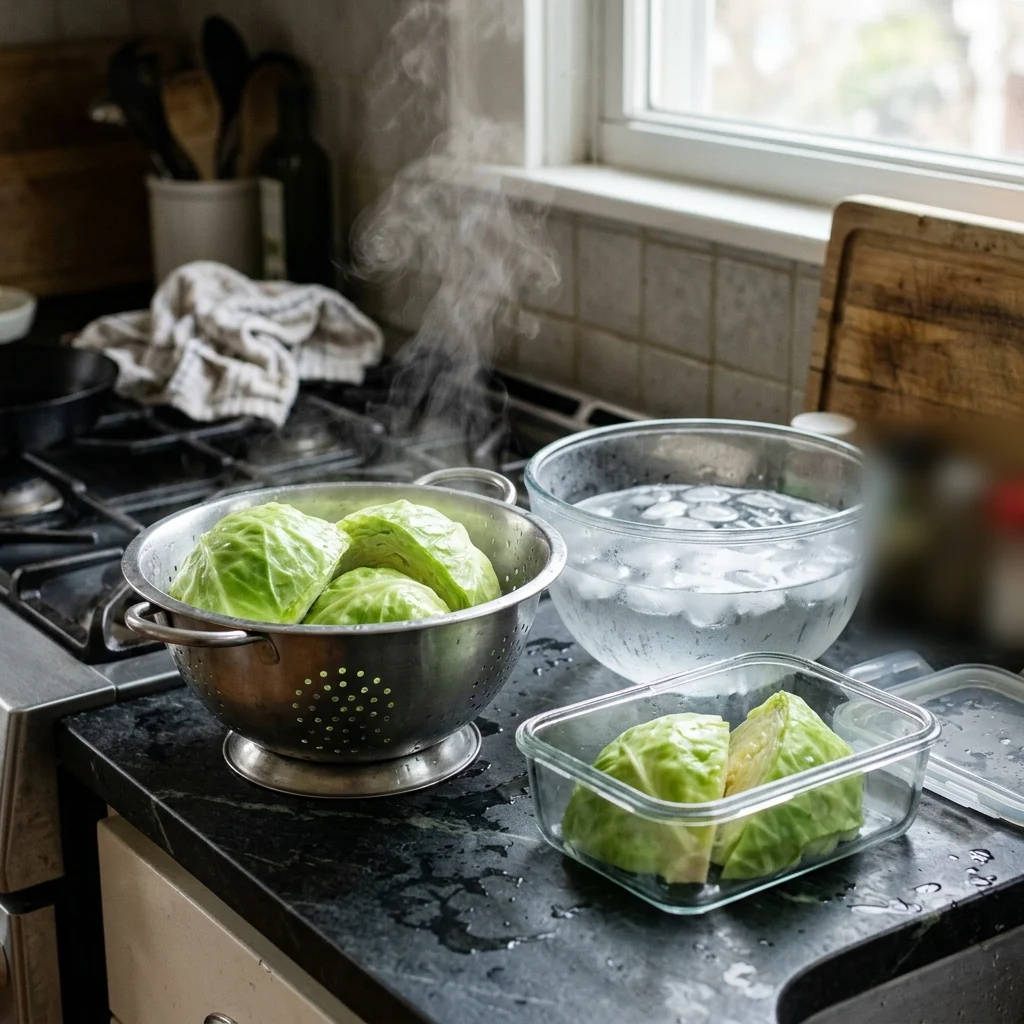
Blanch, cool fast, then pack with half an inch of headspace.
Can you store cabbage raw in the freezer?
No published method skips the blanching. Both the National Center for Home Food Preservation and Food Smart Colorado blanch first, and neither offers a raw option. The reason is quality rather than safety, because unblanched vegetables keep working in the freezer and lose flavour and texture. So give it the 90 seconds.
What happens to cabbage you store in the freezer
It comes out limp, since ice has already broken the cell walls. That suits cabbage soup, stuffed leaves and anything braised. Raw crunch, however, does not come back, which is exactly why the Center restricts frozen cabbage to cooked dishes. Plan the recipe before you fill the bag. McCormick stews whole allspice berries with fermented cabbage for the same reason, because the berries hold up in a long simmer.
How to tell if cabbage has gone bad
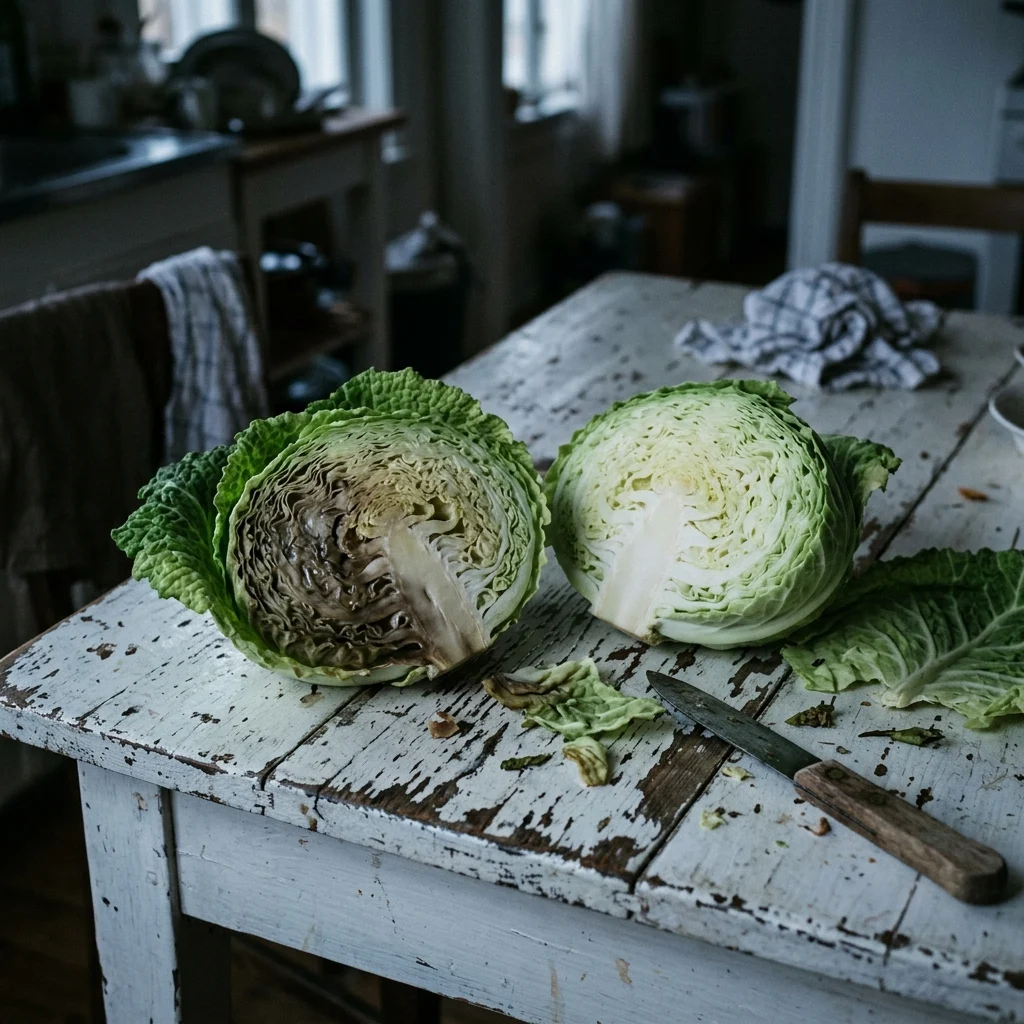
In fact, most of a sad-looking cabbage is still dinner. Black specks are not mold, and tired outer leaves peel off. A head that is soft right through, however, has gone. Here is what each stage means.
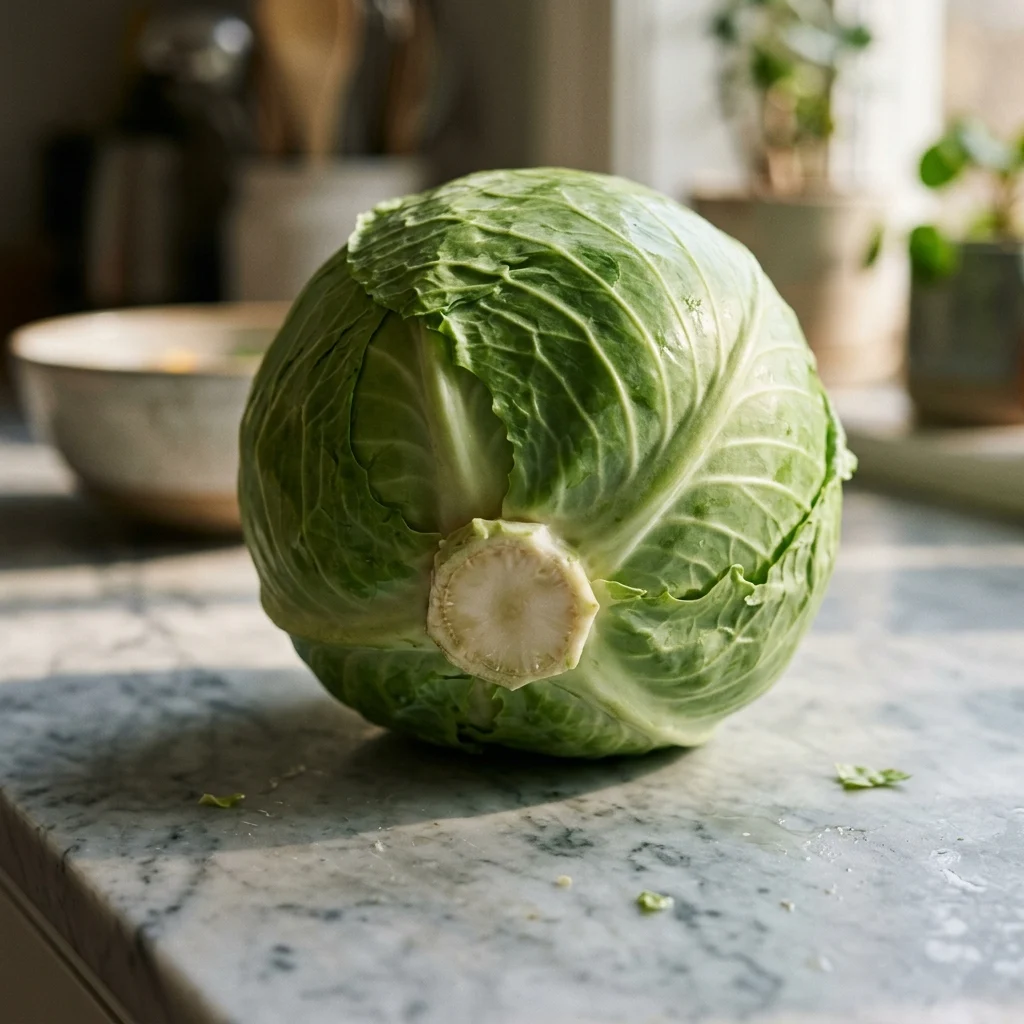
Verdict: use it
Firm cabbage with tight leaves
Heavy in the hand, squeaky, and so tight that nothing lifts. University of Minnesota Extension harvests at exactly this point, when the heads are compact and firm. Iowa State University Extension describes the ones worth buying the same way, crisp and firmly packed. So a head that still feels like that has not started to turn.
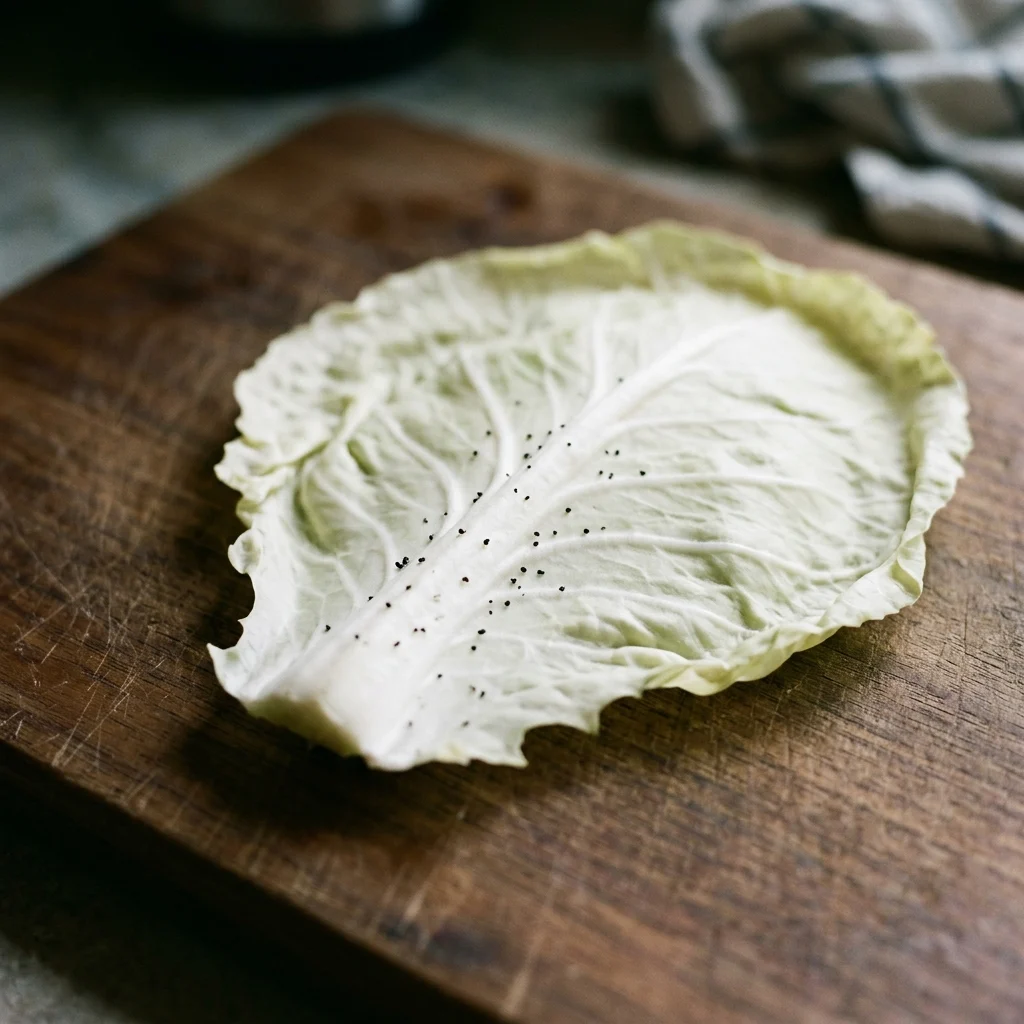
Verdict: use it
Cabbage with black specks
Tiny dark dots on the white midribs are pepper spot, not mold. University of Florida IFAS describes small dark circular or elongated spots on the midribs of the outer leaves. They are about the size of sesame seeds, 1 to 2 mm across. It adds the part that matters: no pathogens have been consistently isolated with this disorder. So it is safe to eat. Cut the specks out if they bother you, or simply ignore them.
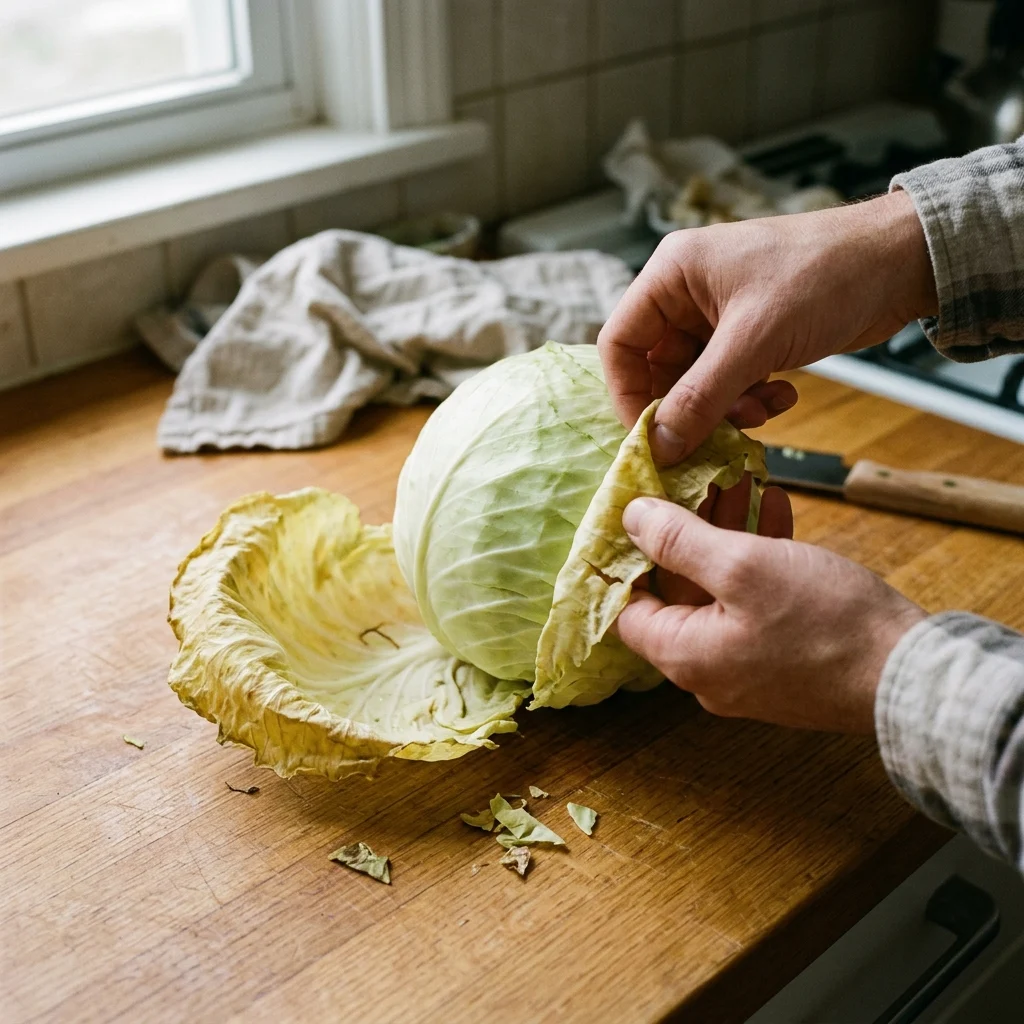
Verdict: peel it back
Cabbage with yellow, wilted or slimy outer leaves
The outer leaves are meant to go first, because that is their job. Purdue University notes that ethylene in storage causes yellowing and abscission of leaves, and UMass Extension adds wilting to that list. Food Smart Colorado simply says to discard damaged, bruised or tough outer leaves. So strip the bad layers off and check what is underneath. A firm, pale head under a slimy wrapper leaf is fine.
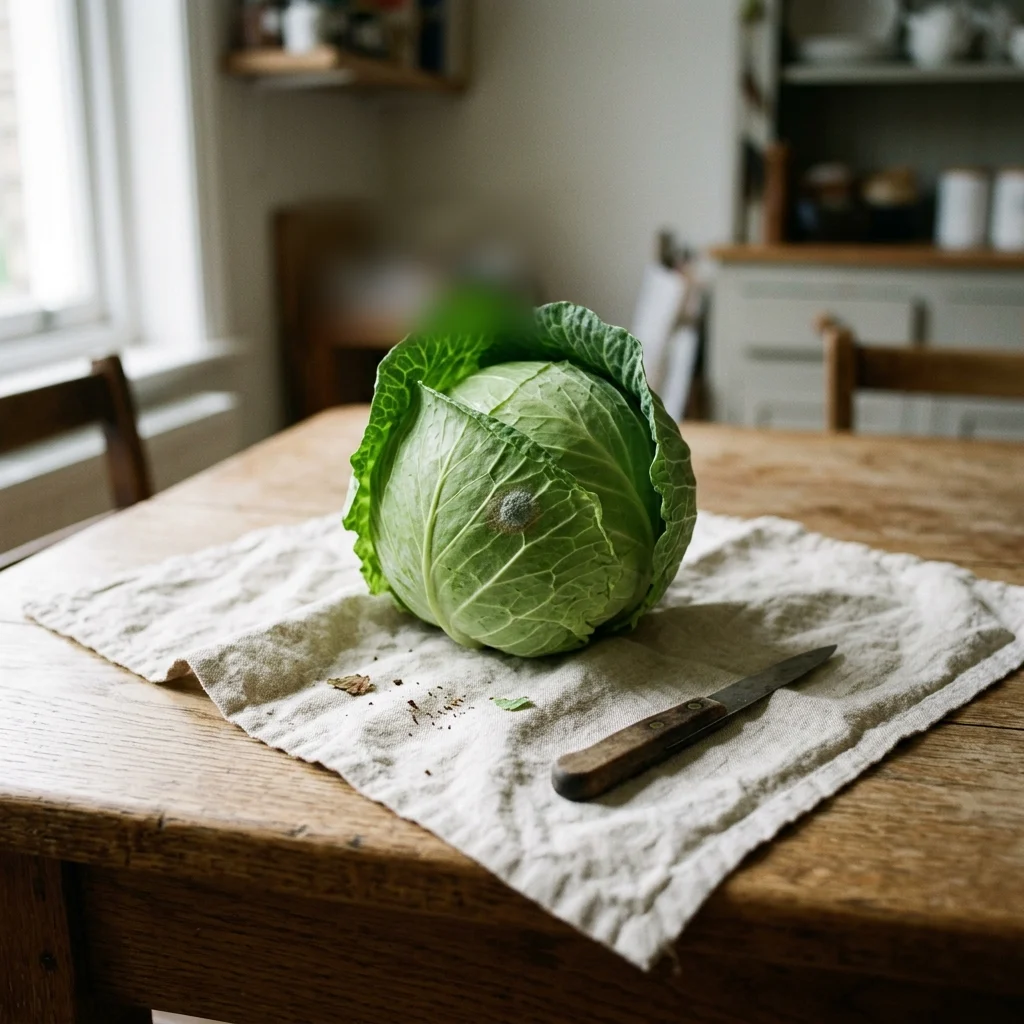
Verdict: cut an inch around it
A moldy spot on a firm cabbage
Cabbage is one of the few foods where trimming mold is the advice rather than the shortcut. UConn Extension puts cabbage among the firm fruits and vegetables, along with bell peppers and carrots. It tells you to cut at least one inch around and below the moldy area. The word firm is doing the work there, however. A head that has gone soft or wet no longer qualifies, so it goes in the bin instead.
Verdict: throw it out
Cabbage that is soft right through or smells bad
Softness that reaches past the outer leaves is rot, and the smell usually arrives with it. Purdue University names bacterial soft rot as the storage problem that follows Alternaria leafspot on cabbage. UConn Extension's one-inch trim does not cover this, since it applies to firm vegetables only. The FDA is blunt about the rest: throw away any produce that looks rotten. Then wipe the drawer out before the next head goes in.
Do the black specks on cabbage you store mean mold?
No, and the fridge is part of the reason you are seeing them. University of Florida IFAS says the exact cause of pepper spot is unknown. It looks like a mix of genetic and environmental factors instead. It also reports that the spots develop faster at 41°F than at either 32°F or 50°F. That is awkward, because 41°F is roughly where a home fridge sits. Cornell University describes the same disorder as physiological rather than a disease. It links the spots to salts or metals gathering at the stomata after high transpiration. In other words, it is a cosmetic fault with a long name. Mold looks nothing like it, since mold is raised, fuzzy and spreading rather than flat and freckled.
Cabbage substitutes
Out of cabbage, or did a head go over before you got to it? Then these will cover most of the job.
Substitute
Works best in
What changes
Napa cabbage
Slaws, stir-fries and dumplings
Softer and milder, so it cooks faster.
Brussels sprouts
Roasting and shredded salads
The same family, concentrated. Trim the bases.
Kale or collards
Braises, soups and stuffing
Tougher leaves, so give them longer.
Fennel or kohlrabi
Raw slaws and crunch
Crisp and sweeter, with no sulphur note.
Mistakes people make when they store cabbage
These are the ways people store cabbage that cost them the most, and each one has an easy fix.
Stripping the outer leaves off before the head goes in. They are the armour, so leave them on until you cook.
Washing the head before it goes in the drawer. Surface water invites rot, so wash it at the chopping board instead.
Keeping it in a dry cupboard, rather than the fridge. Cabbage wants cold and damp, so use the crisper.
Parking it next to the apples instead of away from them. Ethylene yellows the leaves, so give fruit its own drawer.
Cutting the head in half before you need it. A cut face dries out quickly, so keep it whole.
Binning a head because of black specks. That is pepper spot rather than mold, so trim it or ignore it.
Freezing shreds raw for slaw, although no method allows it. Blanch them first, because frozen cabbage is only for cooking.
Sources
Small-Scale Postharvest Handling Practices: A Manual for Horticultural Crops, Lisa Kitinoja and Adel A. Kader, University of California Davis Postharvest Technology Center, 4th edition, July 2002 and revised November 2003, on early cabbage at 32°F for 3 to 6 weeks, late cabbage for 5 to 6 months, and cabbage on the Do Not Wash list.
Storage Guidelines for Fruits and Vegetables, compiled by Eric de Long and revised by Stephen Reiners, Cornell Cooperative Extension Chemung County, on early cabbage at 3 to 6 weeks and late cabbage at 3 to 4 months at 32°F and 95% humidity, and on never letting stored produce freeze.
Optimal Storage Conditions and Ethylene Sensitivity of Fall Storage Crops, UMass Extension Vegetable Program, October 2011 and updated January 2018, on cabbage at 32°F with 98 to 100% humidity for 4 to 6 months and on high ethylene sensitivity causing leaf yellowing, wilting and abscission.
Produce Quality and Safety: Cabbage, J. Neibauer and E. Maynard, Purdue University, 2002, on 32°F and 95% humidity, up to 6 months, ethylene causing yellowing and abscission, splitting after rain, bacterial soft rot and wrapper leaf damage reducing shelf life.
Cabbage and Chinese Cabbage, HGIC 1301, Powell Smith, Nancy Doubrava and Barbara H. Smith, Clemson Cooperative Extension, updated January 2023, on refrigerating all harvested cabbage and on 34°F with 98% humidity for up to five months.
Selecting and Storing Fruits and Vegetables, HGIC 4038, E.H. Hoyle, revised by Adair Hoover and Gayle Willford, Clemson Cooperative Extension, revised January 2013, on 1 to 2 weeks in the refrigerator, 12 months frozen for cooked dishes, and produce lasting longer stored unwashed.
Storage Life of Vegetables, Rhoda Burrows, South Dakota State University Extension, updated October 2021, on cabbage at 32 to 36°F and 95 to 98% humidity for 1 to 6 months, on not washing before storage, and on standing the roots in moist sand.
Harvesting and Storing Home Garden Vegetables, University of Minnesota Extension, on harvesting when heads are compact and firm, on cold and moist storage at 32 to 40°F with 95% humidity, and on five months of storage life.
Harvest and Storage of Vegetables and Fruits, Shawn Olsen, Dan Drost and Teresa Hunsaker, Utah State University Extension, January 2015, on 1 to 2 weeks in the refrigerator, on burying the plant with the wrapper leaves pulled around the head, and on keeping fruit away from vegetables.
Cabbage, Spend Smart Eat Smart, Iowa State University Extension and Outreach, on choosing crisp, firmly packed heads that are heavy for their size, wrapping tightly for up to one week, and removing the wilted and thicker outer leaves at the point of use.
How to Use Cabbage, Food Smart Colorado, Colorado State University Extension, on a cold, moist place such as the vegetable drawer, on discarding damaged or tough outer leaves, and on blanching for about 2 minutes before freezing.
Freezing Cabbage or Chinese Cabbage, National Center for Home Food Preservation, University of Georgia, on trimming the coarse outer leaves, water blanching for 1 and a half minutes, half an inch of headspace, and frozen cabbage being suitable only as a cooked vegetable.
Pepper Spot (Gomasho) on Napa Cabbage, HS1101, Eric Simonne, Jeff Brecht, Guodong Liu and Monica Ozores-Hampton, University of Florida IFAS Extension, on 1 to 2 mm spots on the white midribs, on no pathogens being consistently isolated, on faster development at 41°F than at 32 or 50°F, and on the disorder being safe to eat.
Shades of Black: Storage Disorders of Cabbage, Thomas Björkman, Cornell University, 2009, on pepperspot being physiological rather than a disease and on salts or metals accumulating at the stomata after high transpiration.
Handling Food with Mold, Austin Goldberg, Daniela Avelino and Valerie Duffy, UConn Extension, April 2024, on cutting at least one inch around and below mold on firm vegetables such as cabbage, bell peppers and carrots.
Selecting and Serving Produce Safely, U.S. Food and Drug Administration, March 2024, on refrigerating cut produce, holding perishable produce at 40°F or below, and throwing away produce that looks rotten.
Storage times and safety advice on this page come from the sources above. Food safety depends on conditions I cannot see, so read the Disclaimer, and if in doubt, throw it out.
Other ingredient guides
Browse all guides
Share this guide
Never miss a guide
New ingredient guides when they go up, plus one storage tip worth knowing. Anything sponsored is labelled.

Emilly White