
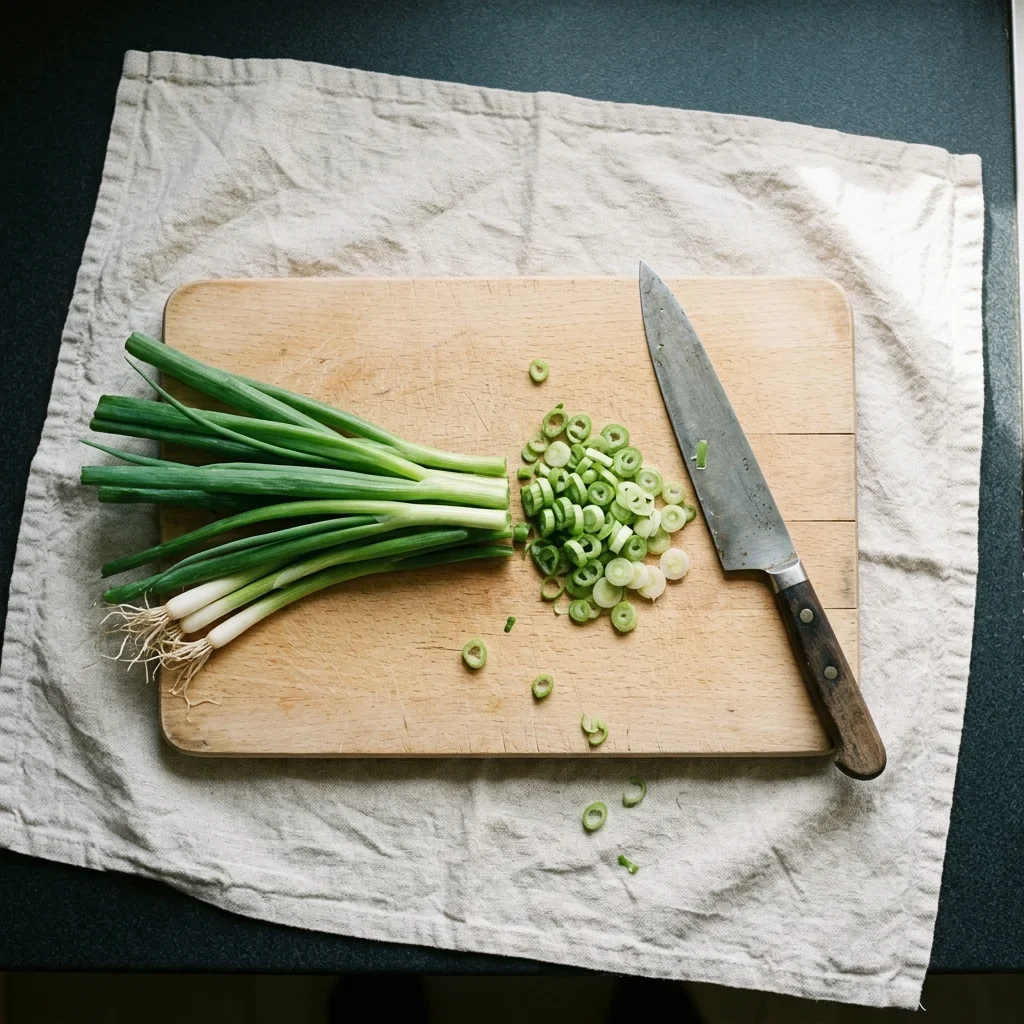
Not recommended
Nothing published supports it. They want 32°F, not room temperature
About 1 week
Bagged, or wrapped in a damp towel, in the crisper drawer
3 to 6 months
Chopped and frozen raw. No blanching needed at all
The short version: to store green onions well, keep them cold and damp. Bag them in the crisper, or stand them in a little water. Then use them within the week, since they are among the most perishable things you can buy.
Storage guidance from the UC Davis WIFSS production summary, UW-Madison Division of Extension and the UC Davis postharvest manual.
On this page
How to choose green onions that keep
Pick by the tops, because the tops fail first. A bunch with crisp, upright greens will still be crisp in a few days. A limp one, on the other hand, is already on its way out.

Crisp and upright keeps. The limp bunch is already on its way out.
Fresh, crisp, green tops. UW-Madison Division of Extension chooses onions with fresh, crisp, green tops. It avoids any that show yellowing, wilting or decay.
Clean white ends. University of Minnesota Extension keeps the test to two things, since it wants green tops and white ends.
Bruised tops are not a deal-breaker. UW-Madison Division of Extension says bruised tops will not affect the quality of the bulbs. That holds as long as the tops are removed.
Nothing yellow or decayed yet. The UC Davis WIFSS production summary names wilted, yellowed and decayed leaves as the result of improper storage. So those are the signs to read backwards at the shop.
How to store green onions so they last
To store green onions so they last, give them two things: hard cold and wet air. Almost nothing else in the fridge wants both, which is why the usual rules do not apply here.
How to store green onions in the fridge
Bagged or wrapped damp, in the crisper drawer. University of Minnesota Extension keeps it simple, since it puts green onions in a plastic bag and refrigerates them. The reason for the bag is the humidity figure. The UC Davis WIFSS production summary stores green onions at 32°F and 95 to 100 percent relative humidity. It gives the reason as simple perishability. The UC Davis postharvest manual gives the same conditions. That is wetter air than almost anything else in your fridge wants. So the damp towel and the jar of water are both ways of getting closer to it. The spinach guide uses a damp towel for the same reason.
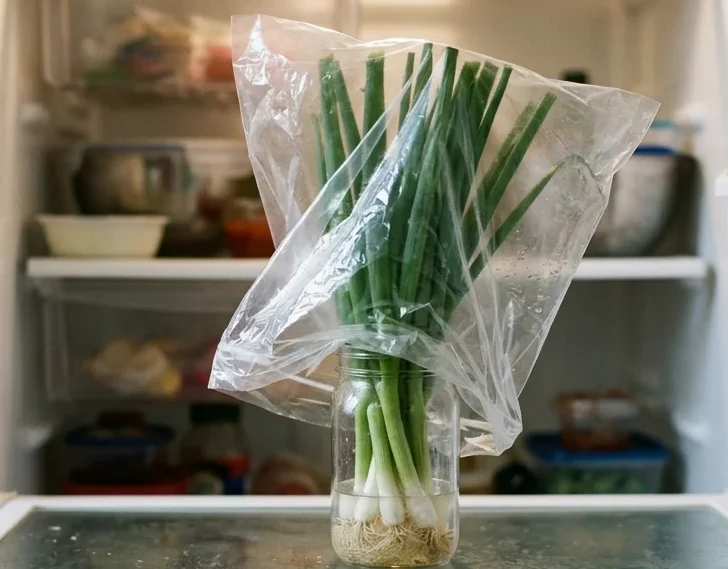
Bagged, wrapped damp or stood in water. All three chase the same humid air.
How long can you store green onions?
About a week at home, and the published figures sit close together. UW-Madison Division of Extension says to use them within 6 to 7 days of harvest. The UC Davis WIFSS production summary gives green onions a short shelf life of about seven to ten days. Clemson Cooperative Extension is the most generous, at 1 to 2 weeks in the refrigerator. University of Minnesota Extension gives no number at all, and simply says to use them as soon as possible. Only the commercial figure goes further. The UC Davis postharvest manual gets 3 to 4 weeks out of them at 32°F. No home fridge holds that, so take a week as the real number.
In other words, a week is the plan and two is lucky. The UC Davis manual also puts green onions in its most perishable class, under 2 weeks of potential storage life. So buy them for the week you need them, rather than in bulk.
Should you store green onions in water or in a damp towel?
Either works, and for the same reason. Both methods are attempts at very humid air, which is what the published target asks for. Here is the detail that explains why water is safe for these and not for most produce. The UC Davis postharvest manual lists green onions among the crops that should be top-iced. That means packed with ice directly on them. It allows that only for products that are water tolerant and not chilling sensitive. Green onions sit on that list beside carrots, sweet corn, lettuce, spinach, radishes and broccoli. The UC Davis WIFSS production summary describes the same practice, where top ice under plastic film keeps moisture high. So a jar with an inch of water in the fridge is not a risky trick for a scallion. It would be a terrible one for a zucchini or a berry. The asparagus guide stands its spears in water for the same reason. No extension source I could open compares the jar against the towel, though, so pick whichever fits your fridge.
Can you store green onions on the counter?
Not for long, and nothing published recommends it. Every source here puts green onions in the fridge, and the commercial figure of 32°F tells you why. Illinois Extension does put the bulbs on a windowsill, but for a different purpose. It saves the white part with the roots and stands it in a shallow dish of water. Put that in a sunny window, then wait for new greens to emerge from the top of the bulb. That is growing rather than storing, so treat the windowsill jar as a small crop. The fridge is still the larder. If a jar of them stood out all evening, the food left out overnight guide covers that.
Should you store green onions washed or unwashed?
Unwashed, then rinsed at the board. Clemson Cooperative Extension brushes off as much dirt and debris as possible. Then it wipes produce clean with a paper towel before storing it. It washes thoroughly only when you are ready to use it. For green onions specifically, it asks you to wash carefully before eating. University of Minnesota Extension gives the method, since it rinses them under running water. The FDA agrees on plain water, because soap, detergent and commercial produce washes are not recommended. Dry them afterwards with a clean cloth or paper towel, which it says further reduces bacteria. Grit hides in the layers at the white end, so that is where to look.
Can you freeze green onions?
Yes, and this is the easiest freezer job on the site, because there is no blanching. UW-Madison Division of Extension says green onions can be frozen without blanching, which it calls heat treatment. Clemson Cooperative Extension gives frozen green onions 3 to 6 months.
How to store green onions in the freezer
Chop them, dry them and freeze them raw. UW-Madison Division of Extension freezes green onions without any heat treatment at all. It warns you what that costs, though, since freezing will intensify the flavor and may affect the texture. Trim the roots and any tired leaf tips first. Then wash them under running water and dry them with a clean towel, as the FDA asks. After that, slice the white and green parts and pack them into a container or bag. The same source suggests where they end up, as frozen green onions are ideal for casseroles and soup broths. Clemson Cooperative Extension gives the bag 3 to 6 months in the freezer.

Chopped, dried and frozen raw. These need no blanching at all.
Does it matter whether you store green onions, scallions or spring onions?
No, and the published sources treat the names as interchangeable. The UC Davis WIFSS production summary calls the crop green onions. Then it lists salad onions, spring onions and green bunch onions as other names for it. UW-Madison Division of Extension says they are often called scallions or summer onions. The botany is a little looser than the labels suggest. UC Davis describes green onions as Allium cepa harvested before the bulb has fully developed. It also notes that many hybrids cross Allium cepa with A. fistulosum, the non-bulb-forming Japanese bunching onion. You will read online that a spring onion has a rounder bulb than a scallion. No authority I could open draws that line, though, so store whichever one you bought the same way.
What happens to green onions you store in the freezer
The flavour gets stronger and the texture gives way. UW-Madison Division of Extension puts it in one line, since freezing will intensify the flavor and may affect the texture. So a thawed scallion will not stand up as a garnish. Use it where it melts into something instead. That is why the same source sends frozen green onions to casseroles and soup broths. The onions guide covers the dry-skinned kind, which keeps for months instead.
How to tell if green onions have gone bad
Most of a tired bunch is still usable. Yellow tips come off, and a limp stalk still cooks, so really only slime ends a bunch. Here is what each stage means.
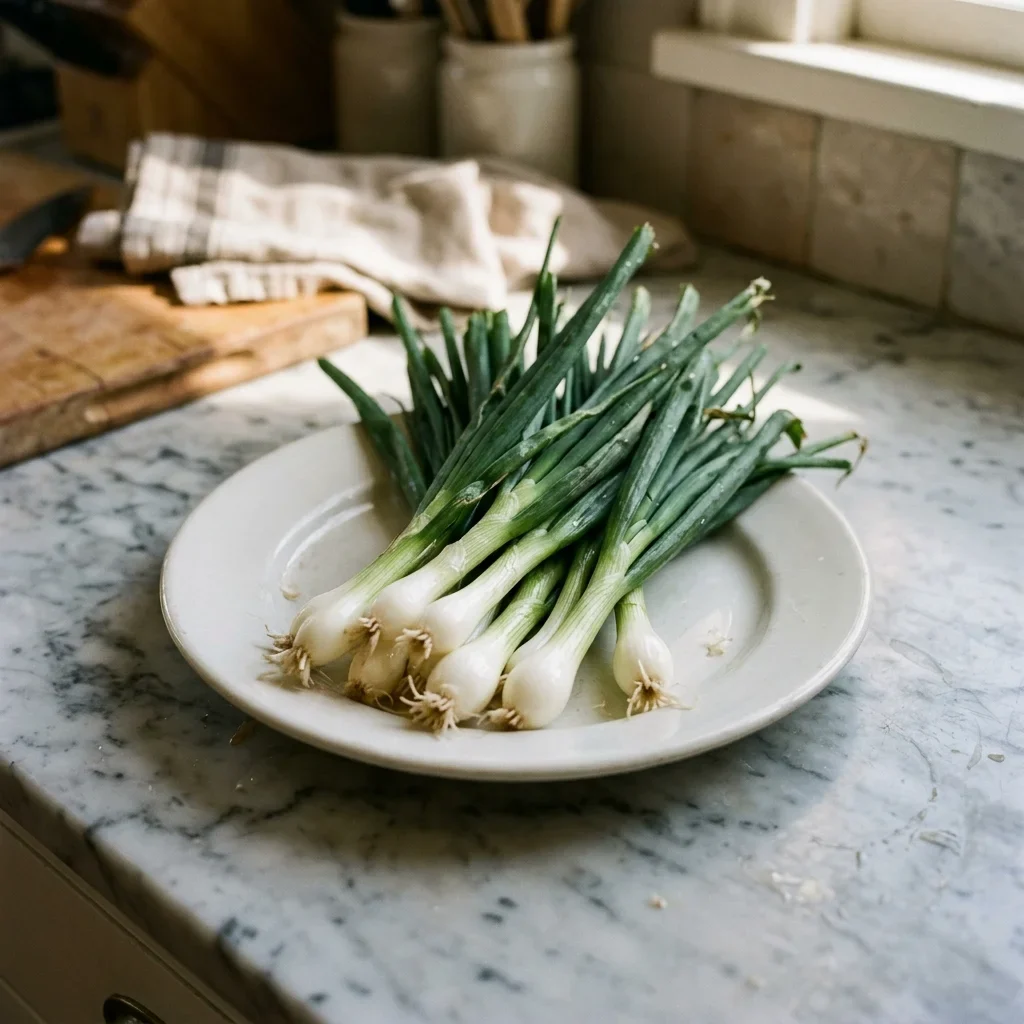
Verdict: use them
Crisp, bright green onions
Upright, firm greens and clean white ends. UW-Madison Division of Extension looks for exactly that, with fresh, crisp, green tops. University of Minnesota Extension adds the other half, since it wants green tops and white ends. So eat them, and keep the rest cold.
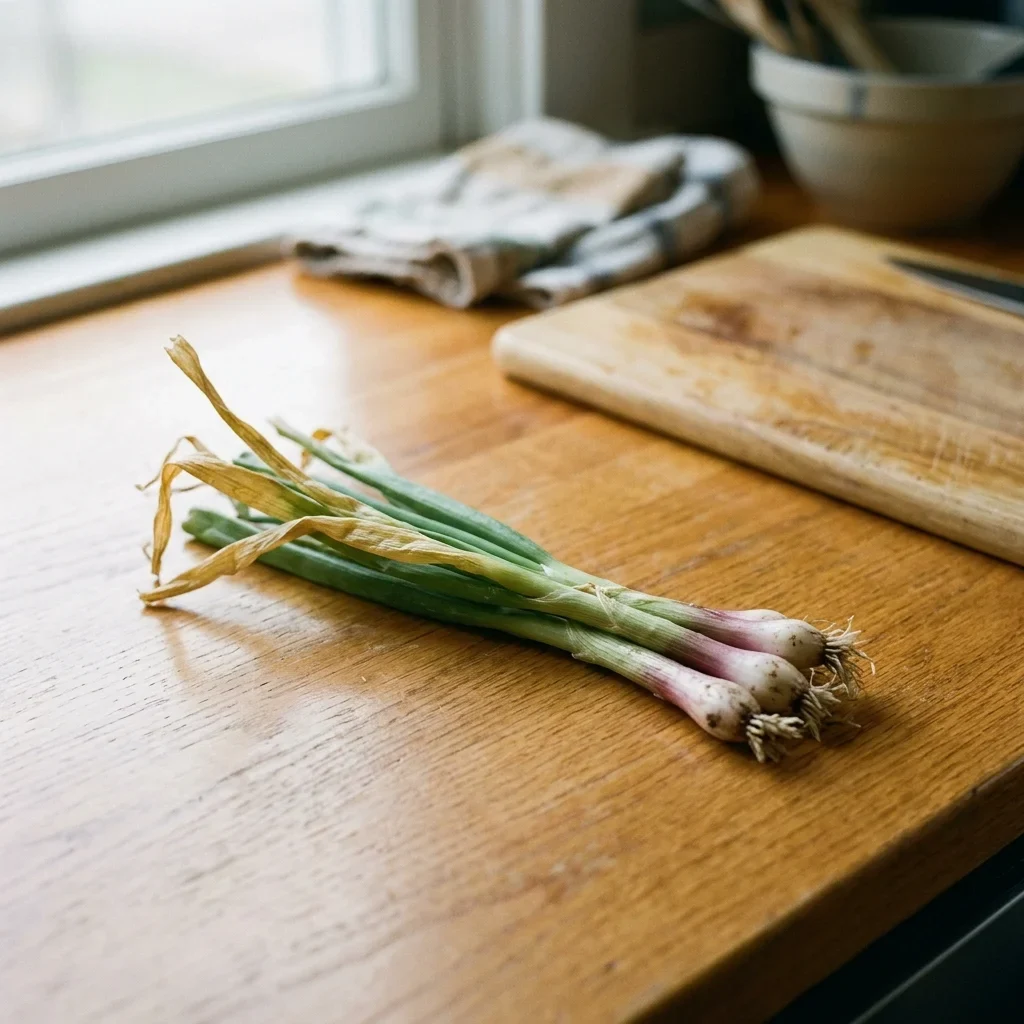
Verdict: trim and use
Green onions with yellow tips
Yellowing starts at the tips and works down. The UC Davis WIFSS production summary lists wilted, yellowed and decayed leaves together as the result of improper storage. In other words, yellow is a storage symptom rather than an age limit. So snip the yellow off and use the rest, then move the bunch somewhere colder and damper.

Verdict: cook with them
Limp or wilted green onions
A stalk that flops has lost water, which is the whole reason for the humidity target. It is still food, though, and heat hides the texture. So chop it into a soup, an omelette or a stir-fry rather than onto a salad. Water contact is not a risk here either, since the UC Davis manual counts green onions as water tolerant.
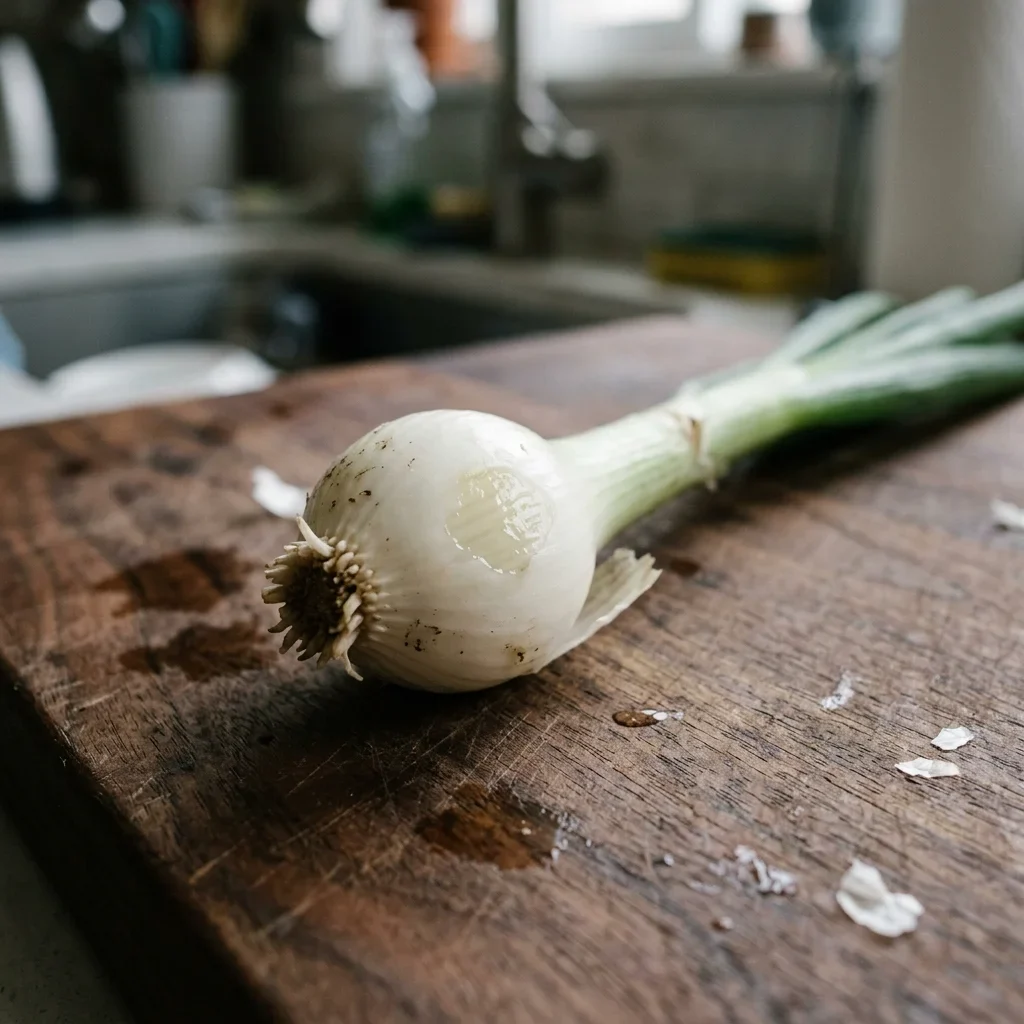
Verdict: peel that layer off, or let it go
Green onions with a slimy outer layer
Slime on the white end is where the decay is. Be honest about the limits here. No extension source I could open says whether peeling it off makes the rest safe. The nearest thing comes from UW-Madison Division of Extension. It says bruised tops will not affect the quality of the bulbs if the tops are removed. That is about bruising rather than slime, though. UConn Extension does not name green onions in either of its mold lists. So there is no one-inch trim to fall back on here either. Here is the practical line. If one outer layer slips off, and what is underneath is firm and dry, use it today. If the slime goes deeper than a layer, let the bunch go.

Verdict: throw them out
Green onions that have gone soft and wet through
When the white end is soft all the way through and the greens have collapsed, it is over. The UC Davis WIFSS production summary uses the word decayed for this, alongside wilted and yellowed. Here again, no extension source I could open gives a smell test for green onions. So judge it by the feel of the white end rather than by the smell. UConn Extension puts soft produce in the discard-the-whole-item class rather than the trim class. A bunch like this is as soft as produce gets. Then wash out the drawer or the jar before the next bunch goes in.
Is it safe to store green onions and eat them raw?
Usually yes, although green onions have a food safety history worth knowing. In 2003 the CDC reported a hepatitis A outbreak traced to green onions at one restaurant in Monaca, Pennsylvania. About 555 people were identified as cases, and three died. The onions had been grown in Mexico. The CDC explains how that can happen. It can arrive through contact with infected workers, or through contaminated water during irrigation, rinsing, cooling and icing. That last word matters, because icing is exactly the practice that keeps green onions fresh. The FDA's advice at the time was simple. Anyone worried about hepatitis A from green onions should cook them thoroughly before eating. Note that the advice was to cook them, rather than to wash them harder. For an everyday bunch, rinse it well and eat it raw if you like. If you are cooking for someone with a weak immune system, cook the onions instead.
Green onion substitutes
Out of green onions, or did the bunch go slimy before you got to it? Then these will stand in.
Substitute
Works best in
What changes
Chives
Garnish and finishing
Milder, so use a little more.
Leeks
Soups and braises
Sweeter, although they need cooking.
Shallots
Dressings and sauces
Sharper raw, so slice them thin.
Red onion
Salads and salsas
Much stronger, so rinse the slices.
Mistakes people make when they store green onions
These are the ways people store green onions that cost them the most, and each one has an easy fix.
Leaving the bunch loose in the fridge. Dry air wilts and yellows them, so bag them or wrap them damp.
Keeping them on the counter all week. Nothing published supports that, so use the fridge instead.
Buying two bunches because they were cheap. These are among the most perishable things in the shop, so buy for the week.
Washing them before they go in. Wipe the dirt off instead, then rinse them at the board.
Blanching them before freezing. They need no heat treatment, so freeze them raw.
Freezing them wet. Dry them with a clean towel first, as the FDA asks.
Scattering them raw for someone with a weak immune system. Cooking is the safer call there.
Sources
Green Onions: production summary, Western Institute for Food Safety and Security, University of California Davis, 2016, funded in part by the FDA, on green onions being Allium cepa harvested before the bulb forms, on salad onions, spring onions and green bunch onions as other names, on hybrids crossing Allium cepa with A. fistulosum, on a shelf life of about seven to ten days, on storage at 32°F and 95 to 100 percent relative humidity, on wilted, yellowed and decayed leaves from improper storage, and on top ice under plastic film.
Small-Scale Postharvest Handling Practices: A Manual for Horticultural Crops, Lisa Kitinoja and Adel A. Kader, University of California Davis Postharvest Technology Center, 4th edition, July 2002 and revised November 2003, on green onions at 32°F with 95 to 100% humidity for 3 to 4 weeks, on green onion in the most perishable class at under 2 weeks, and on green onions among the water tolerant, non-chilling-sensitive crops that should be top-iced.
Green Onion, Veggie Bites, Amanda Miller, FoodWIse, University of Wisconsin-Madison Division of Extension, Fond du Lac County, on choosing fresh, crisp, green tops and avoiding yellowing, wilting or decay, on bruised tops not affecting the quality of the bulbs once removed, on refrigerating and using within 6 to 7 days of harvest, on freezing without blanching, on freezing intensifying flavour and affecting texture, and on scallions and summer onions as other names.
Green onions (scallions), Real Life Good Food, University of Minnesota Extension, on choosing green onions with green tops and white ends, on a plastic bag in the refrigerator, on using them as soon as possible, and on rinsing under running water.
Selecting and Storing Fruits and Vegetables, HGIC 4038, E.H. Hoyle, revised by Adair Hoover and Gayle Willford, Clemson Cooperative Extension, revised January 2013, on green onions and scallions keeping 1 to 2 weeks refrigerated and 3 to 6 months frozen, on washing carefully before eating, and on brushing dirt off and wiping produce clean rather than washing it before storage.
Regrowing Scrap Veggies, Eat.Move.Save, University of Illinois Extension, on saving the white part of green onions with the roots, standing it in a shallow dish of water in a sunny window, and new greens emerging from the top of the bulb.
Hepatitis A Outbreak Associated with Green Onions at a Restaurant: Monaca, Pennsylvania, 2003, Morbidity and Mortality Weekly Report, Centers for Disease Control and Prevention, November 2003, on approximately 555 cases and three deaths, on the green onions being grown in Mexico, on contamination through infected workers or contaminated water during irrigation, rinsing, processing, cooling and icing, and on the FDA advising consumers to cook green onions thoroughly.
Selecting and Serving Produce Safely, U.S. Food and Drug Administration, March 2024, on soap, detergent and commercial produce washes not being recommended, on washing under running water, and on drying produce with a clean cloth or paper towel to further reduce bacteria.
Handling Food with Mold, Austin Goldberg, Daniela Avelino and Valerie Duffy, UConn Extension, April 2024, on trimming an inch from firm fruits and vegetables and discarding soft ones whole.
Storage times and safety advice on this page come from the sources above. Food safety depends on conditions I cannot see, so read the Disclaimer, and if in doubt, throw it out.
Other ingredient guides
Browse all guides


Share this guide
Never miss a guide
New ingredient guides when they go up, plus one storage tip worth knowing. Anything sponsored is labelled.

Emilly White