
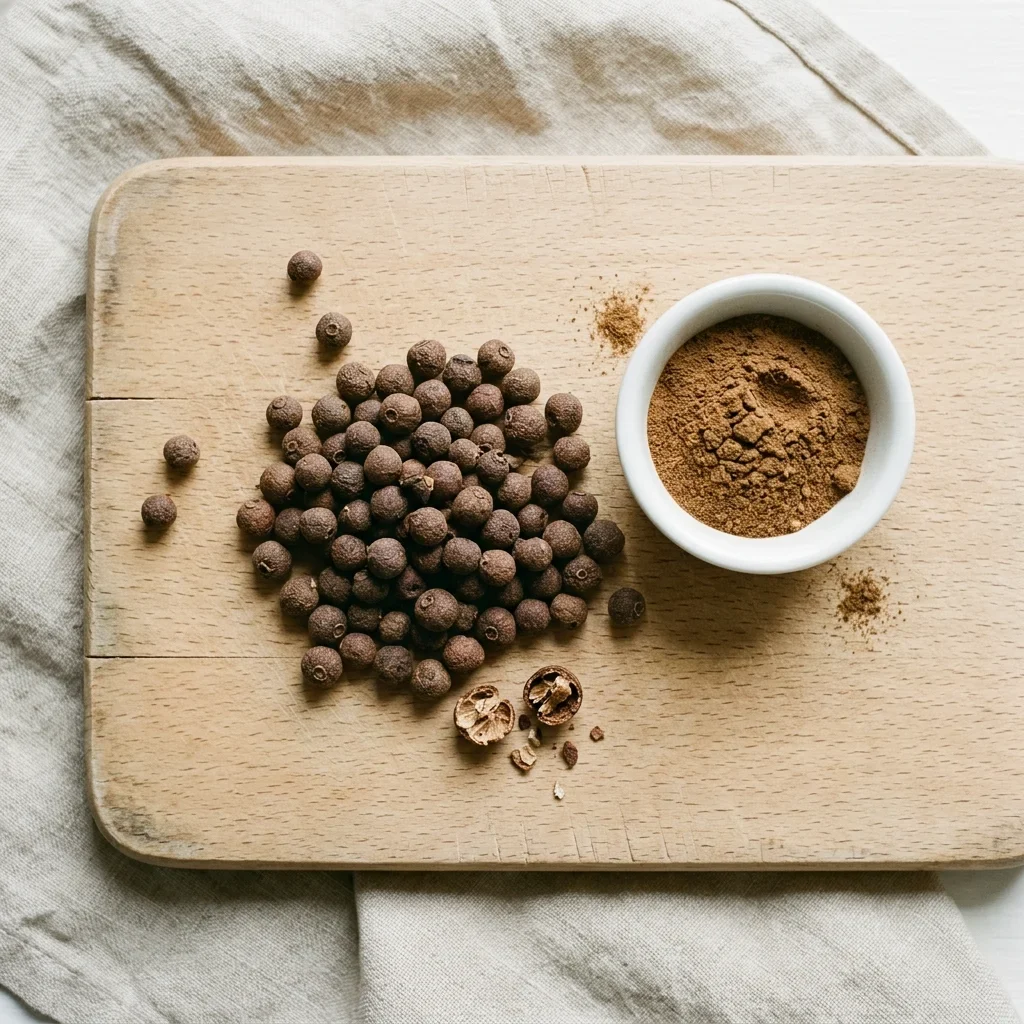
3 to 4 years
Airtight, dark, away from the stove. Crush them as you need them
2 to 3 years
The same jar rules, though the aroma goes first
Disputed
NDSU's chart says it extends shelf life. Its own column warns about moisture
The short version: to store allspice well, keep it airtight, dark and cool. Buy the berries if you have a grinder, because whole allspice holds its oils for years. The ground jar fades sooner, though. Then crush what a recipe needs, and smell it before you trust the rest.
Shelf lives here come from NDSU Extension and Clemson Cooperative Extension. The reason spices fade comes from Utah State University Extension, while the pest figures come from UW-Madison Division of Extension.
On this page
What to check before you store allspice
Two questions settle it, and the cupboard is only the second one. First, berries or powder? Then, is the jar airtight and out of the light? So answer those before you look for a date on the lid.
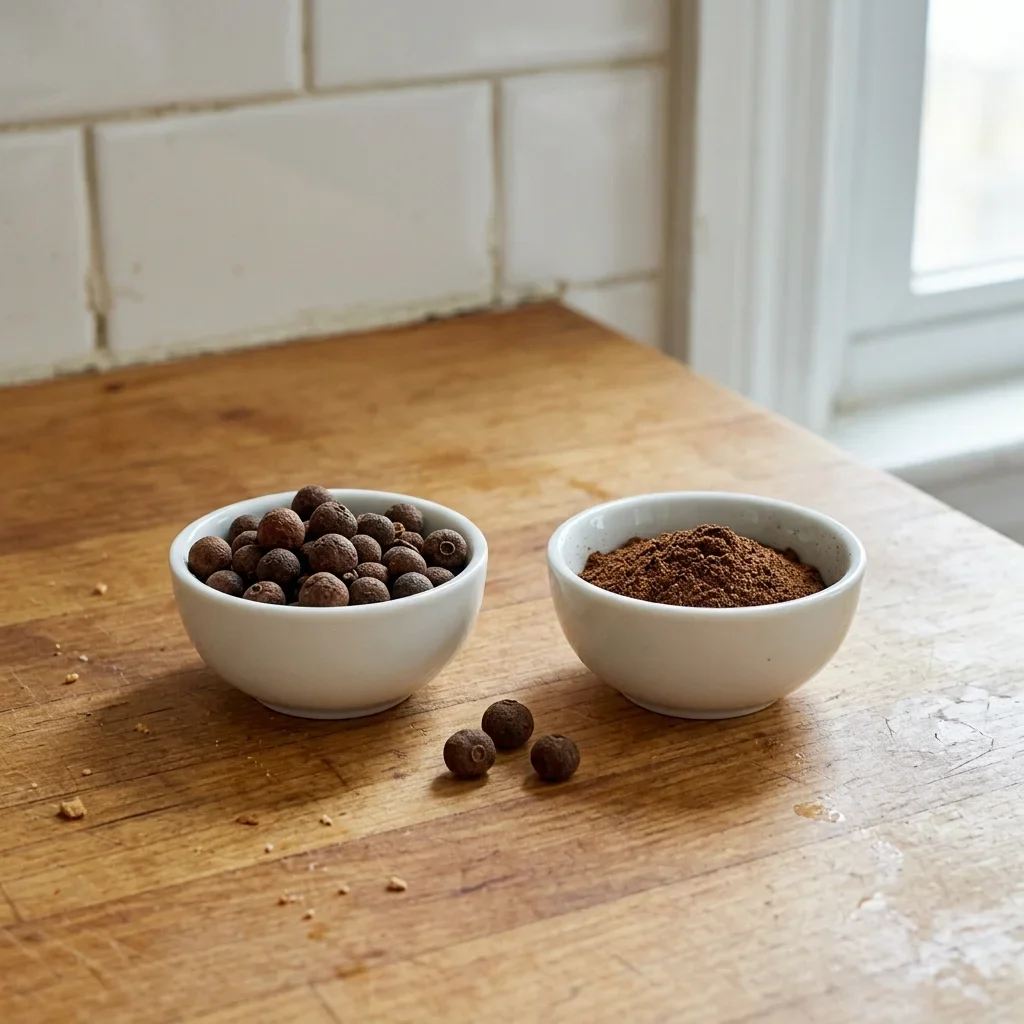
Berries for anything that simmers. Ground for anything that bakes.
Berries last longer, so buy them whole where you can. McCormick lists whole allspice by name among the whole spices it gives 3 to 4 years. It gives ground spices 2 to 4 years instead. NDSU Extension runs on the same lines. It gives whole spices 3 to 4 years, while ground spices get 2 to 3.
What fades is an oil, not a powder. Utah State University Extension explains it, because it says the active components of spices and herbs are plant oils. As oils they can oxidize to lose flavor and color, it adds. So an airtight jar is doing a real job, rather than just keeping the shelf tidy.
The spot matters as much as the lid. Clemson Cooperative Extension says storage areas near oven ranges, hot water pipes or heating ducts should not be used. Heat and moisture can otherwise cause food to lose its quality more rapidly, it explains. McCormick names the worst shelf in a kitchen too. Avoid that little ledge at the top of your stove, it says.
A cracked lid invites company. Clemson lists spices among the foods where insect infestation can occur in any home. It also tells you to avoid buying damaged packages. Texas A&M AgriLife shows how little room a beetle needs. Newly hatched larvae can enter food packaging through very small holes, it says. Minute seams around lids of spice containers count as holes, too.
How to store allspice so it keeps its punch
To store allspice so it keeps its punch, keep air, light, heat and damp away from it. Those four come up in every source we opened, although none of them lists all four in one line. The reason runs underneath all of it, because the flavor lives in a volatile oil.
How to store allspice in the cupboard
In a sealed jar, in a dark cupboard, well away from the stove. NDSU Extension says it in one sentence. Store spices in airtight containers in dry places away from sunlight and heat, it instructs. Clemson Cooperative Extension then lists the spots to avoid, which are near oven ranges, hot water pipes or heating ducts. Its pantry chart assumes tightly sealed or airtight containers throughout. So the jar it came in is fine, as long as the lid still seals. A closed cupboard also beats an open rack, because McCormick says spices will last longer in a dark cabinet.
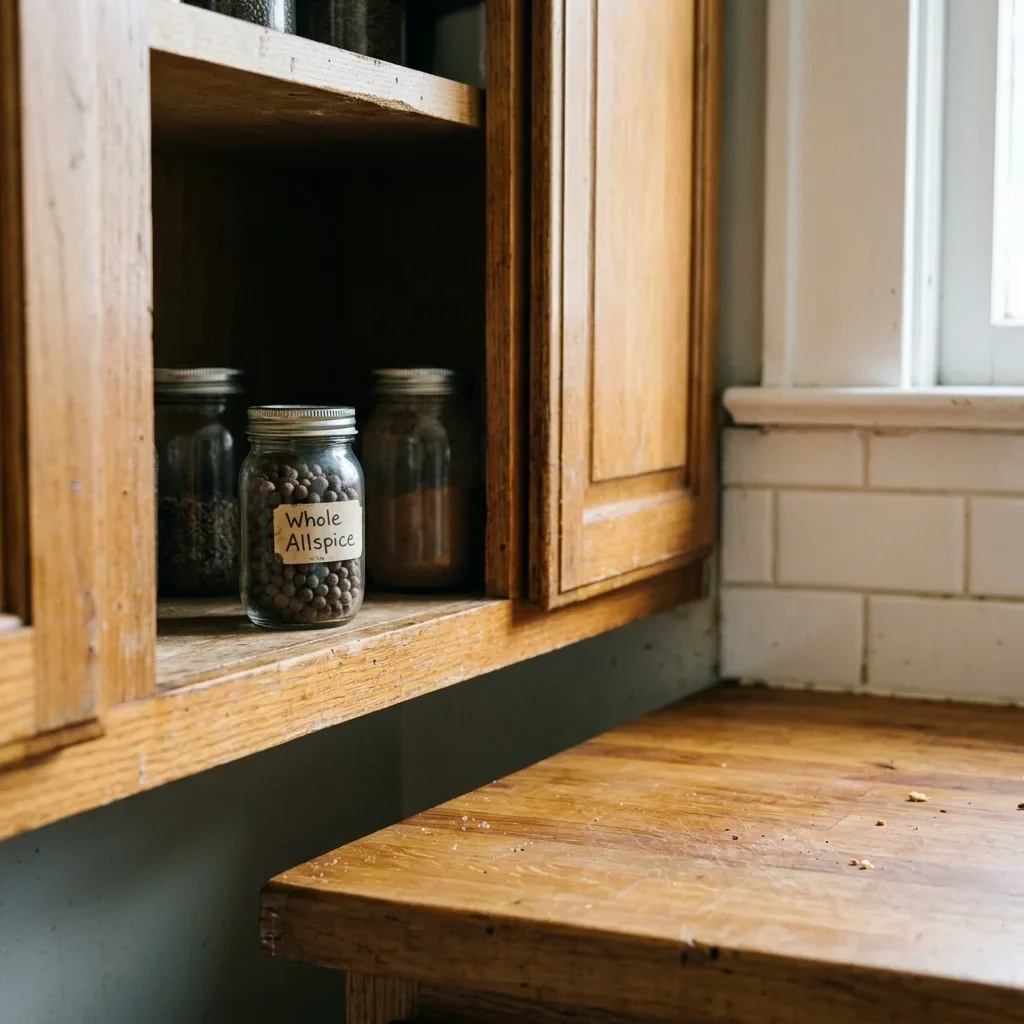
Sealed, dark, and nowhere near the stove or the kettle.
How long can you store allspice?
Three to four years for the berries, and two to three for the powder. Those are NDSU Extension figures, and McCormick gives whole spices the same 3 to 4 years. The charts drift apart after that, though. Clemson's pantry factsheet stretches whole spices to 4 to 5 years. Its own food selection factsheet, meanwhile, cuts whole spices to 2 years and ground to 6 months. So one university publishes a four-fold range for the same jar. That is a fair warning about how firm these numbers are.
So treat the shorter figures as the real ones, and let your nose settle it. NDSU Extension asks for exactly that. Check aroma at the times listed, it says, then replace the jar if it has faded. In other words, the chart tells you when to check rather than when to bin. A jar of berries from three years ago can easily beat a ground jar from the spring.
Should you store allspice whole or ground?
Whole, unless you only ever bake with it. The berries keep longer, and they also behave differently in a pot. McCormick sends whole berries to slow-cooked stews, braises, mulling and pickles. Whole berries are less intense than the ground form, it explains, while ground spices are more intense than whole berries. So the powder is for cakes and custards, whereas the berries are for anything that simmers. It also notes that whole allspice is stewed with sauerkraut. That is one more reason to keep a jar near the cabbage. The trade is a grinder, then, and about ten seconds.
How to store allspice in a pumpkin spice blend
Give the blend the shorter window, because that is where the charts land. McCormick lists its pumpkin pie spice as a blend of four ground spices. Those are cinnamon, ginger, nutmeg and allspice. So the allspice in your Halloween baking is probably in two jars at once. The published shelf lives for a blend do not match, though. NDSU Extension gives herb and spice blends 6 months, while McCormick gives most seasoning blends 1 to 3 years. That is the widest gap here, so smell the blend rather than trusting either figure. If you mix your own, McCormick says to whisk the ground spices together. Then store them in an airtight spice jar. For the pies and party food they end up in, see how to store Halloween leftovers.
How to store allspice you ground yourself
Grind what the recipe needs, then leave the rest as berries. No source we opened gives a separate shelf life for home-ground allspice, so we are not going to invent one. The direction is clear enough, since ground spices carry the shorter figure in every chart here. McCormick explains why grinding to order helps. Crushing whole seeds immediately before cooking releases the essential oils at peak freshness, it says. So a jar you grind ahead starts losing those oils the moment you fill it. Keep it airtight all the same, and use it first.
Can you store allspice in the freezer?
Two NDSU pages disagree, which is worth saying out loud. Its Food Storage Guide says spices can be stored in the freezer to extend shelf life. Its Prairie Fare column says not to freeze them, since that can introduce moisture into the containers. So one institution argues both ways, and neither page is retired. The freezer has a second, separate use here, though, because it kills pantry beetles.
How to store allspice in the freezer
Seal it twice, and let it warm up before you open it. NDSU Extension permits the freezer, since its chart says spices can be stored there to extend shelf life. The worry in its own Prairie Fare column is condensation, because freezing can introduce moisture into the containers. So the answer is a barrier. Utah State University Extension suggests it directly. Often the entire spice container can be sealed in jars or foil-lined bags, it notes. The same page warms food up out of the freezer before repacking it. The rice guide follows that step too.
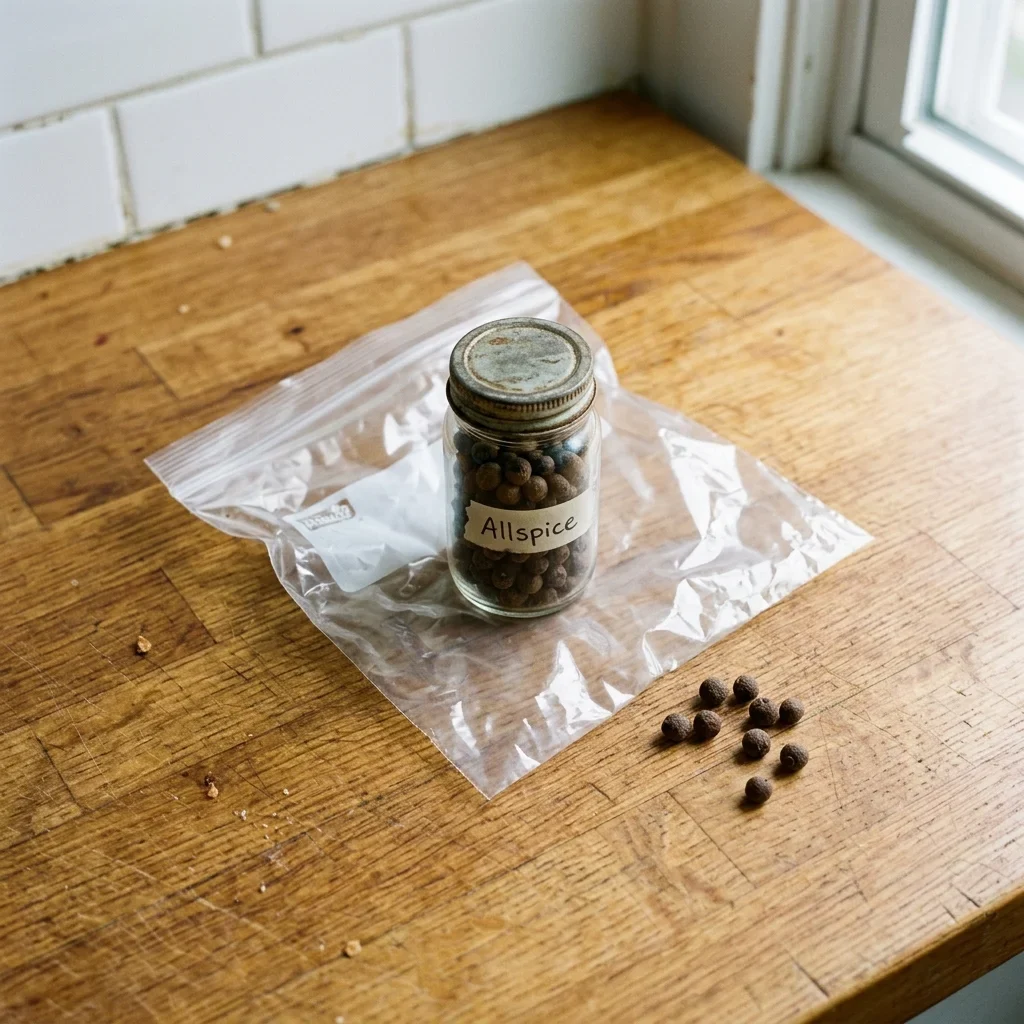
Into the freezer only if the jar is sealed inside something else.
Can you store allspice in the freezer to kill pests?
Yes, and that is the freezer's clearest use for a spice. UW-Madison Division of Extension gives two ways to treat an infested product. Heating it to 140°F for two to three hours kills all life stages. Freezing at 20°F or less for 48 hours does the same. Texas A&M AgriLife sets a colder, longer bar, since it freezes infested material at 0°F for six days. Most home freezers sit at 0°F, so that is the figure you can actually meet. Even so, both pages would rather you threw the infested jar away than treated it. So treat the jars you think are clean, and bin the one with the holes.
What happens to allspice you store in the freezer
Very little, provided no water reaches it. Nothing we opened reports flavor loss from cold on its own. The hazard they name is condensation, since NDSU's Prairie Fare column says freezing can introduce moisture into the containers. Utah State University Extension follows that through. Dried foods pick up moisture from the air and then mold or spoil, it says. So a sealed jar is fine in the freezer, while a loose one is a gamble. The cold is not what costs you the spice, in other words. The open lid is.
How to tell if allspice has gone bad
Allspice does not spoil the way a perishable does. So four of the five stages below are about flavor, and only the last is a bin job. McCormick says spices do not become moldy or rotten the way fresh produce does. It is better to think of them as going not good rather than bad, it adds. Pests and damp are the exception, though. Here is what each stage looks like, then.
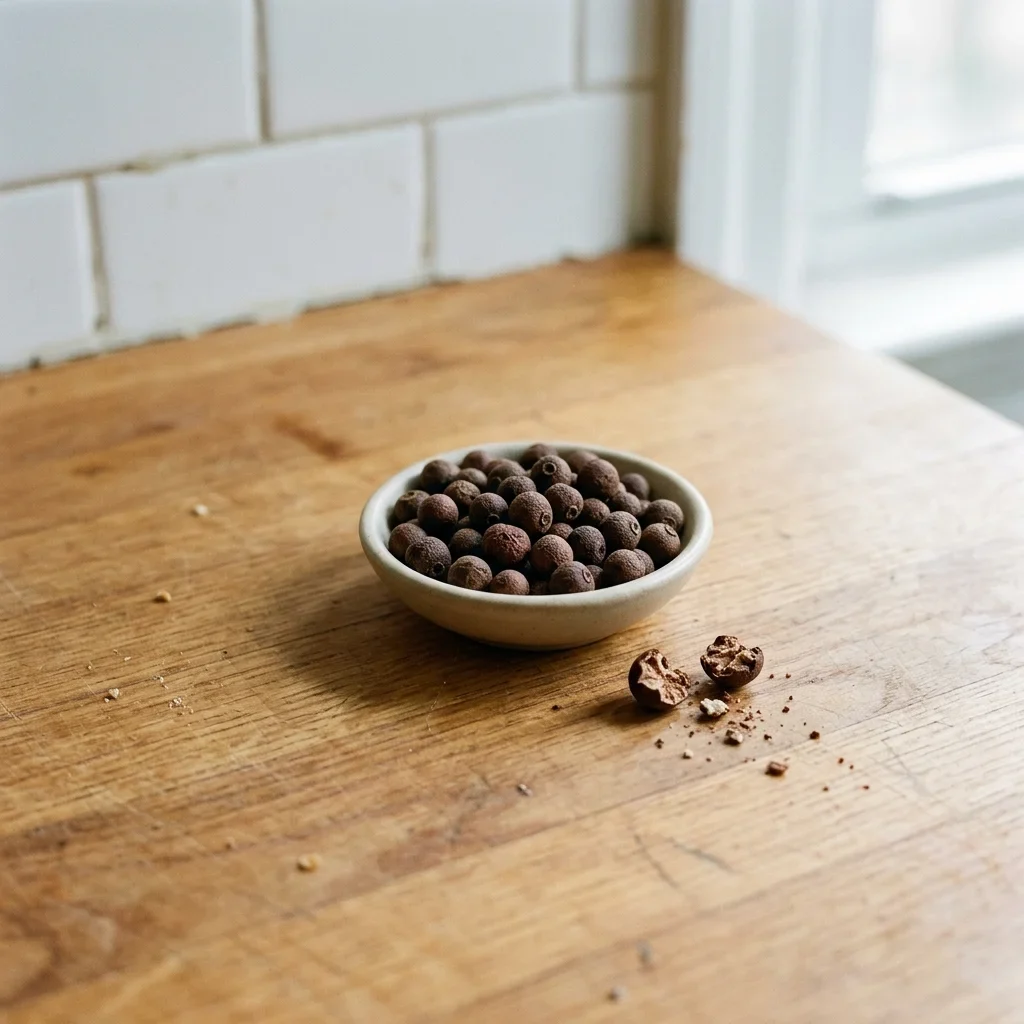
Verdict: use it
Fresh allspice berries
Crush one between your fingers and it smells of cloves and pepper at once. McCormick defines shelf life as the length of time a spice is most aromatic and delicious for cooking. So this is that definition in your hand. Its allspice page describes the flavor as evoking a blend of nutmeg, cloves and cinnamon. Then use it as written, with no adjustment.
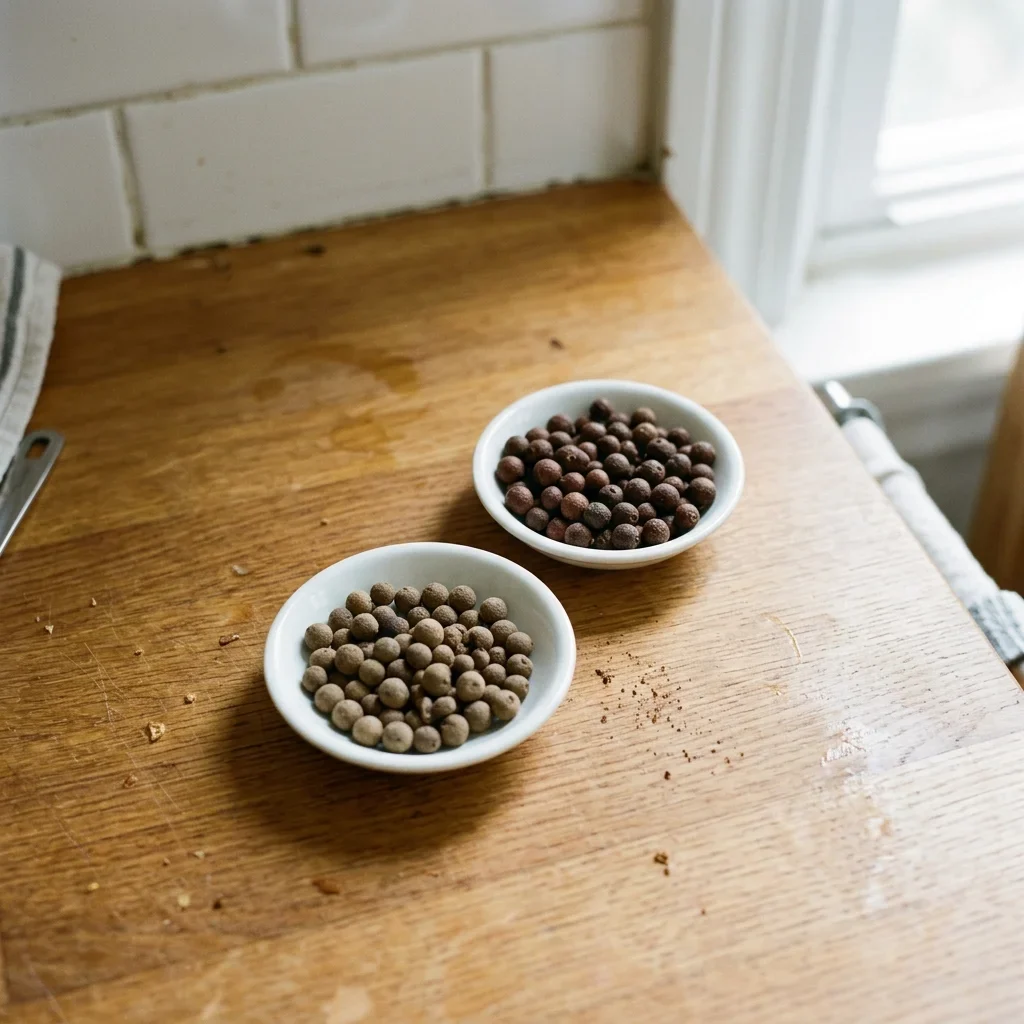
Verdict: use more of it
Allspice that is losing its punch
The smell is still there, although you have to crush harder to find it. NDSU Extension's instruction at this point is to check aroma and replace a faded jar. That is a judgement rather than a rule, though, so there is a step in between. NDSU's Prairie Fare column says you can add extra spice to offset the flavor loss. It also names the cost. The amount needed to match the old flavor can affect the color and quality of the dish. So lean on it harder in a braise, and buy fresh for a cake.
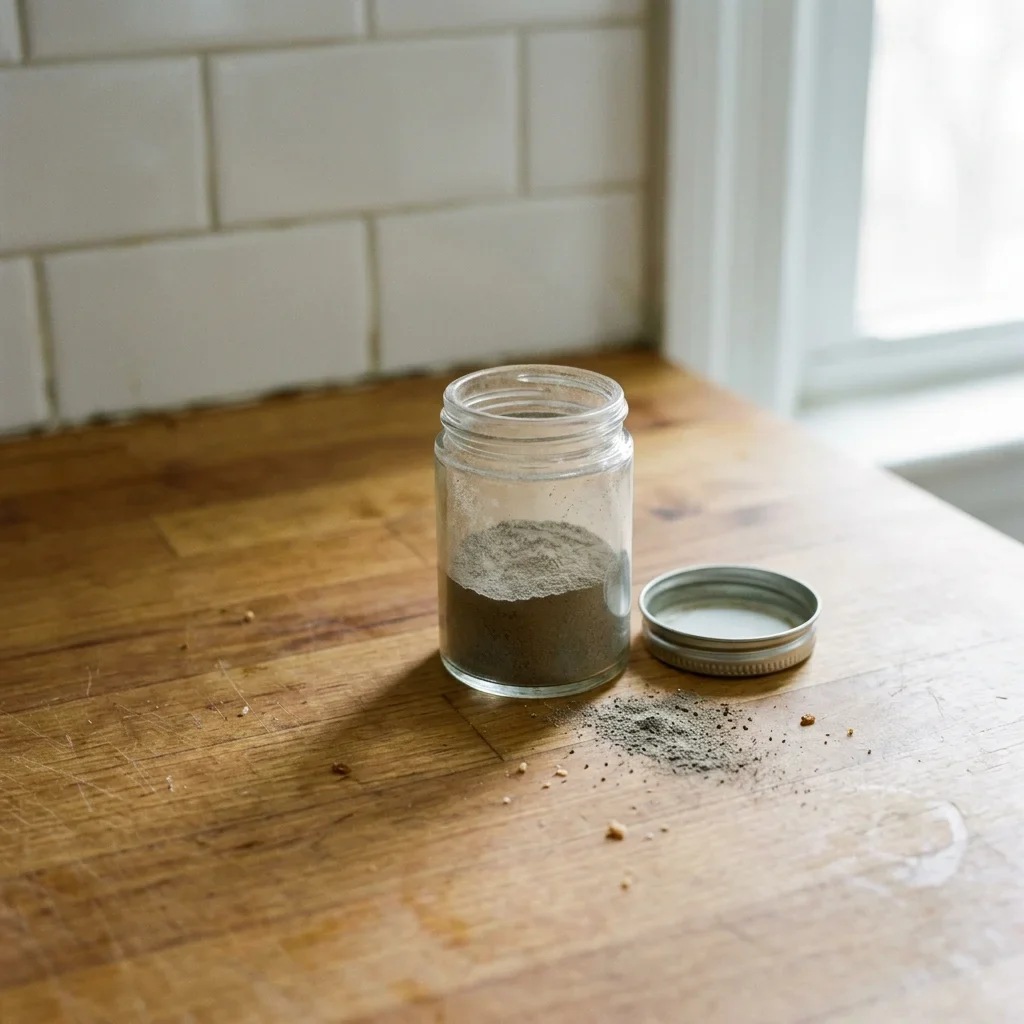
Verdict: replace it
Flat, dusty allspice
Nothing on the nose, and the powder has gone grey-brown. NDSU's Prairie Fare column gives both tests. You can sniff them or taste them, it says, and you can check their color. Faded color might mean faded flavor too, it adds. This is a quality call rather than a safety one. McCormick says ground spice blends do not spoil in a way that makes you sick. They do lose potency and flavor over time, though. So an old jar will not hurt anybody. It simply stops earning its place.
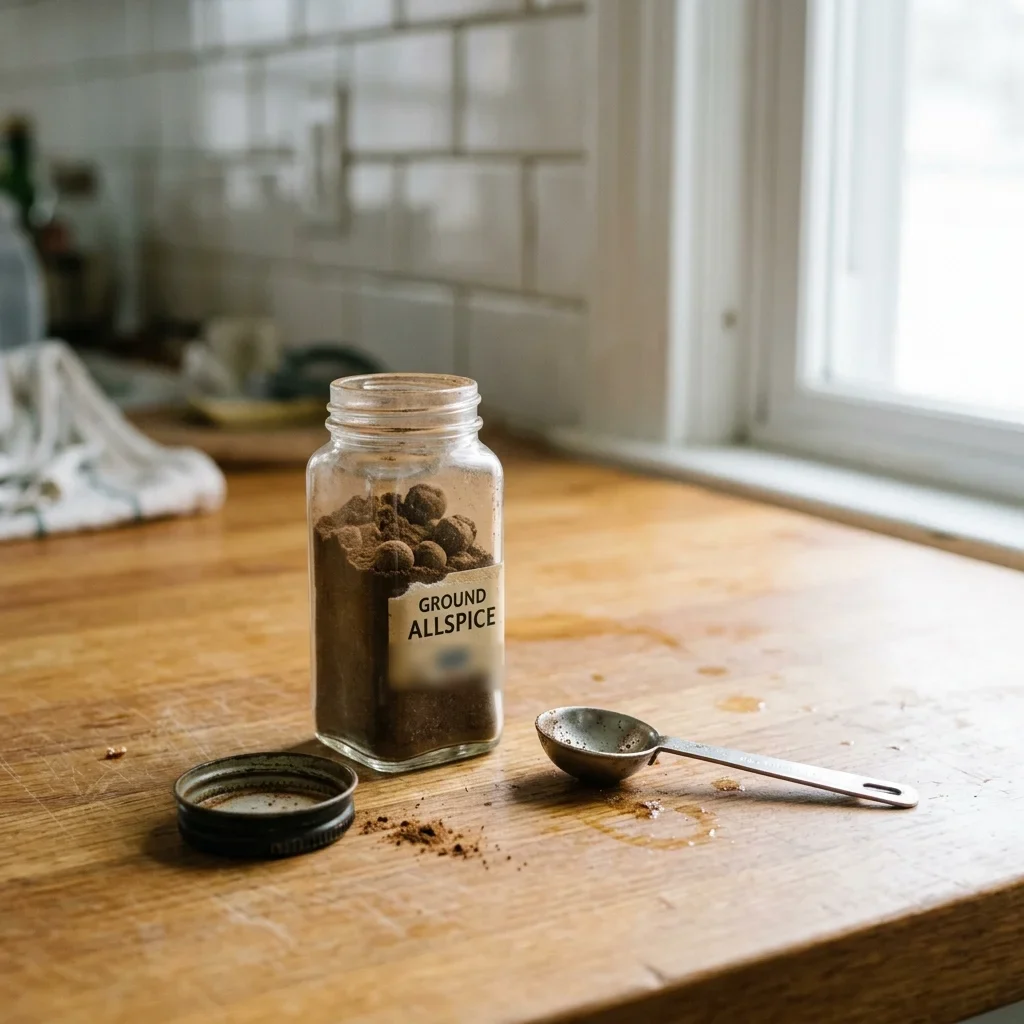
Verdict: replace it
Clumped ground allspice
Lumps mean moisture got in, and that cannot be reversed. NDSU's Prairie Fare column names the two usual routes. It says to keep measuring spoons dry, and not to open a jar over a steaming pan of food. Mulling is exactly that risk, because the pot is steaming and the jar is right over it. Heat and moisture decrease the potency of spices, the column adds. Utah State University Extension gives the worse ending, as dried foods that pick up moisture can mold or spoil. So open a new jar, then finish the clumped one this week in something slow-cooked.
Verdict: throw the jar out
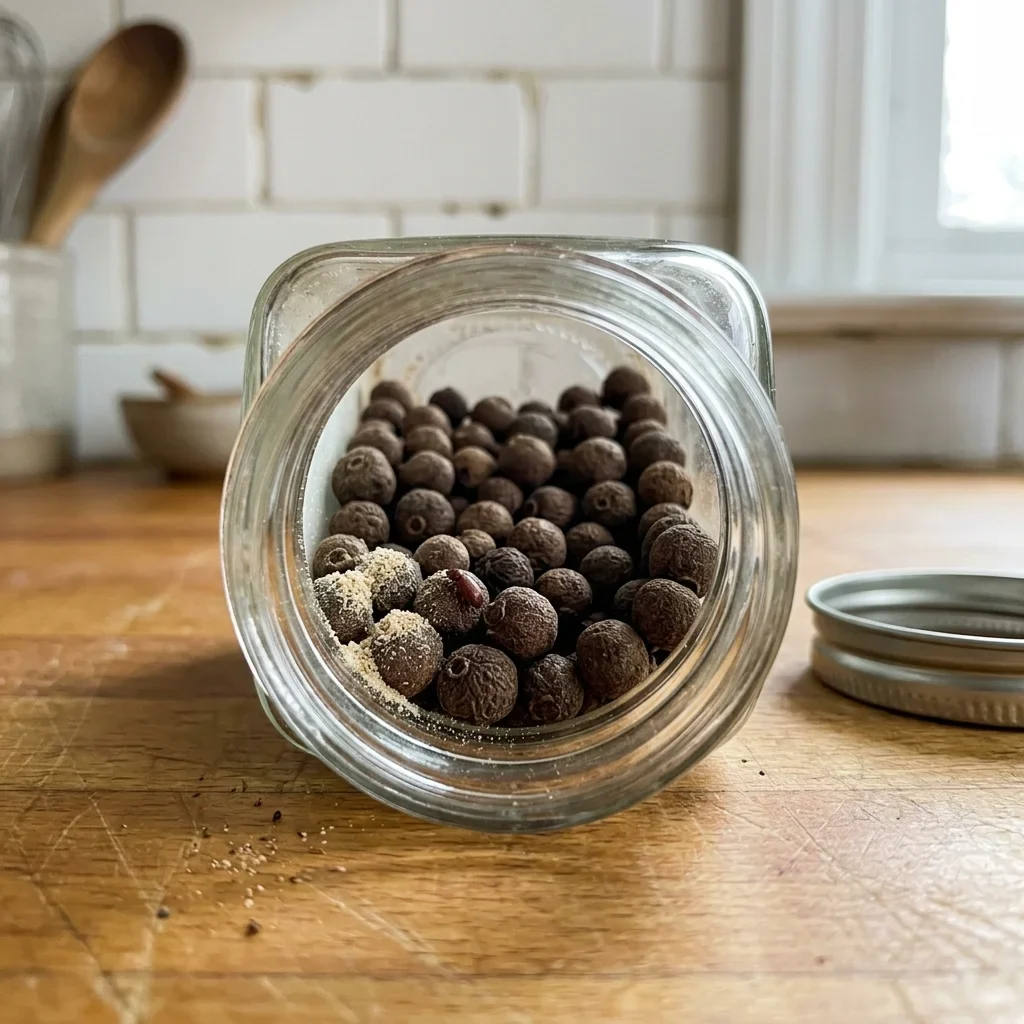
Allspice with pests or mold
Small round holes, loose dust, or anything fuzzy. UW-Madison Division of Extension lists the signs. Infested products often have small round shot holes in packaging, with large amounts of dusty frass inside. Small C-shaped grubs can be found feeding in the product as well. Texas A&M AgriLife says to discard any infested food products that you find. UW-Madison agrees, since it calls cleaning up and disposing of them the best control. Visible mold goes the same way, because nothing we opened offers a method for saving it. So out it goes, and then check the shelf, since flour and rice pull the same beetles.
Is allspice the same as pumpkin pie spice?
No, and the difference is worth knowing in October. McCormick puts it plainly, since it says pumpkin pie spice and allspice are completely different. Allspice is a single spice made from dried, unripened berries, it explains. Its name comes from a flavor that resembles a blend of cinnamon, nutmeg and cloves. Pumpkin pie spice, meanwhile, is a blend of four distinct ground spices, and allspice is one of them. So the two jars are related but not interchangeable. They are also on different clocks, because NDSU gives blends 6 months and whole spices 3 to 4 years. In other words, the blend you opened last Halloween is the one to smell first.
Allspice substitutes
Out of allspice, or did the jar lose its smell? Then one of these will cover it.
Substitute
Works best in
What changes
Cloves, cinnamon and nutmeg
Baking and braises
Allspice tastes of all three, so a pinch of each stands in.
Pumpkin pie spice
Autumn baking
Allspice is already one of its four spices.
Ground cloves
Hams and glazes
Sharper, so use a lighter hand.
Whole cloves
Mulling and pickling
They hold up in a simmering pot, as the berries do.
Mistakes people make when they store allspice
These are the ways people store allspice that cost them the most, although each one has a quick fix.
Keeping the jar on the ledge above the stove. Clemson says not to store food near oven ranges, so move it into a cupboard.
Buying ground when the recipe wants berries. McCormick sends whole allspice to stews, braises, mulling and pickles, so keep a jar of berries as well.
Grinding the whole jar at once. Ground spices carry the shorter figure, so grind what you need and leave the rest whole.
Measuring with a damp spoon. NDSU's Prairie Fare column says to keep measuring spoons dry, because moisture is what makes spices clump.
Shaking the jar over a mulling pot. The same column warns against opening spices over a steaming pan, since the steam goes straight into the jar.
Going by the date rather than the smell. NDSU says to check aroma at the times listed, then replace the jar only if it has faded.
Taking holes in the lid for wear and tear. Texas A&M says larvae get in through minute seams, so look closely before you refill a jar.
Sources
Food Storage Guide, Julie Garden-Robinson, NDSU Extension publication FN579, on whole spices at 3 to 4 years, ground spices at 2 to 3 years, herb and spice blends at 6 months, airtight containers in dry places away from sunlight and heat, checking aroma and replacing faded jars, and the freezer extending shelf life.
Prairie Fare: Don't Forget Your Spices, Julie Garden-Robinson, NDSU Extension, May 2013, on sniffing, tasting and checking color, faded color meaning faded flavor, adding extra spice to offset flavor loss and what that costs, heat and moisture reducing potency, not freezing spices because of moisture, dry measuring spoons, and not opening a jar over a steaming pan.
Food Storage: Pantry, Clemson Cooperative Extension Home and Garden Information Center, on whole spices at 4 to 5 years and ground spices and herbs at 2 to 3 years in tightly sealed or airtight containers, avoiding storage near oven ranges, hot water pipes or heating ducts, and insect infestation in spices and other dry foods.
Food Selection and Storage, Clemson Cooperative Extension Home and Garden Information Center, on whole spices at 2 years and ground spices and herbs at 6 months, which is the shorter of Clemson's two published charts.
Packaging Foods for Storage, Utah State University Extension, on the active components of spices and herbs being plant oils that oxidize to lose flavor and color, sealing a whole spice container inside a jar or foil-lined bag, dried foods picking up moisture from the air and then molding or spoiling, and letting food warm up after the freezer before repacking.
How Long Do Spices Last?, McCormick, on whole allspice named among whole spices at 3 to 4 years, ground spices at 2 to 4 years, seasoning blends at 1 to 3 years, shelf life meaning the time a spice is most aromatic, spices going not good rather than bad, crushing whole seeds immediately before cooking to release the oils, a dark cabinet beating an open rack, and keeping spices off the ledge above the stove.
Allspice Recipes, How To Use and Flavor Pairings, McCormick, on allspice not being a blend but the pea-sized berry of an evergreen tree, its flavor evoking nutmeg, cloves and cinnamon, whole berries suiting slow-cooked stews, braises, mulling and pickles, whole berries being less intense than ground, and whole allspice being stewed with fermented cabbage.
About Pumpkin Pie Spice: Uses, Pairings and Recipes, McCormick, on pumpkin pie spice being a blend of cinnamon, ginger, nutmeg and allspice, allspice and pumpkin pie spice being completely different things, allspice being a single spice from dried unripened berries, ground spice blends losing potency rather than becoming unsafe, and storing a homemade blend in an airtight jar.
Cigarette and Drugstore Beetles, Michael Merchant, Texas A&M AgriLife Extension, on these beetles feeding on spices among other stored foods, newly hatched larvae entering packaging through very small holes including the seams around spice lids, discarding infested food, and freezing infested material at 0°F for six days.
Drugstore Beetles, Phil Pellitteri, UW Insect Diagnostic Lab, University of Wisconsin-Madison Division of Extension, item XHT1103, revised May 2011, on spices among the foods infested, shot holes in packaging and dusty frass, C-shaped grubs inside the product, cleaning up and disposing of infested food as the best control, tight-fitting lids on uninfested dry goods, and heating to 140°F for two to three hours or freezing at 20°F or less for 48 hours.
Storage times and safety advice on this page come from the sources above. Food safety depends on conditions I cannot see, so read the Disclaimer, and if in doubt, throw it out.
Other ingredient guides
Browse all guides
Share this guide
Never miss a guide
New ingredient guides when they go up, plus one storage tip worth knowing. Anything sponsored is labelled.

Emilly White