
12 to 18 months
Unopened shelf-stable bottle only, 50 to 70°F (Clemson)
Up to 5 days
Fresh or opened, 40°F or below (Utah State, Oregon State)
Up to 1 year
Airtight and labelled at 0°F, quality only (Oregon State, Utah State)
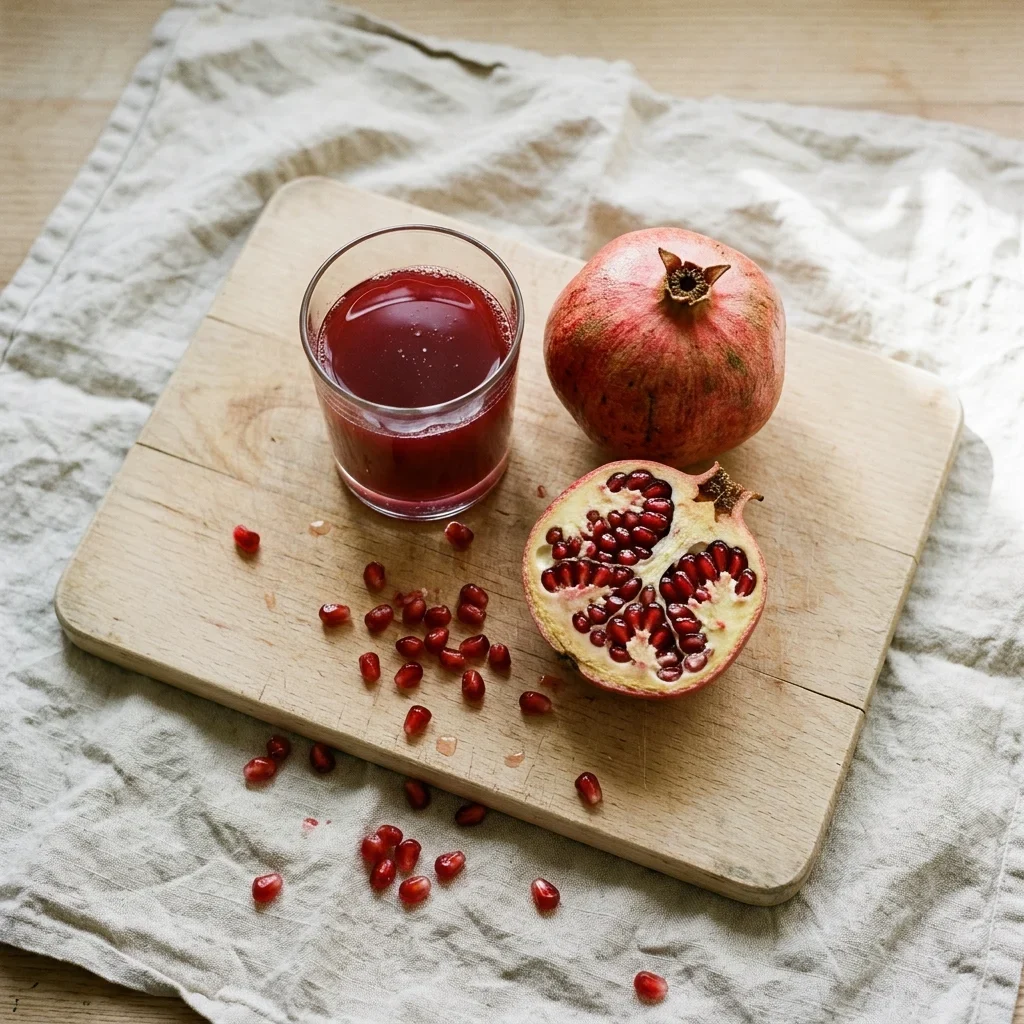
The short version: to store pomegranate juice well, keep it at 40°F or below, since cold is the whole job. Drink it within five days of opening. Then freeze whatever is left in airtight labelled containers, where it keeps about a year.
Storage times here come from Utah State University Extension, Oregon State University Extension and Clemson Cooperative Extension. The safety rules, meanwhile, come from the FDA and UC Agriculture and Natural Resources.
On this page
What to check before you store pomegranate juice
Two things decide how long the juice lasts, though, and neither is the fridge. Was it pasteurized? And was the fruit clean before it was cut? Both are settled before the juice ever reaches the jar.

Shiny, firm and unbroken skin, because cracks and soft spots start the trouble.
Shiny, firm and unbroken skin, because cracks and soft spots start the trouble.
Start with sound fruit. Oregon State University Extension chooses pomegranates that are mostly round and heavy for their size. The skin should also be shiny, firm and unbroken. Similarly, it says to avoid any with cracks, bruises or soft and wrinkly skin.
Then check whether the juice was pasteurized. The FDA requires packaged untreated juice to carry a warning that it has not been pasteurized. So if that sentence is on the label, the juice is raw. No warning does not settle it either, since the FDA exempts juice sold by the glass.
Sour and dark does not mean sterile, though. UC Agriculture and Natural Resources is blunt about that assumption. In fact bacteria can survive for long periods of time in orange juice and other fruit juices, it says. Pomegranate juice sits in the same family, so the same rule applies.
Finally, think about where the juice is going. Utah State University Extension prefers the freezer to the canner, because the juice holds its flavour and colour better that way. Oregon State University Extension also warns that pomegranate juice stains, so cover up and clean spills quickly.
How to store pomegranate juice so it lasts
To store pomegranate juice so it lasts, treat the cold as the whole job. Pomegranate juice has no pantry life once it is open, whereas an unopened shelf-stable bottle does. So the question is always which bottle you are holding.
How long does fresh pomegranate juice last in the fridge?
Fresh pomegranate juice keeps up to five days in the fridge, according to Utah State University Extension. Oregon State University Extension gives the same figure, since it refrigerates arils or juice for up to five days. The Pomegranate Council, however, gives juice only 3 days. Two extension services against an industry group is not much of a contest, so five days is the figure here. Even so, take the short end for juice you pressed yourself, because home juicing is not pasteurized. Keep it at 40°F or below, as Clemson Cooperative Extension asks.
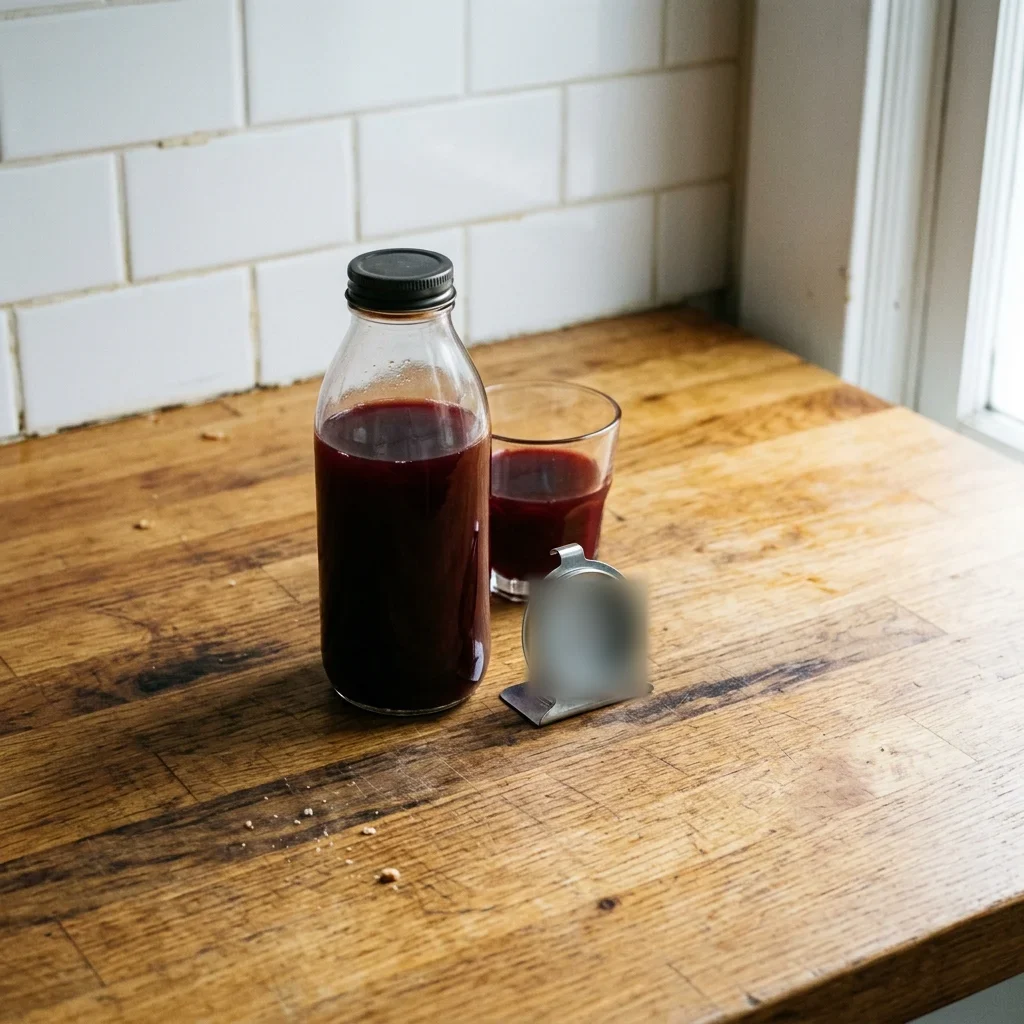
On a cold shelf at 40 degrees or below, never in the door.
On a cold shelf at 40°F or below, rather than in the door.
Does bottled pomegranate juice need to be refrigerated?
It depends on where the shop kept it. POM Wonderful sells its juice from the refrigerated produce section. So that bottle belongs in the fridge from the day you buy it. A shelf-stable bottle, on the other hand, can stay in the cupboard while it is sealed. Clemson Cooperative Extension gives commercial high-acid foods, juices among them, 12 to 18 months there. That assumes a pantry at 50 to 70°F, though, since storage time drops significantly above 75°F.
So the label tells you more than the date does. Check whether the bottle was chilled in the shop, then keep it the same way at home. In other words, a bottle that arrived cold does not become shelf-stable in your cupboard.
How long does pomegranate juice last after opening?
Give opened pomegranate juice five days in the fridge, since that is the window Utah State University Extension gives fresh juice. None of the extension sources we opened puts a separate figure on an opened bottle, though. Clemson Cooperative Extension also treats opened commercial product as perishable, without giving a day count. POM Wonderful prints a Best By date on the bottom of the bottle in light-coloured ink, so hold it under a bright light to read it. So treat five days as the working figure and that date as the ceiling.
Can you leave pomegranate juice out on the counter?
Pomegranate juice should not sit out longer than two hours, according to UF/IFAS Extension. It also discards perishable food left at room temperature for longer than 2 hours. Above 90°F, though, the limit drops to 1 hour. Oregon State University Extension says the same thing in a recipe note, since it refrigerates or freezes leftovers within 2 hours. So a jug on the table goes back in the fridge between pours. If one stood out all night, the food left out overnight guide covers that.
Can you can pomegranate juice?
You can, although Utah State University Extension would rather you froze it. Canned pomegranate juice may brown and lose flavour, it warns. So it adds 2 tablespoons of bottled lemon juice per quart to help retain colour and flavour. The method, then, is to bring the juice quickly to a boil, pour it into hot jars, adjust the lids and process. Processing takes 5 minutes up to 1,000 feet, then 10 minutes to 6,000 feet, and 15 minutes above that. Jars processed under 10 minutes must also be sterilised first, by boiling them for 10 minutes. Note that the lemon juice has to be bottled rather than fresh, because fresh juice has no guaranteed pH. The lemons guide covers that.
Can you freeze pomegranate juice?
Yes, and in fact two extension services say the freezer beats the canner. Utah State University Extension prefers freezing because the juice holds flavour and colour better. Similarly, Oregon State University Extension gives juice a year in airtight labelled containers. So this is the answer for a glut of fruit, or for a bottle you will not finish.
How to store pomegranate juice in the freezer
Pour the juice into airtight containers, then label them with the date. Utah State University Extension also leaves 1/2 inch of headspace and stands the containers upright until they are frozen. Oregon State University Extension, meanwhile, asks only for airtight and labelled, and gives the juice up to one year. Headspace matters because liquid expands as it freezes, as Penn State Extension explains. For a narrow-necked jar, Penn State wants 1 1/2 inches instead. The National Center for Home Food Preservation takes a different route for whole fruit. It then taps the halved shell with a blunt tool to break section walls and open juice sacs. Then it packs the juice and pulp with a cold 30 percent syrup.
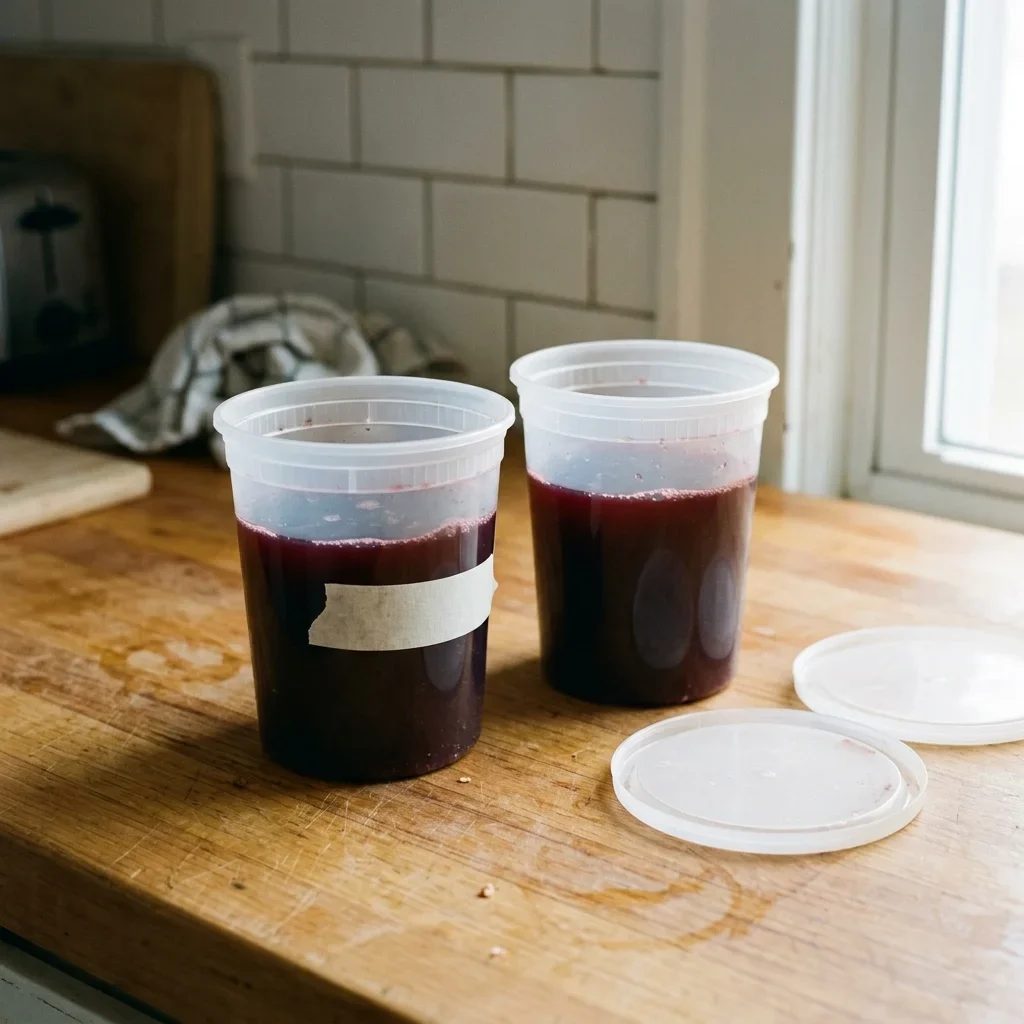
Airtight, labelled and dated, then stood upright until frozen.
Airtight, labelled and dated, then stood upright until it is frozen.
How long does frozen pomegranate juice keep?
Frozen pomegranate juice keeps about a year, since two sources agree on it. Oregon State University Extension freezes juice or arils for up to one year. Similarly, Utah State University Extension says to use frozen pomegranates within 1 year. The Pomegranate Council, however, gives juice only 6 months. Freezing is a quality clock rather than a safety one, so that gap is about flavour and colour.
Does freezing change pomegranate juice?
Juice comes through freezing better than the arils do. Oregon State University Extension freezes arils on a baking sheet first, so they do not clump together. Juice needs none of that, because it has no shape to lose. Colour is the thing to protect instead, which is why Utah State University Extension reaches for bottled lemon juice when it cans rather than freezes.
How to tell if pomegranate juice has gone bad
Pomegranate juice is dark, so it hides early changes better than a pale juice would. Three of the five stages below are about quality, while two end the bottle. One rule covers all of them, though. The UCCE Master Food Preservers say never to taste food that looks or smells strange. That is because most bacteria that cause foodborne illness are odorless, colorless, and tasteless.
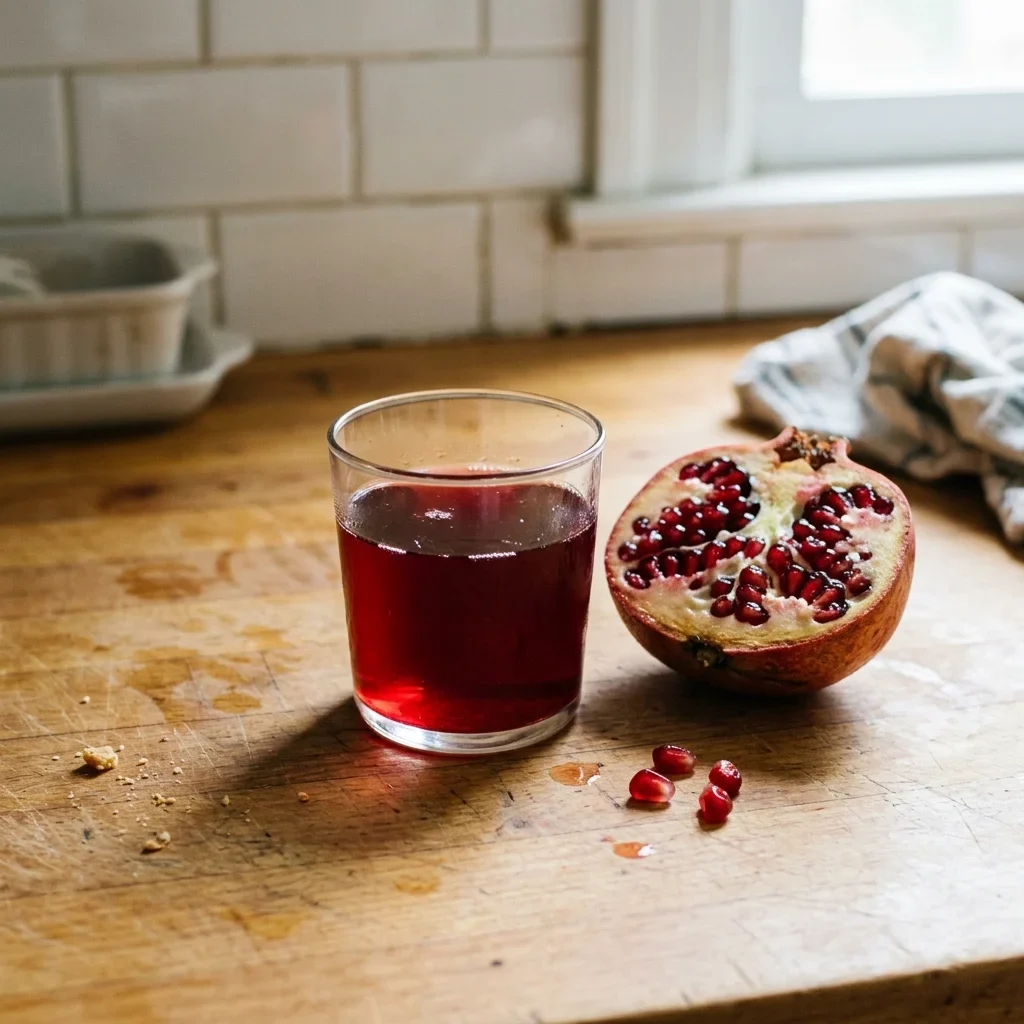
Verdict: use it
Deep red pomegranate juice
Deep red, clean-smelling, and quiet when you open it. This is juice well inside its window, so drink it or cook with it.
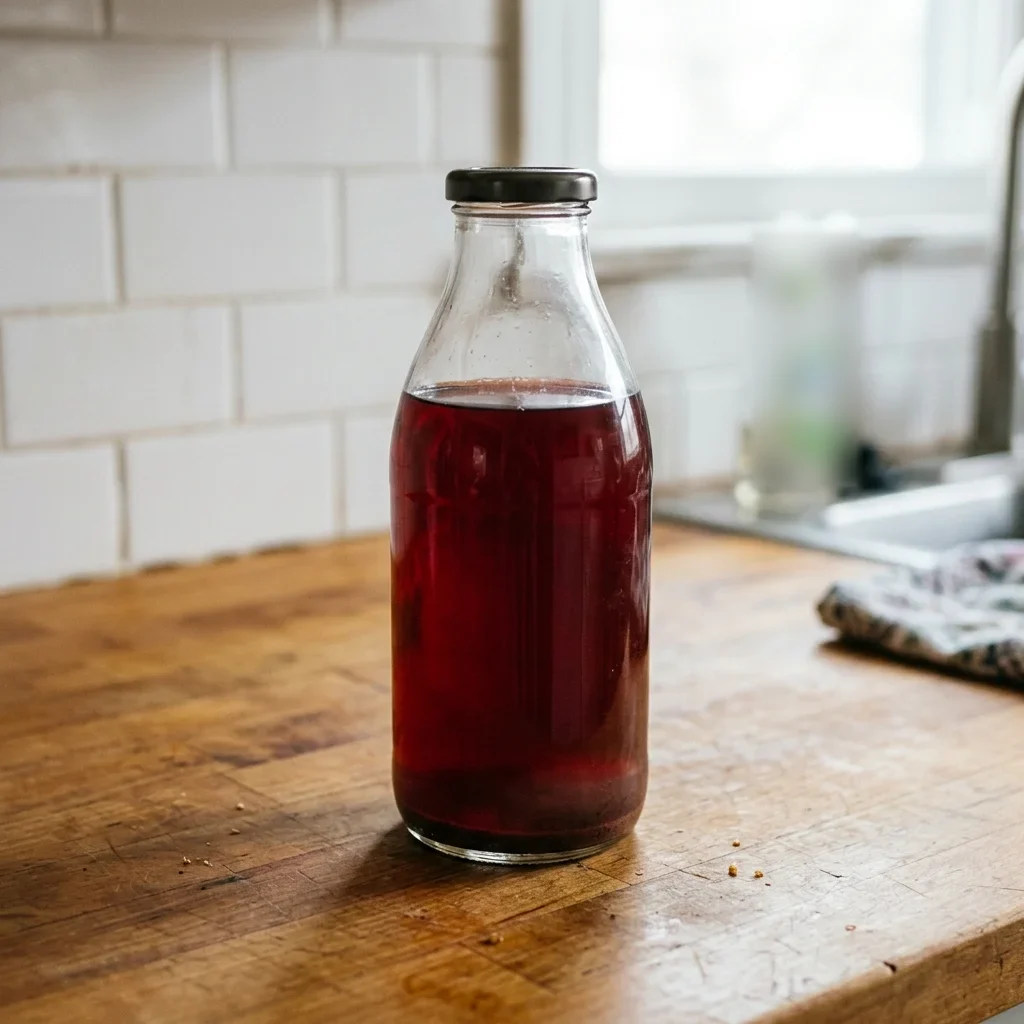
Verdict: use it
Cloudy pomegranate juice with sediment
A haze, or a layer of fine sediment settled at the bottom. Neither one is spoilage by itself, and the apple cider guide makes the same point. In fact Oregon State University Extension says fresh pressed cider has a cloudy appearance. So shake the bottle, then smell it.
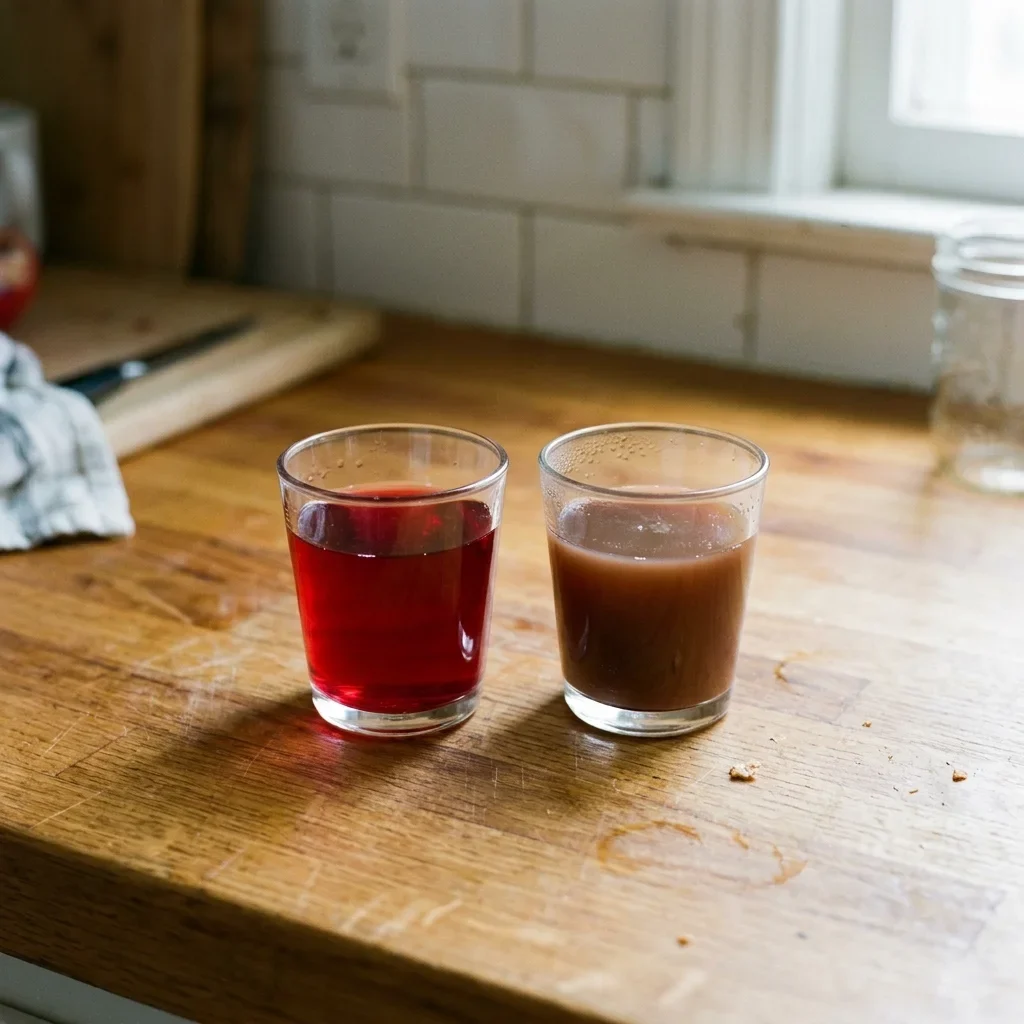
Verdict: use it in cooking
Browning pomegranate juice
A duller, brownish red rather than a clear deep red. Utah State University Extension treats browning as a colour and flavour fault, since it warns that canned juice may brown and lose flavour. So this is quality rather than safety, and cooking will hide it.
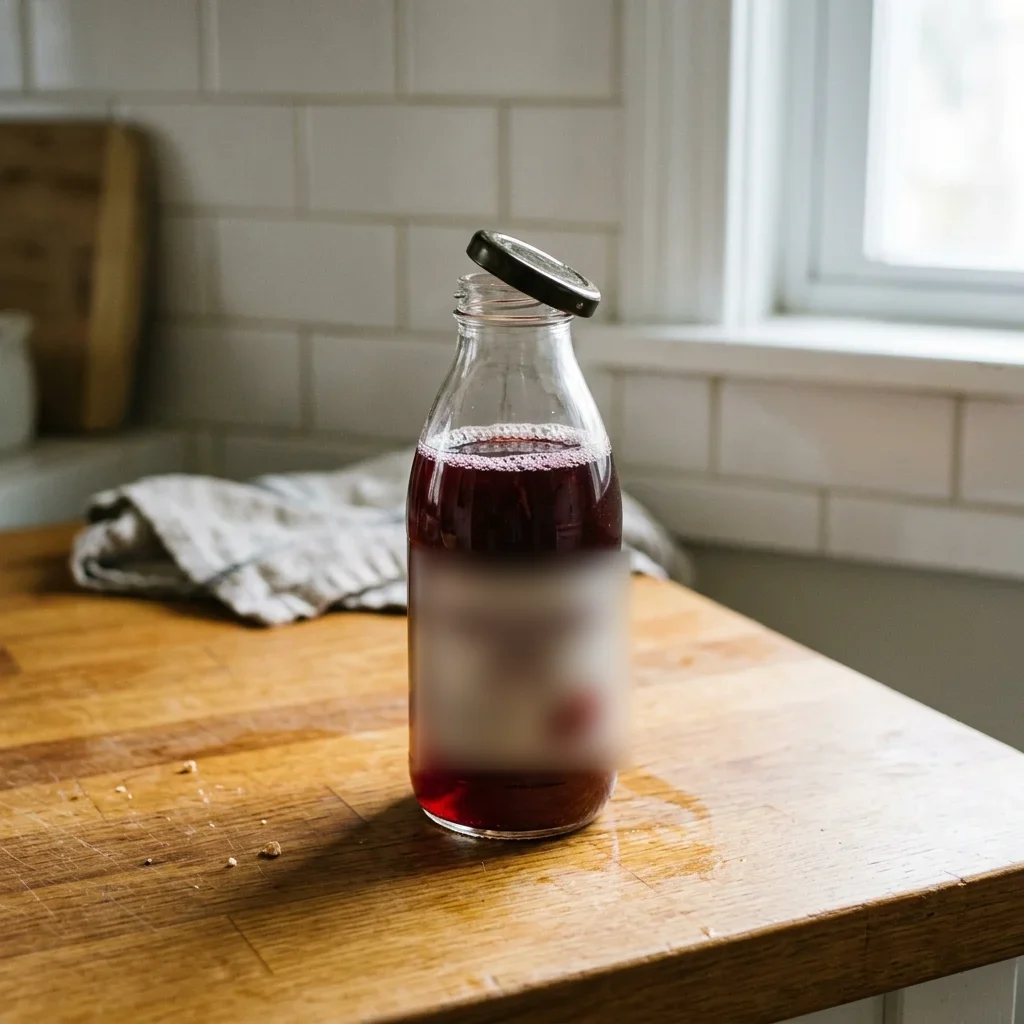
Verdict: throw it out
Fizzing pomegranate juice
Bubbles, a hiss on opening, or a cap that pushes back. Sugar is being fermented, and Oregon State University Extension describes where that ends, since fermented juice becomes an alcoholic beverage. No source we opened gives a home test that separates early fermentation from spoilage. So pour it away rather than tasting it.
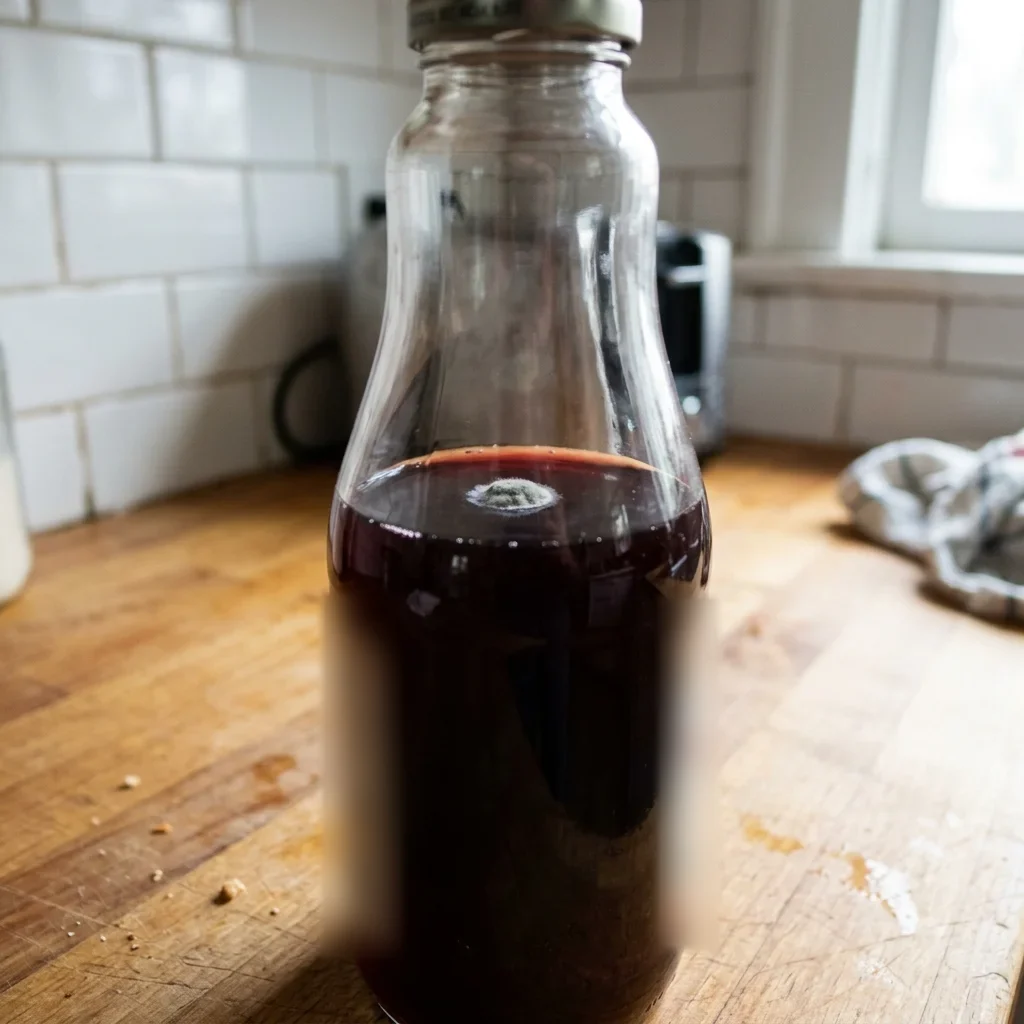
Verdict: throw it out
Sour-smelling or moldy pomegranate juice
A sour, yeasty or alcoholic smell, or fuzz at the surface or around the neck of the bottle. The smell usually comes first, because fermenting juice turns alcoholic, as Oregon State University Extension describes. Mold is the rarer, visible sign. Either way, pour it away rather than tasting it, then wash the shelf where it stood.
Is it safe to drink pomegranate juice past the Best By date?
A Best By date is a quality date rather than a safety deadline. POM Wonderful prints its own on the bottom of the bottle in light-coloured ink. Clemson Cooperative Extension gives commercial high-acid foods 12 to 18 months for best quality. It also names what disqualifies a container: bulging lids, leaks, spurting contents, off odours or mold. So check the seal and the smell before you check the date. Even so, an unpasteurized bottle deserves less benefit of the doubt. The FDA names children, older adults, pregnant people and those with weakened immune systems as being at risk.
Pomegranate juice substitutes
Out of pomegranate juice, or did the bottle have to go? Then one of these will stand in.
Substitute
Works best in
What changes
Frozen pomegranate juice
Smoothies and sauces
A year in the freezer, and no shape to lose.
Pomegranate arils
Salads and garnishes
Five days in the fridge, or a year frozen.
Grenadine syrup
Drinks and glazes
Utah State gives it 1 to 2 weeks in the fridge.
Unsweetened cranberry juice
Braises and dressings
Sharper and less sweet, so use a lighter hand.
Mistakes people make when they store pomegranate juice
These are the ways people store pomegranate juice that cost them the most, although each one has a quick fix.
Leaving a chilled bottle in the cupboard. POM Wonderful sells it from the refrigerated section, so it belongs in the fridge from the day you buy it.
Leaving a jug out through a meal. UF/IFAS Extension gives perishable food only 2 hours at room temperature, then 1 hour above 90°F.
Filling a container to the brim before freezing. Liquid expands, so Utah State University Extension leaves 1/2 inch of headspace.
Canning with fresh lemon juice instead of bottled. Its pH is not guaranteed, so Utah State University Extension asks for bottled juice.
Binning juice because of sediment. Fine sediment settles out on its own, so shake the bottle and smell it first.
Tasting a bottle that smells wrong. Most bacteria that cause foodborne illness are odorless, colorless and tasteless, so throw it out instead.
Trusting the Best By date alone. Clemson instead tells you to discard containers that bulge or leak, whatever the date says.
Sources
How to Preserve Pomegranates, SuzAnne Jorgensen and Charlotte Brennand, Utah State University Extension, on fresh seeds or juice keeping up to 5 days in the refrigerator, freezing being preferred to canning because flavour and colour hold better, 1/2-inch headspace, labelling and standing containers upright, using frozen pomegranates within 1 year, grenadine syrup keeping 1 to 2 weeks refrigerated, canned juice browning and losing flavour, 2 tablespoons of bottled lemon juice per quart, and boiling-water processing of 5, 10 or 15 minutes by altitude.
Pomegranate Basics, Food Hero, Oregon State University Extension Service, October 2024, on choosing fruit that is mostly round and heavy for its size with shiny, firm, unbroken skin, refrigerating arils or juice for up to five days, freezing juice or arils in airtight labelled containers for up to one year, pomegranate juice staining, and refrigerating or freezing leftovers within 2 hours.
Freezing Pomegranates, National Center for Home Food Preservation, University of Georgia, on selecting fully ripe fruit, tapping the halved shell with a blunt tool to break section walls and open juice sacs, and packing juice and pulp in a cold 30 percent syrup.
Safety of Stored Foods, Pamela Schmutz and E. H. Hoyle, Clemson Cooperative Extension factsheet HGIC 3520, revised April 2020, on a refrigerator at 40°F or below, a freezer at 0°F or below, commercial high-acid foods such as juices keeping 12 to 18 months, a pantry at 50 to 70°F, storage time dropping above 75°F, opened commercial product being perishable, and discarding containers that bulge, leak or smell off.
Preserving foods: Fruit juice and apple cider, Nellie Oehler, Oregon State University Extension Service SP 50-455, revised July 2024, on fresh pressed juice looking cloudy, pasteurized juice keeping about a week in the refrigerator, 2 inches of headspace for freezing, storing canned juice in the dark so the colour does not fade, and fermented juice becoming an alcoholic beverage.
Oranges: Safe Methods to Store, Preserve, and Enjoy, Jennifer E. Snart, Mary Lu Arpaia and Linda J. Harris, UC Agriculture and Natural Resources publication 8199, January 2006, on bacteria surviving for long periods of time in fruit juices, Salmonella outbreaks traced to unpasteurized juice, pathogens moving from the rind into the flesh during juicing, and the 2-hour and 1-hour limits for cut fruit.
What You Need to Know About Juice Safety, U.S. Food and Drug Administration, content current as of March 2024, on the required warning statement for untreated juice, children, older adults, pregnant people and people with weakened immune systems being at risk, the exemption for juice sold by the glass, and keeping untreated products refrigerated.
FOOD SAFETY: The 2-hour rule, Brenda Marty-Jimenez, UF/IFAS Extension Broward County, October 2023, on discarding perishable food left at room temperature longer than 2 hours, 1 hour above 90°F, and keeping cold food at 40°F or below.
Why Allow Headspace when Canning and Freezing Food?, Martha Zepp, Penn State Extension, updated February 2024, on liquid expanding when frozen and 1 1/2 inches of headspace for juice in narrow jars.
Preserving Citrus, UCCE Master Food Preservers of El Dorado County, October 2025, on never tasting food that looks or smells strange because most bacteria that cause foodborne illness are odorless, colorless and tasteless.
FAQs, POM Wonderful, on its juice being sold in the refrigerated produce section, the Best By date being printed on the bottom of the bottle in light-coloured ink, and the juice being whole-pressed pomegranate and nothing else.
How To Store a Pomegranate, the Pomegranate Council, on refrigerated juice keeping up to 3 days and frozen juice up to 6 months, which are the shorter industry figures named against the extension figures above.
Storage times and safety advice on this page come from the sources above. Food safety depends on conditions I cannot see, so read the Disclaimer, and if in doubt, throw it out.
Other ingredient guides
Browse all guides






Share this guide
Never miss a guide
New ingredient guides when they go up, plus one storage tip worth knowing. Anything sponsored is labelled.

Emilly White