
A few hours
Only while you wait to chill them, since they will not ripen off the vine
About 1 week
Unwashed, still on the stem, in a vented bag in the coldest part
Yes, as a snack
Loose on a tray first, then bagged. Thawed they turn soft
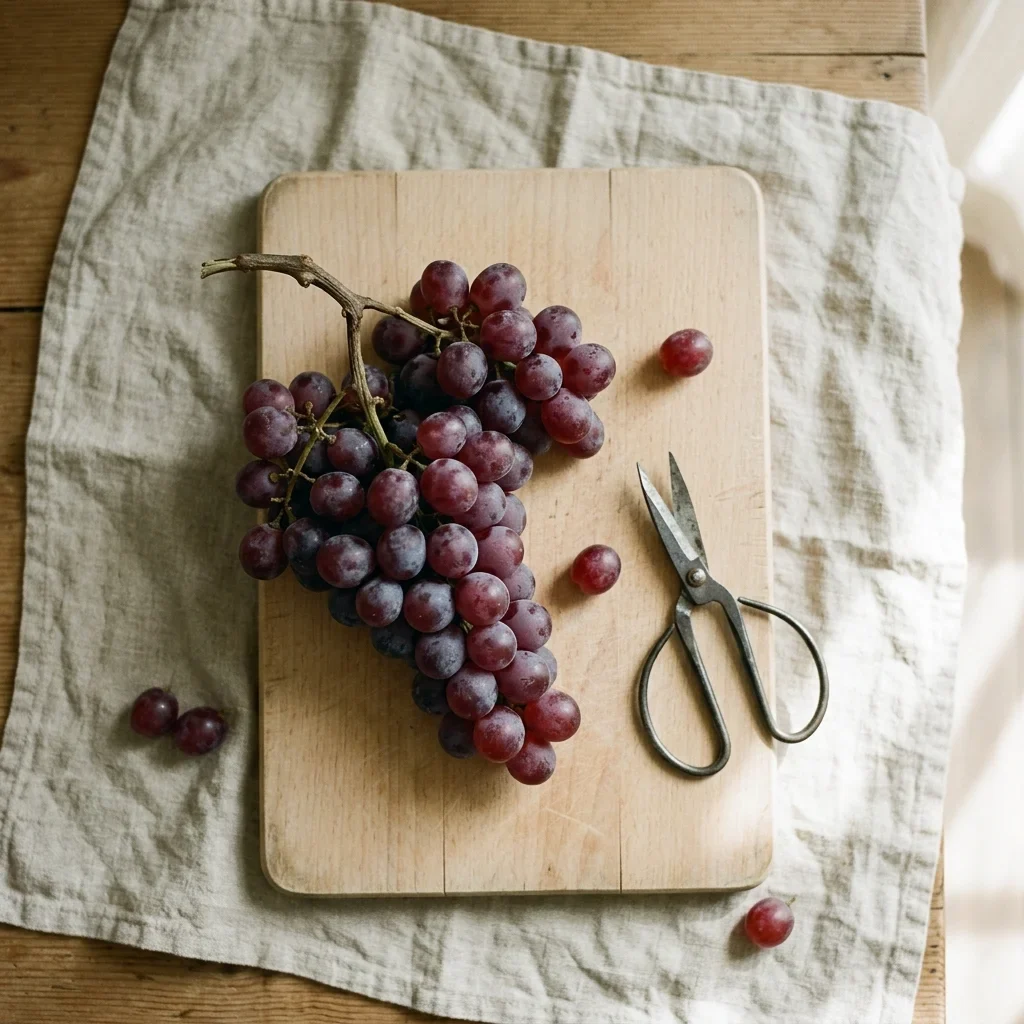
The short version: to store grapes well, leave them unwashed and on the stem. Keep the bunch in a vented bag in the coldest part of the fridge. Then rinse only the handful you are about to eat.
Storage guidance from UC Davis and the USDA, Texas A&M AgriLife Extension and Cornell Cooperative Extension.
On this page
How to choose grapes that store well
Grapes never improve after harvest, so the bunch in your hand is already as good as it will get. That is why the stems deserve a longer look than the fruit. They show how much water the bunch has already lost.
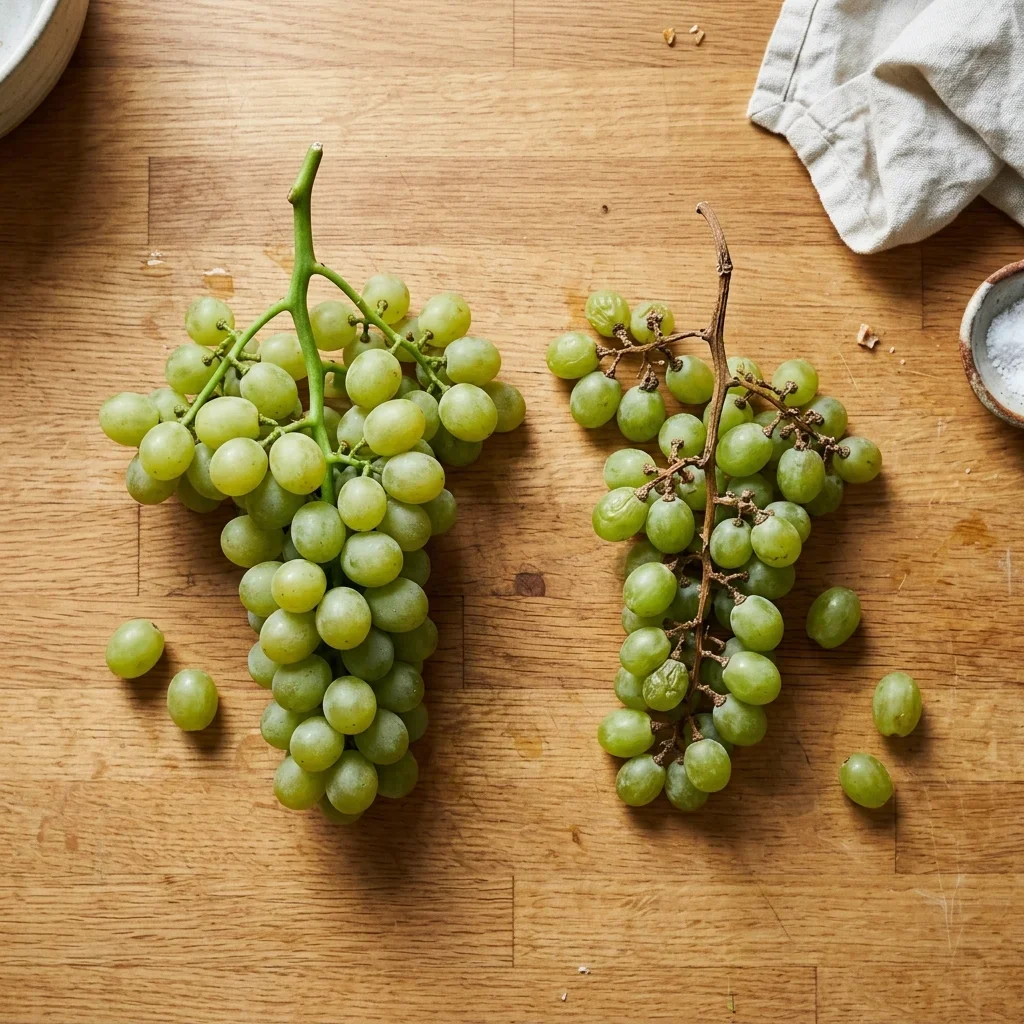
Green, pliable stems keep. Brown, brittle ones have already lost water.
Firm berries that are also well attached. University of Wisconsin Division of Extension looks for firm, plump, well coloured clusters, securely attached to green stems.
Green, pliable stems instead of brown ones. Utah State University Extension describes high quality grapes as plump, well formed and firmly attached to green, pliable stems.
Nothing moldy, wet or shrivelled, especially at the stem end. University of Wisconsin Division of Extension also says to avoid dry, brittle stems and moldy or shrivelled grapes.
A dusty white bloom, which is a good sign rather than a bad one. Purdue Extension says the natural bloom or whitish coating becomes more noticeable as grapes reach maturity.
How to store grapes so they last
To store grapes so they last, keep three things away from them: warmth, standing water and wounds. Each one feeds the same two problems. Grapes lose water through their stems, and gray mold travels from berry to berry.
Where to store grapes in the fridge
Put the unwashed bunch in a vented or perforated bag rather than a sealed box. Then keep it in the coldest part of the fridge, not the door. Commercial cold stores hold grapes at 30 to 32°F with 90 to 95% humidity. That figure comes from Carlos Crisosto and Joseph Smilanick of UC Davis and the USDA. Even a well set home fridge at 40°F is warmer than that. University of Wisconsin Division of Extension asks for perforated plastic bags, since they hold moisture in while letting air move. Keep the bunch away from vegetables as well. Cornell Cooperative Extension says fruit and vegetables should always be stored separately. Fruit gives off ethylene, and in return it picks up vegetable smells. That is the same reason the lettuce guide keeps greens in a drawer of their own.
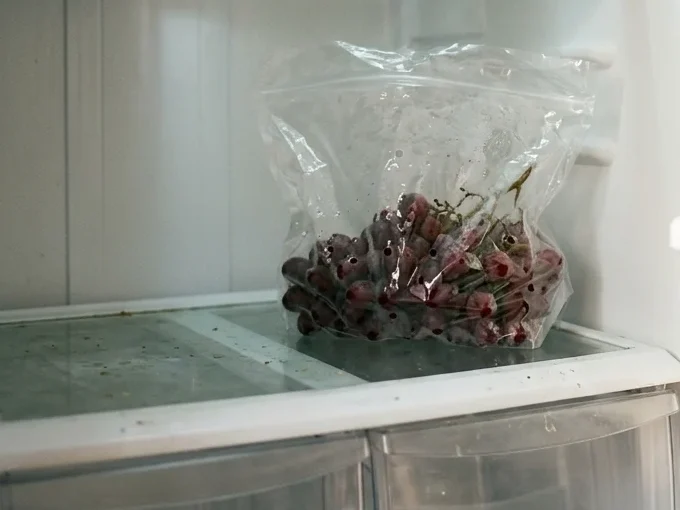
A vented bag in the coldest part of the fridge, never the door.
How long can you store grapes?
Plan on about a week, and treat anything beyond that as a bonus. Published figures, however, disagree sharply. Texas A&M AgriLife Extension gives grapes 3 to 5 days in the refrigerator crisper. Purdue Extension FoodLink says up to 5 days, while University of Minnesota Extension gives up to 1 week. Utah State University Extension gives about 2 weeks, and University of Wisconsin Division of Extension says up to 3 weeks. Cornell Cooperative Extension's chart goes further again, at 4 to 6 weeks. That figure assumes 32°F and 90% humidity, however, rather than a kitchen. So take the short number. Most of the gap between these figures is really the gap between a cold store and your crisper drawer.
In other words, the temperature sets the clock and the bag winds it. Keep the berries cold and unbruised, and a week quietly turns into two. A warm shelf, on the other hand, will cost you several days.
Should you store grapes washed or unwashed?
Unwashed, every time. Texas A&M AgriLife Extension is blunt about it: fresh fruits and vegetables should be stored unwashed. It is best to wash them just before they are eaten or prepared. That keeps spoilage and mold growth down during storage. UC San Diego Center for Community Health gives the same instruction for grapes. So rinse only the handful you are about to eat. When you do wash them, the FDA asks for running water and nothing else. Soap, detergent and commercial produce wash are not recommended. The same rule runs through the strawberries guide, since wet skins in cold air are what mold wants.
How to store grapes on the counter
Only for the hour or two before you can chill them, because nothing good happens to grapes at room temperature. Crisosto and Smilanick describe the table grape as non-climacteric, with a relatively low rate of physiological activity. In kitchen terms it has finished. University of Wisconsin Division of Extension says it plainly: grapes will not improve or ripen after harvest. So a bowl on the counter costs you water and firmness and gives nothing back. Unlike bananas or tomatoes, there is nothing here worth waiting for.
How to store grapes you have cut from the bunch
Keep loose berries in a covered container in the fridge, then eat them within a day or two. Pulling a grape off its stem leaves a wound at the cap stem, and that is where rot starts. Crisosto and Smilanick note that wounds on the berry surface near harvest provide opportunities for infection. The FDA also asks for cut produce to go in the fridge, at 40°F or below. If a bowl of washed grapes sat out all evening instead, the food left out overnight guide covers it.
Can you freeze grapes?
Yes, and they are one of the few fruits that come out of the freezer better than they went in. Utah State University Extension gives three methods, one of them a loose tray freeze. The National Center for Home Food Preservation adds that sugar is optional. In a fruit pack it is there for flavour, colour and texture rather than preservation. So plain frozen grapes are a published method, not a shortcut.
How to store grapes in the freezer
Pull the berries off the stems, then wash them and dry them well. Spread them one layer deep on a tray and freeze them solid before they go into a bag. That is Utah State University Extension's loose pack. The National Center for Home Food Preservation starts the same way, sorting, stemming and washing fully ripe, firm, sweet grapes. It leaves seedless grapes whole, while it halves the seeded kinds to take the seeds out. For a container pack both leave half an inch of headspace. The Center also covers the fruit with cold 40 percent syrup when you want it sweetened.
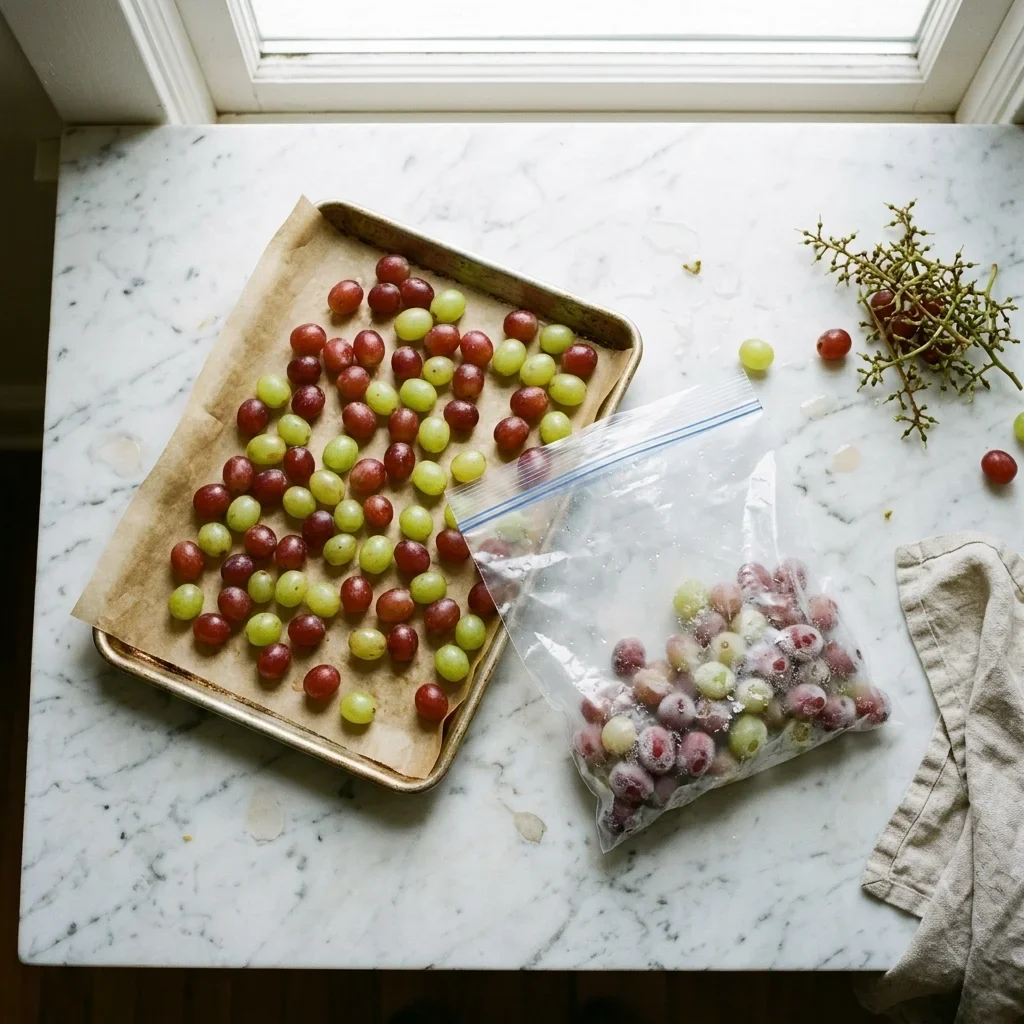
Freeze them loose on a tray first, then bag them.
Can you store grapes whole in the freezer?
Yes, and whole is the whole point for snacking. The National Center for Home Food Preservation leaves seedless grapes whole, so seeds are the only reason to cut one. Freeze them loose on a tray first, however, because a bagful of damp berries sets into a single lump.
What happens to grapes you store in the freezer
Ice breaks the cells, so a thawed grape is soft and leaky rather than crisp. Eaten straight from the freezer, though, that same change is what makes them taste like sorbet. Utah State University Extension treats a tray freeze as a finished product rather than something to thaw. The Center's syrup, purée and juice packs, meanwhile, are aimed at cooking and drinks.
How to tell if grapes have gone bad
Most of a tired bunch is still worth eating. A dusty white film is not mold, and a wrinkled grape is not a safety problem. One furry berry, however, is a reason to go through the bunch berry by berry. Here is what each stage means.
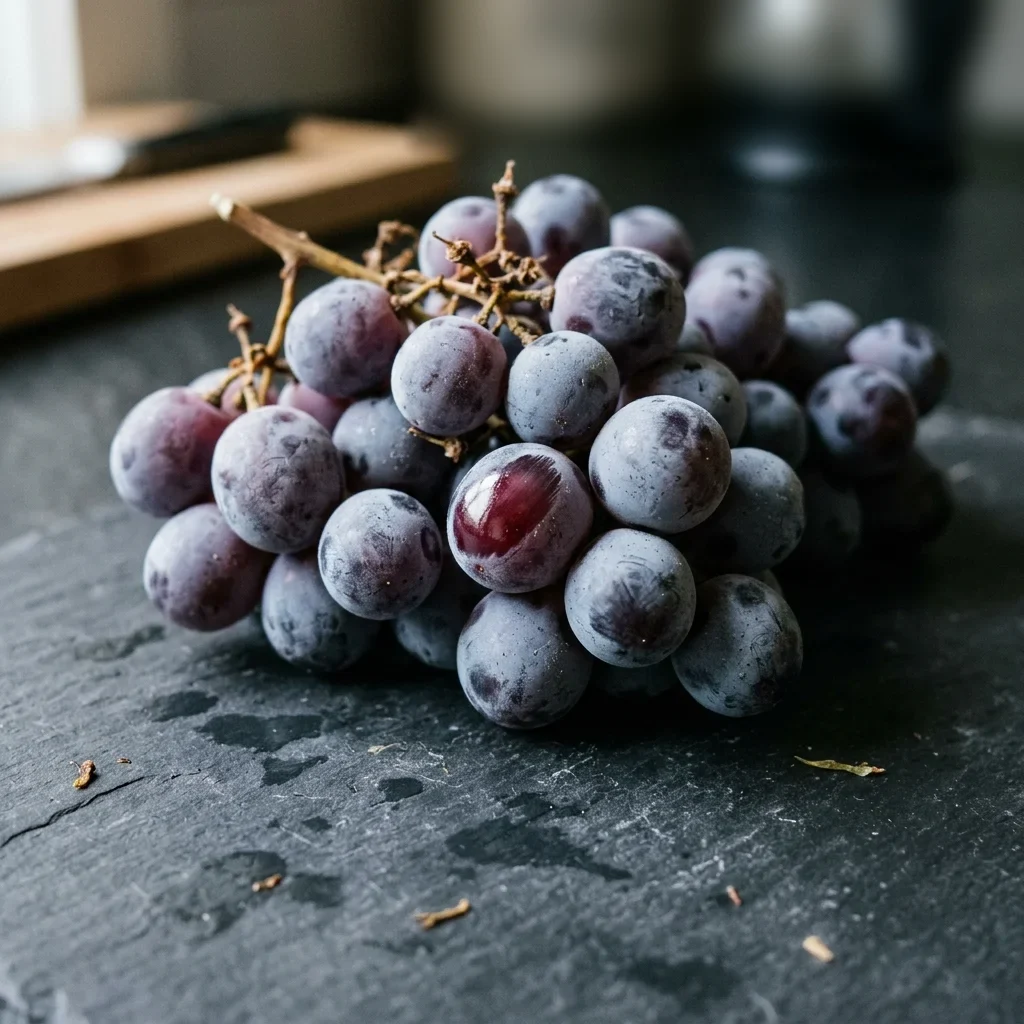
Verdict: use it
Firm grapes with a white bloom
Plump berries, green stems, and a faint even dusty coating. That coating is bloom. Purdue Extension describes it as the natural whitish coating that becomes more noticeable as grapes mature. UC San Diego Center for Community Health says grapes carrying it are still good to eat. Bloom also protects them from losing moisture and decay. So do not scrub it off hunting for mold.
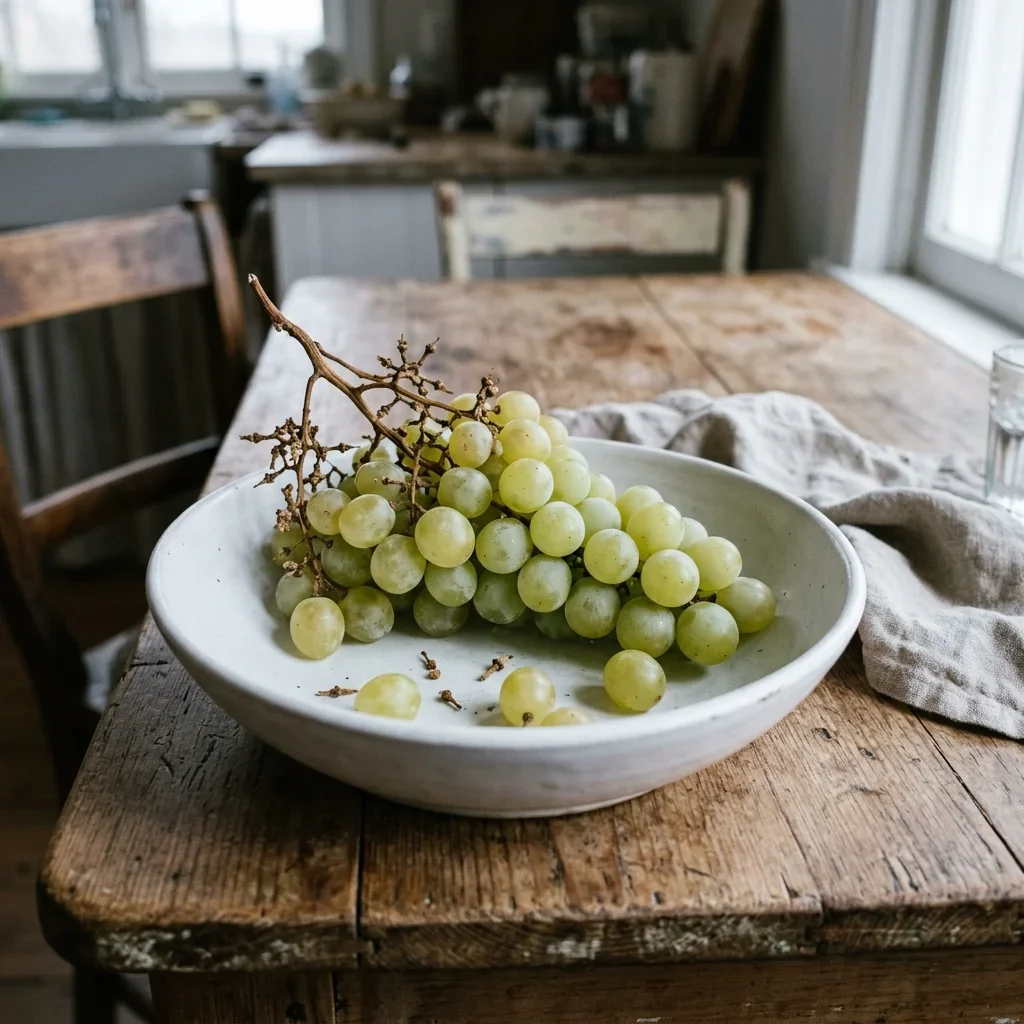
Verdict: eat them this week
Grapes with brown, dry stems
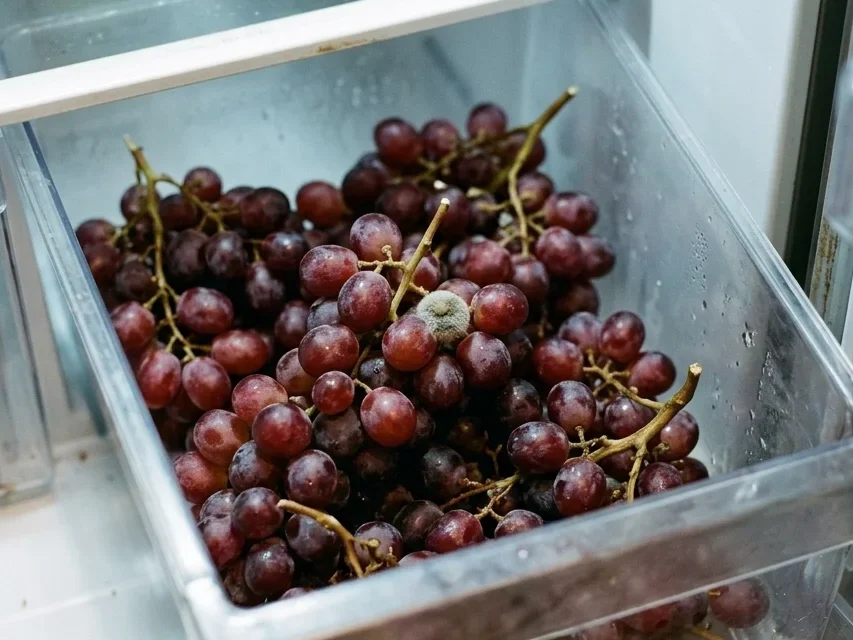
When stems turn brown and brittle, the bunch has been drying out. Crisosto and Smilanick put the stems' respiration rate at roughly 15 times that of the berries. They also list stem drying and browning first among the results of water loss after harvest. Even so, the berries themselves are often still firm. So eat them this week rather than binning them, and put the next bunch in a vented bag.
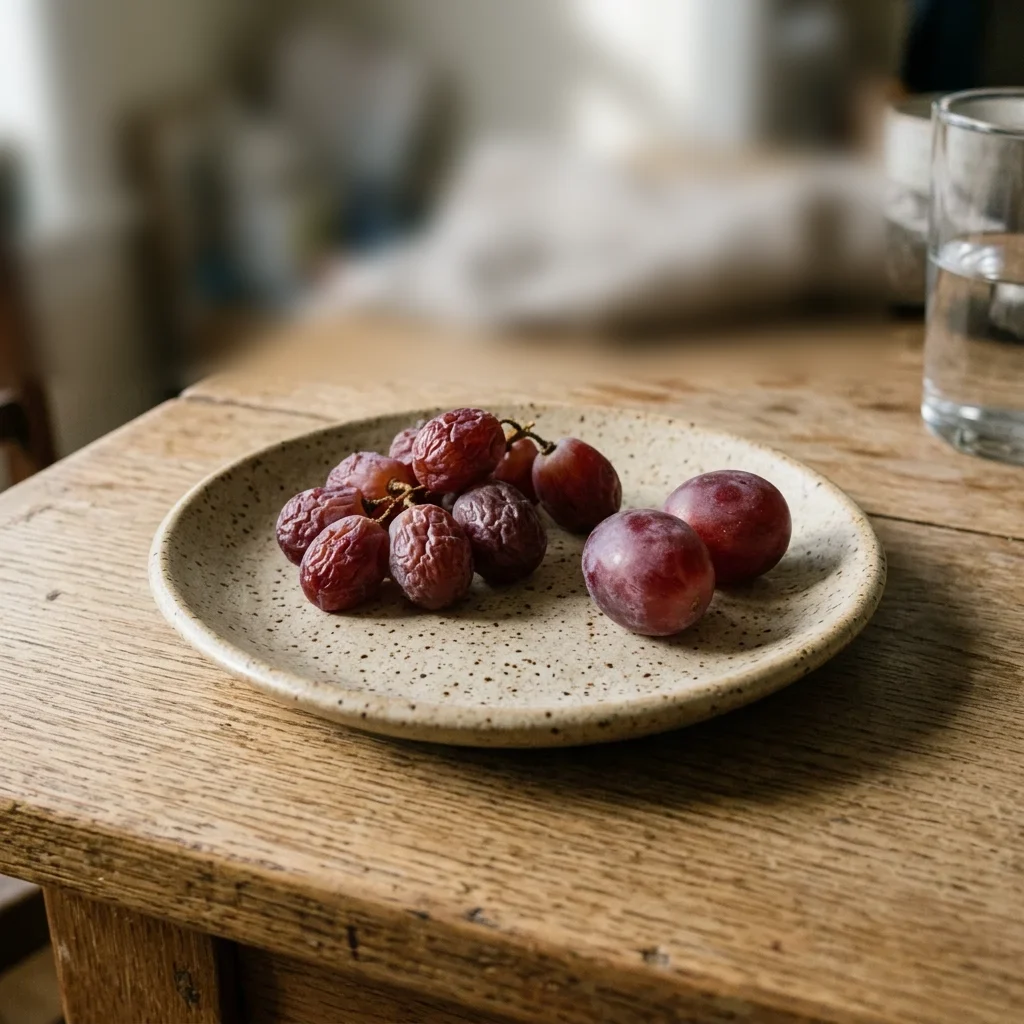
Verdict: cook or freeze them
Wrinkled or soft grapes
When the skin wrinkles and the berry gives under your thumb, that is more water loss. Crisosto and Smilanick name it as wilting and shrivelling of berries. In fact the same source counts shrivelled and dried berries among the quality defects rather than the safety problems. So freeze them or cook them down, as long as nothing is moldy and nothing is leaking.
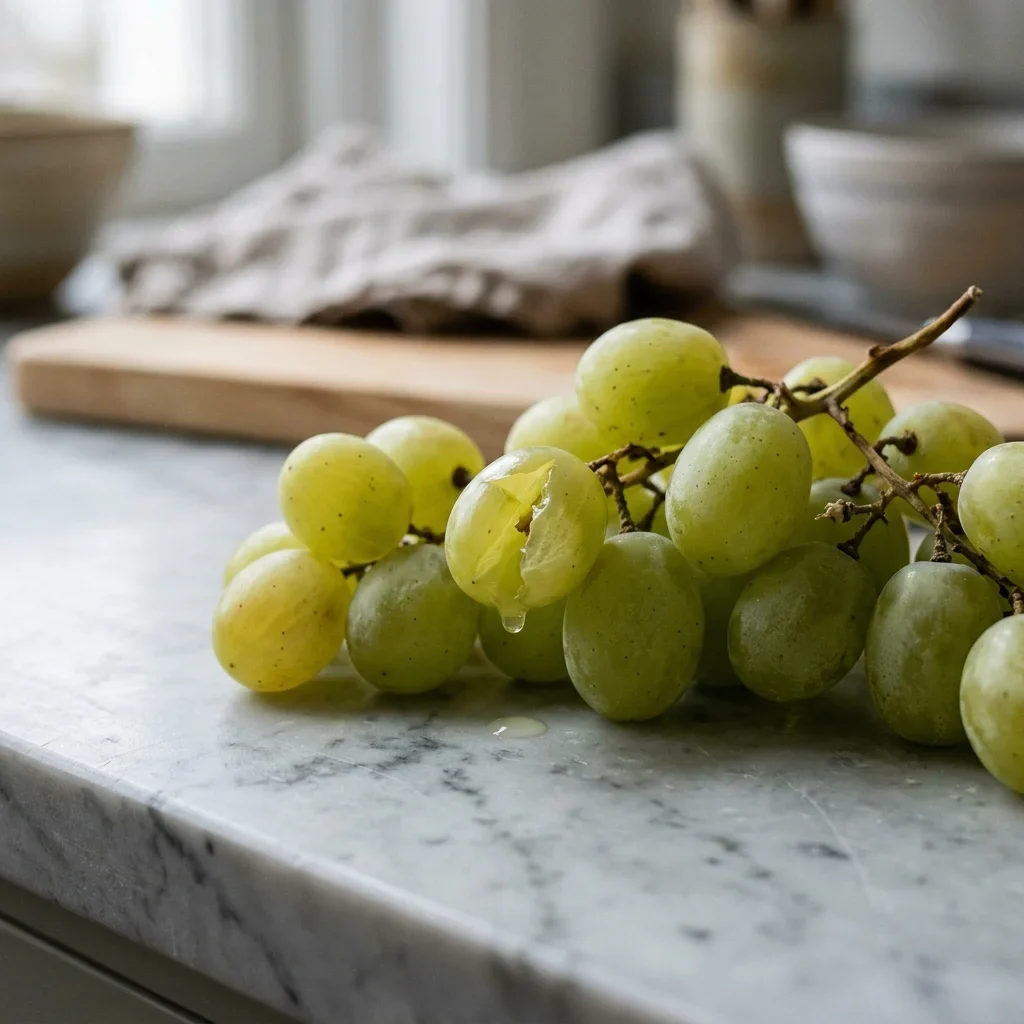
Verdict: pick them out
Split or leaking grapes
Above all, a cracked skin is an open wound. Crisosto and Smilanick say wounds on the berry surface give gray mold its opening. They add that no wound is needed at all when conditions are wet. Then pull the split berries out, dry the bag and eat the rest. Cracked berries count against a bunch in their list of defects too, alongside bruises and shatter. Shatter is their name for berries dropping off the cap stem.
Verdict: throw it out
Moldy grapes
Gray mold, though, is the one that ends a bunch. Crisosto and Smilanick call Botrytis cinerea the most destructive postharvest disease of table grapes. It develops at temperatures as low as 31°F, and it grows from berry to berry. A berry browns first, then its skin loosens. After that, white thread-like filaments erupt through the surface and masses of gray spores follow. That is why the fridge slows gray mold without stopping it. UConn Extension says to discard soft fruit whole when it is moldy. It names strawberries and tomatoes rather than grapes, however. So for one furry berry the honest answer sits in between. Bin that berry and every one touching it, then look over the rest. Give up on the bunch once mold has moved along the stem.
Is the white film on grapes you store mold?
Nearly always it is bloom. The test, in fact, is what it looks like. Bloom is an even, dusty, whitish film over the whole berry. Purdue Extension expects more of it on riper fruit. UC San Diego Center for Community Health adds that it protects the grape from losing moisture and decay. Gray mold, however, looks nothing like that. Crisosto and Smilanick describe brown berries with loosened skins, white filaments erupting through the surface and then gray spores. It usually starts where two berries touch. In other words, even and dusty is fine, whereas fuzzy and patchy is not.
Grape substitutes
Out of grapes, or did the bunch go over before you got to it? Then these will fill the same gap.
Substitute
Works best in
What changes
Apples
Lunchboxes and cheese boards
Crisp and sweet, and they keep for weeks longer.
Raisins
Baking, salads and oatmeal
The same fruit concentrated, so use rather less.
Cherries
Snacking and roasting
Sweeter and softer, with stones to deal with.
Melon
Fruit salad and cheese plates
Juicier and milder. Cut it grape-sized.
Mistakes people make when they store grapes
These are the ways people store grapes that cost them the most, and each one has an easy fix.
Washing the bunch before it goes in the fridge. Wet skins invite mold, so rinse only what you are about to eat.
Pulling the berries off the stem before they go in the fridge. Every pull leaves a wound where rot can start, so keep the bunch whole.
Keeping them in the fridge door rather than at the back. That is the warmest shelf you have, so use the coldest part instead.
Sealing them in a solid tub instead of a vented bag. Trapped moisture rots them, so let the air move.
Parking them next to onions or last night's dinner. Fruit picks up vegetable smells, so give it a drawer of its own.
Binning a whole bunch because of a dusty white film. That is bloom rather than mold, so rinse it and eat.
Leaving one moldy berry in place while you eat the rest. Gray mold grows from berry to berry even in the cold, so take it and its neighbours out.
Sources
Table Grapes Postharvest Quality Maintenance Guidelines, Carlos H. Crisosto, University of California Davis, and Joseph L. Smilanick, USDA-ARS, on 30 to 32°F storage, 90 to 95% humidity, water loss and stem browning, berry shrivelling, shatter, cracked berries and gray mold.
Safe Storage of Fresh Fruits and Vegetables, E-200, Amanda Scott, Texas A&M AgriLife Extension, September 2008, on storing produce unwashed, perforated bags and 3 to 5 days for grapes in the crisper.
Storage Guidelines for Fruits and Vegetables, compiled by Eric de Long and revised by Stephen Reiners, Cornell Cooperative Extension Chemung County, on grapes at 32°F and 90% humidity for 4 to 6 weeks and on storing fruit and vegetables separately.
Veggie Bites: Grapes, Amanda Miller, University of Wisconsin-Madison Division of Extension Fond du Lac County, drawing on Ohio State University Extension, on choosing clusters, perforated bags, 2 to 3 days at best and up to 3 weeks stored well.
Grapes, Charlotte Brennand and Christine Jensen, Utah State University Extension, on perforated bags, temperatures down to 31°F, about 2 weeks of storage and three freezing methods.
Freezing Grapes, National Center for Home Food Preservation, University of Georgia, on sorting, stemming and washing, leaving seedless grapes whole, syrup and purée packs and sugar being optional.
Grapes, Real Life Good Food, University of Minnesota Extension, December 2023, on choosing plump firm grapes, up to 1 week in the fridge and washing right before use.
Grape, FoodLink, Purdue Extension, on choosing firm plump fruit and storing grapes loosely and unwashed for up to 5 days.
Harvesting Grapes, Rosie Lerner, Purdue Extension Yard and Garden, September 2011, on bloom becoming more noticeable at maturity, 32°F with 85% humidity and grapes not ripening after cutting.
Grapes, Eat CA, UC San Diego Center for Community Health, on bloom being a natural coating that is safe to eat, not washing until you are ready to eat, and up to 2 weeks in a breathable bag.
Selecting and Serving Produce Safely, U.S. Food and Drug Administration, March 2024, on washing under running water without soap, refrigerating cut produce and holding perishable produce at 40°F or below.
Handling Food with Mold, Austin Goldberg, Daniela Avelino and Valerie Duffy, UConn Extension, April 2024, on discarding soft fruit whole when it is moldy.
Storage times and safety advice on this page come from the sources above. Food safety depends on conditions I cannot see, so read the Disclaimer, and if in doubt, throw it out.
Other ingredient guides
Browse all guides


Share this guide
Never miss a guide
New ingredient guides when they go up, plus one storage tip worth knowing. Anything sponsored is labelled.

Emilly White