

About 2 weeks
Cool and out of the sun. This is the commercial optimum, oddly enough
About 6 weeks
Whole and unwashed, in a plastic bag in the crisper drawer
Juice and zest
Juice in ice cube trays, then bagged. Zest grated and dried
The short version: to store lemons well, put them whole and unwashed in a plastic bag in the crisper drawer. Keep the bag closed, since the fruit loses water through its skin. Then juice anything going hard and freeze it in cubes.
Storage guidance from Utah State University Extension, UC Davis and University of Minnesota Extension.
On this page
How to choose lemons that store well
Mold on citrus needs a wound, so the rind is the only thing worth inspecting. A heavy lemon is also a wet one, which is the whole point of buying it.
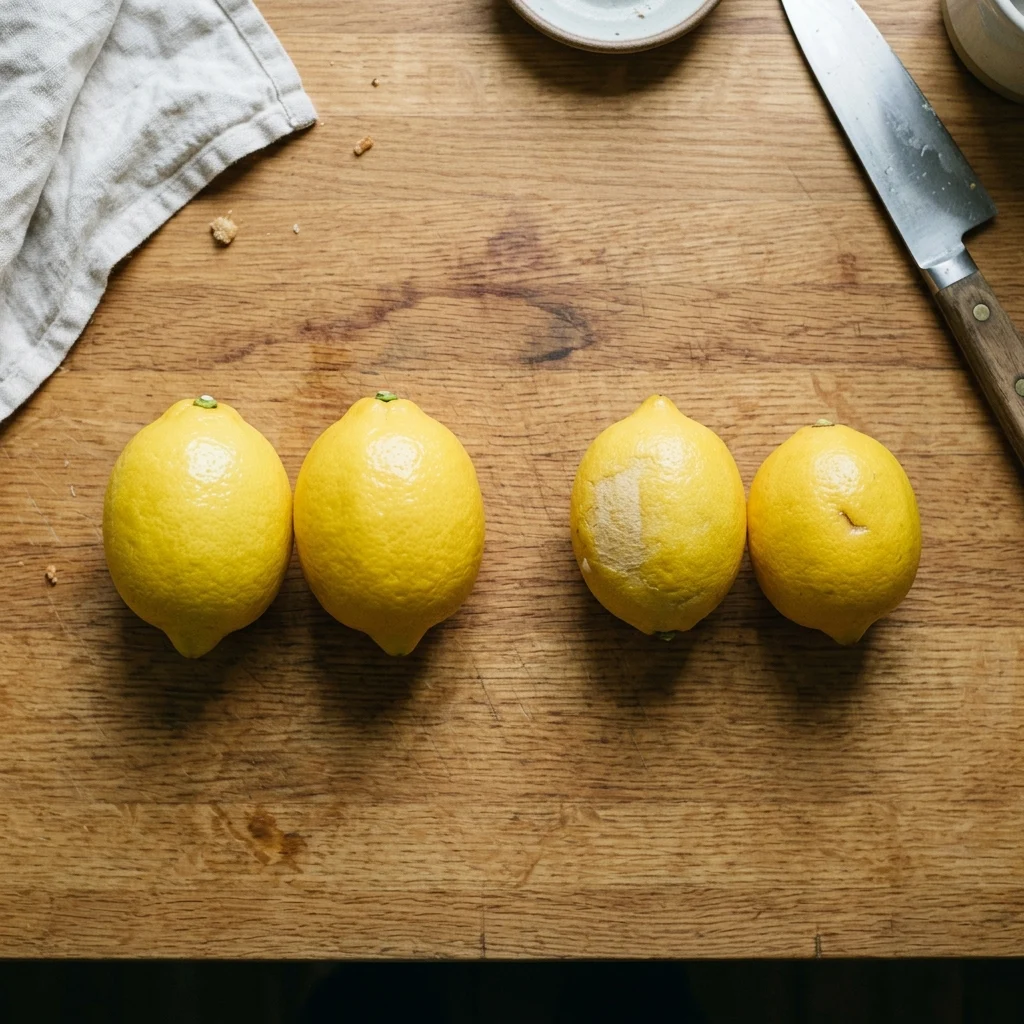
Smooth, heavy and unbroken keeps. A nick is where mold gets in.
Firm, and also heavy for its size. Utah State University Extension looks for firm lemons with a bright yellow colour and a shiny thin skin. They should feel heavy for their size.
Smooth, unbroken skin, especially around the ends. University of Minnesota Extension gives the same short test, firm and heavy with firm, smooth skin.
No soft spots at all, since that is where rot begins. The National Center for Home Food Preservation selects firm, tree-ripened fruit that is heavy for its size. It also asks for fruit free from soft spots.
Nothing nicked or grazed, because mold needs a wound. UC Statewide IPM Program explains that blue and green mold need injured rinds. So a scuff is where the trouble starts.
How to store lemons so they last
To store lemons so they last, slow down two things: water leaving the skin, and mold finding a wound. A bag in the fridge handles the first, while careful handling handles the second.
How to store lemons in the fridge
Put them whole and unwashed in a plastic bag, then keep the bag in the crisper drawer. Utah State University Extension gives bagged lemons about 6 weeks there, against about 2 weeks at room temperature. The bag, however, is doing most of that work. UC Davis names water loss as the main postharvest problem for citrus. Commercial stores also hold lemons at 85 to 90% humidity for the same reason. Then keep them away from the vegetables as well. Cornell Cooperative Extension says fruit and vegetables should always be stored separately. UC Davis adds a stranger reason to keep citrus apart, since biphenyl-treated fruit can pass odours to other produce. The apples guide splits the drawers in the same way.
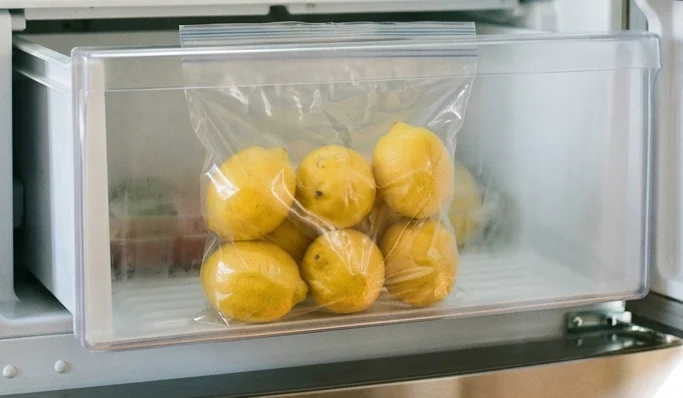
Whole, unwashed and bagged, in the crisper rather than the fruit bowl.
How long can you store lemons?
Two weeks out, or six weeks bagged and cold instead. The published figures agree on the shape of that, if not the numbers. Utah State University Extension gives about 2 weeks at room temperature, for example. It gives about 6 weeks in a bag in the fridge. University of Minnesota Extension is more cautious, at up to 2 weeks in the fridge. Clemson Cooperative Extension, meanwhile, gives citrus a wide 2 to 8 weeks refrigerated. UC Davis gives 1 to 6 months, although that assumes 50 to 55°F and steady humidity. So treat 2 weeks as the figure you can count on. Six weeks is what a good bag earns you.
In other words, the bag matters more than the shelf. A dry lemon has simply lost water, and nothing you do afterwards puts it back.
Should you store lemons in the fridge or on the counter?
The fridge, for anything you are not using this week. This is the one place where home advice and postharvest science pull apart, so it is worth saying why. UC Davis puts the lowest safe temperature for lemons at 11 to 13°C, which is 52 to 55°F. Below that they suffer chilling injury, which shows as pitting, membranous staining and red blotch. A home fridge runs at 40°F or colder, so it sits well under that line. UC Davis also lists lemons among the fruits that one light freezing can ruin. Even so, Utah State University Extension still gives bagged lemons six weeks in the fridge against two on the counter. The honest reading, though, is simple. Chilling injury costs you quality slowly, whereas drying out and mold cost you the whole lemon quickly. Use the counter for the next few days and the fridge for the rest.
How to store lemons you have cut
Cover the cut face, refrigerate it, and plan on days rather than weeks. The FDA asks for cut produce to be refrigerated, at 40°F or below. No extension source I could open, however, gives a day count for a cut lemon. So the numbers you see online come from food blogs rather than from an authority. Judge it by the cut face instead, since dry, darkened or weeping means juice it now. If a jug of lemon water stood out all night, the food left out overnight guide covers that.
Should you store lemons washed or unwashed?
Unwashed, and then scrubbed hard at the chopping board. Texas A&M AgriLife Extension says fresh fruits and vegetables should be stored unwashed. Washing just before use helps prevent spoilage and mold growth in storage. The scrubbing part matters more for lemons than for most fruit. Sue Mosbacher of the UC Cooperative Extension Master Food Preservers puts it plainly. Otherwise any pathogens on the peel will spread to the inside with the cut of the knife. University of Minnesota Extension keeps it simple too: rinse under running water, then pat dry.
Can you freeze lemons?
Yes, and the juice freezes better than the fruit. The National Center for Home Food Preservation gives methods for sections in syrup and for plain juice. Utah State University Extension skips the sections entirely and freezes juice in ice cube trays. So the freezer is where a glut of lemons goes, rather than where a single one waits.
How to store lemons in the freezer
Scrub the outsides first, then juice them. Sue Mosbacher pours the juice into freshly washed ice cube trays and lays wax paper over each tray. Then, the next morning, the cubes go into a labelled freezer container. The label carries the contents, the freeze date and a use-by date. She measures each cube at about two tablespoons, too. She gives the cubes up to a year before quality starts to slip. The National Center for Home Food Preservation adds two details worth copying. Use a squeezer that does not press oil from the rind. Then pack the juice in glass jars to avoid off-flavours.
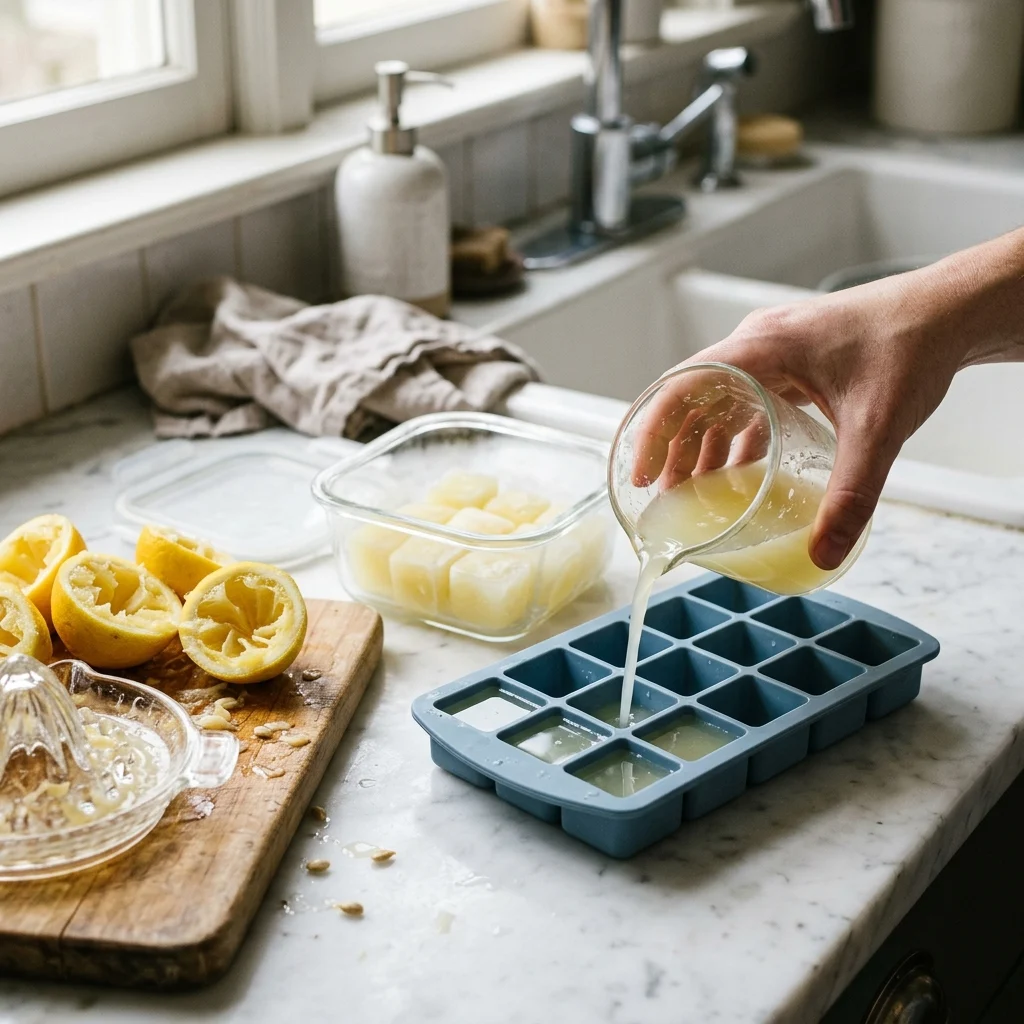
Juice into trays, wax paper over the top, then bag the cubes.
Can you store lemons whole in the freezer?
No published method does it that way. Instead, the National Center for Home Food Preservation washes and peels the fruit. It then divides it into sections and removes the membranes and seeds. Utah State University Extension juices instead, or grates and dries the zest. Neither one freezes a whole lemon, so juice and zest first. Lemon extract is the bottled version of that flavour, and the lemon extract guide covers how long a bottle keeps.
What happens to lemons you store in the freezer
Ice breaks the flesh, so a thawed lemon is soft and the pulp will not hold a slice. The juice, however, comes through more or less intact. One rule comes with it, though. Sue Mosbacher warns against using fresh lemon juice to acidify foods for canning, since its pH cannot be guaranteed. Use bottled juice for canning, and save the lemon juice cubes for cooking and drinks.
How to tell if a lemon has gone bad
Most of a tired lemon is still juice. A pitted skin is only a quality problem, and a hard lemon still gives something up. A soft wet patch, however, is the end. Here is what each stage means.
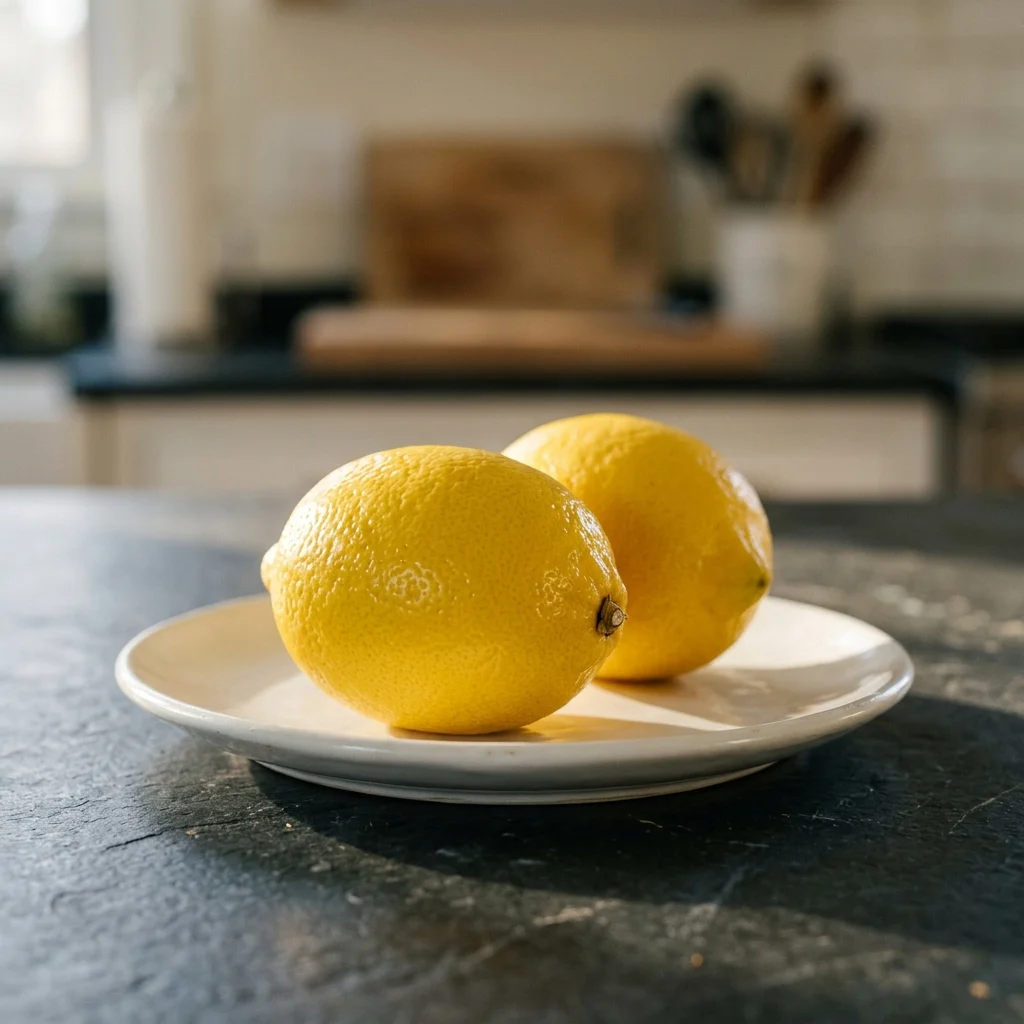
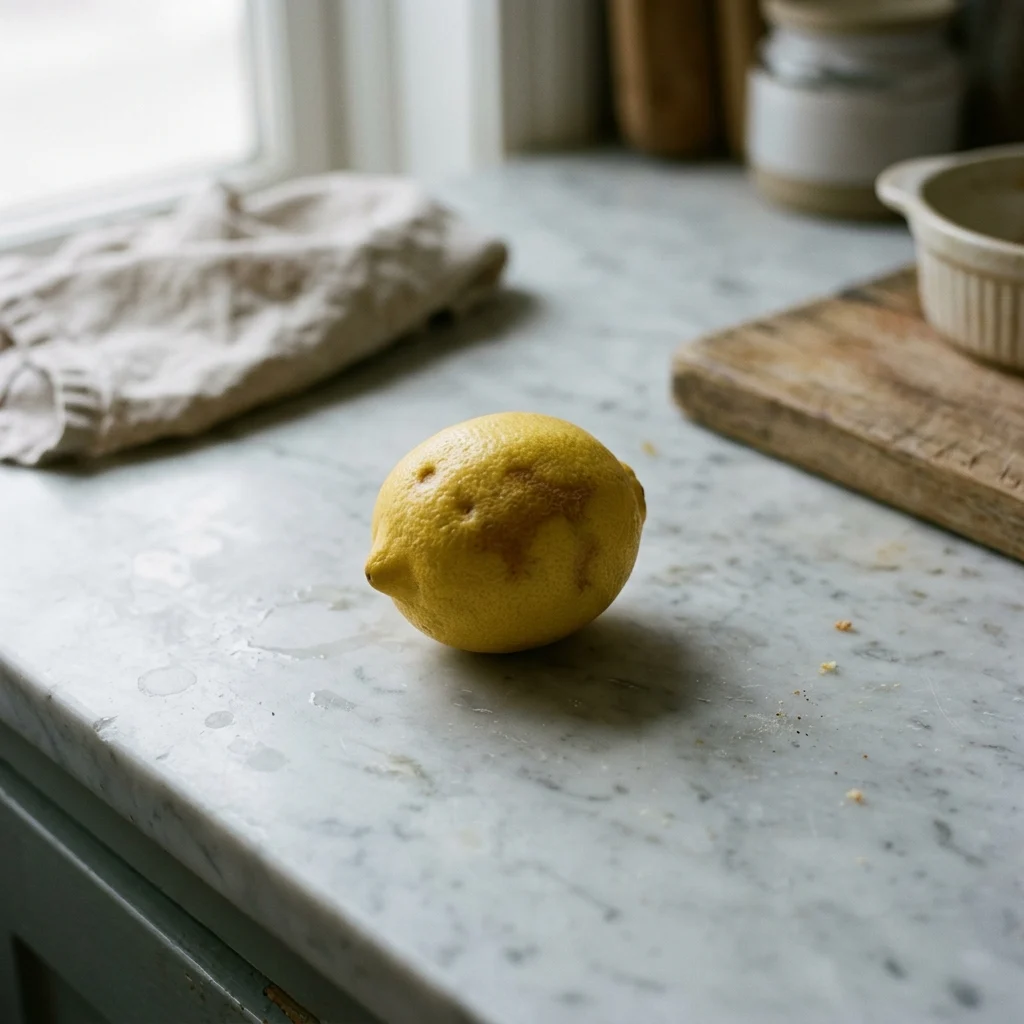
Verdict: use it
Firm, glossy lemons
Bright yellow and smooth, and also heavy in the hand. Utah State University Extension describes the ones worth buying the same way. It asks for a shiny thin skin and weight for the size. So a lemon that still looks like that has not started to turn.
Verdict: juice it this week
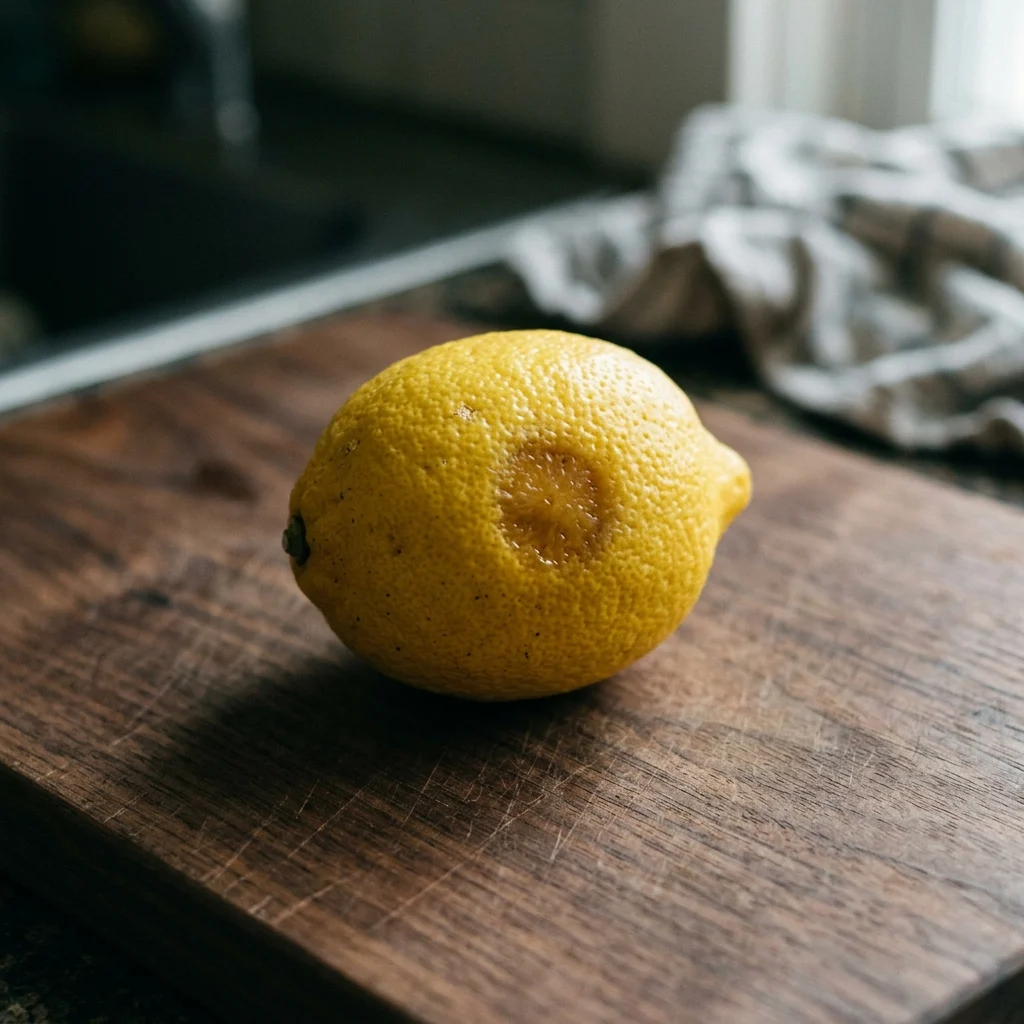
Lemons with pitted or stained skin
Shallow dimples across the rind usually mean the fridge, not age. UC Davis lists pitting, membranous staining and red blotch as the symptoms of chilling injury. In fact they show up below 52 to 55°F. It is a quality fault rather than a safety one. So juice the fruit, then move the bag to a warmer shelf.
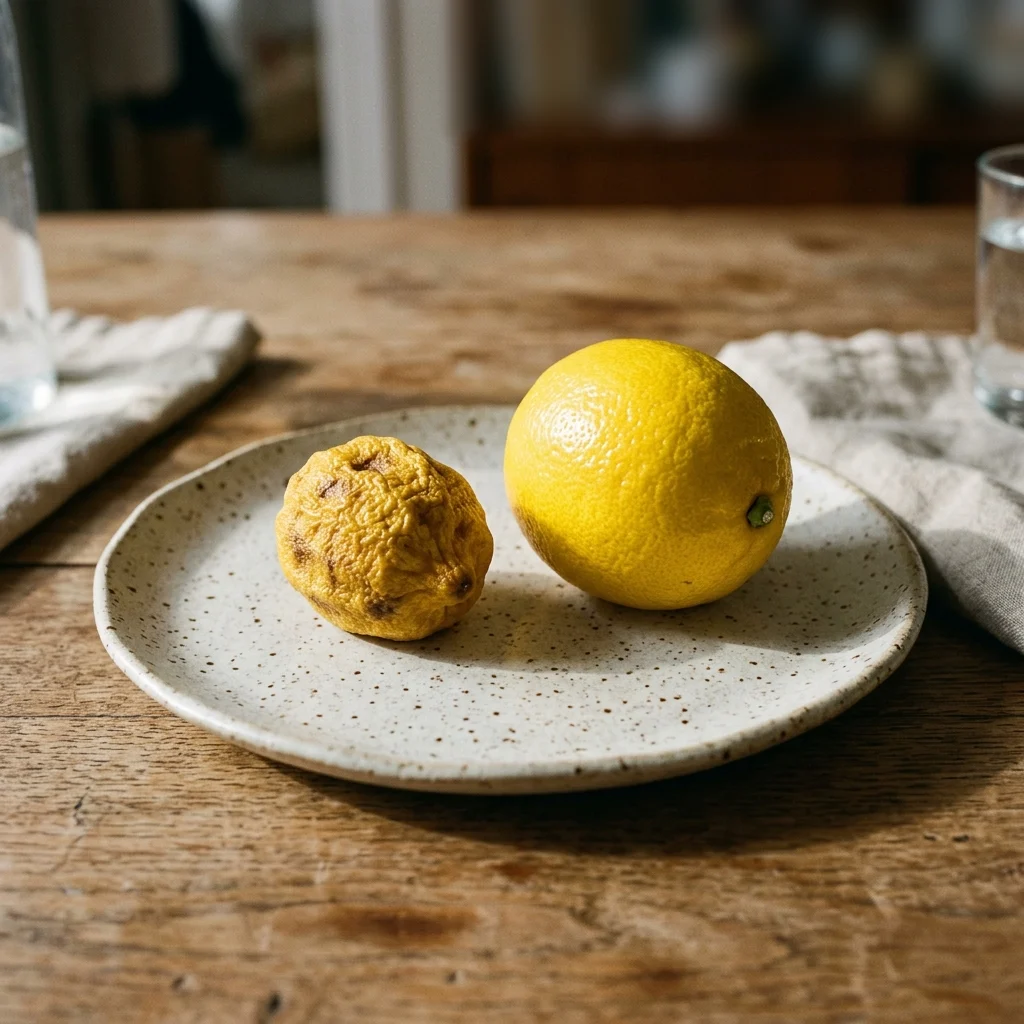
Verdict: juice it now
Hard, dry or shrivelled lemons
When a lemon turns light and leathery, it has lost its water. UC Davis names water loss as the main cause of postharvest loss in citrus, and nothing reverses it. Roll it firmly, then cut it and take whatever juice is left. In fact a hard lemon often still gives a tablespoon or two, which is enough for a dressing.
Verdict: throw it out
Lemons with a soft, water-soaked patch
That patch has a name, and it is the start of mold rather than a bruise. UC Statewide IPM Program calls it clear rot, a circular, soft, water-soaked lesion on the rind. Whitish mycelia and then blue or green spores come next. So bin it before that happens, even though nothing is fuzzy yet.
Verdict: throw it out, then check the bag
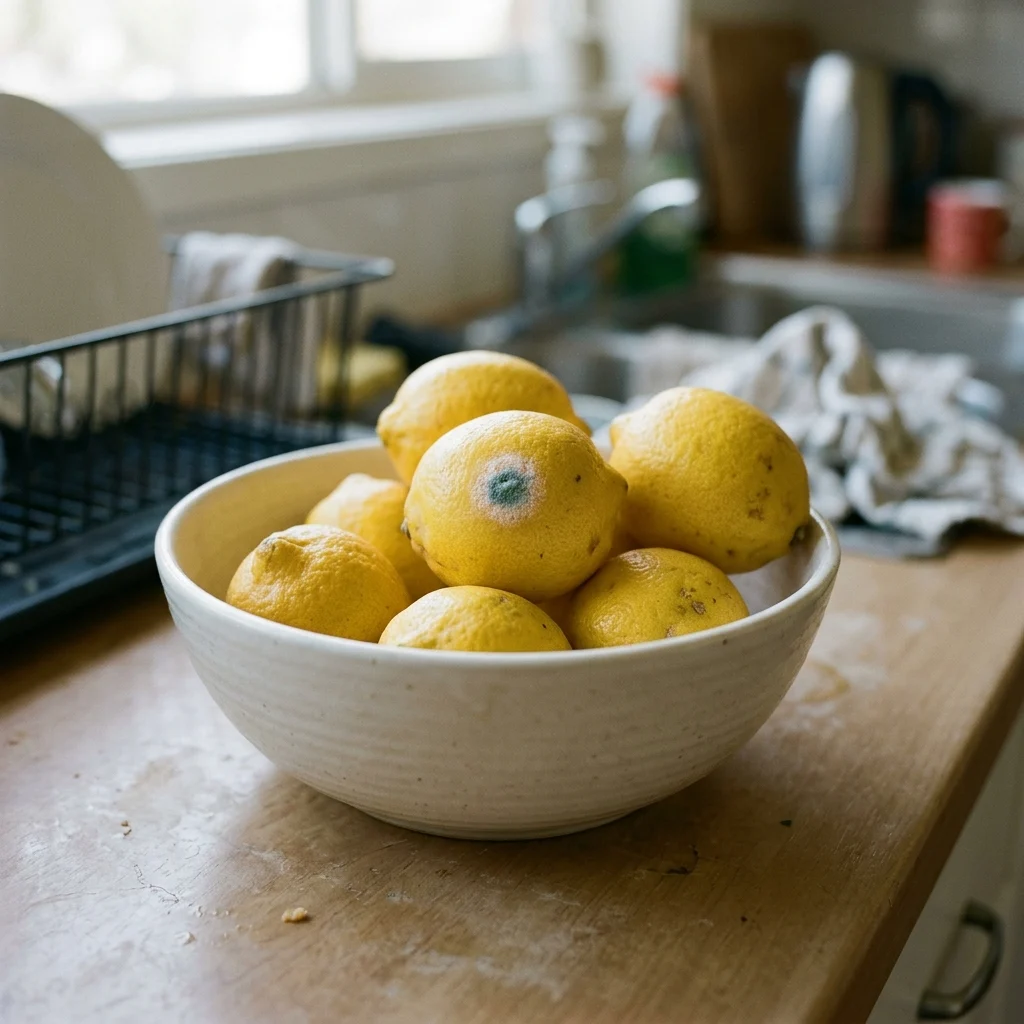
Lemons with white, green or blue mold
Two fungi account for nearly all of it, in fact. UC Statewide IPM Program names blue mold as Penicillium italicum and green mold as P. digitatum. Both of them, though, need an injured rind to get in. The mold shows first as whitish mycelia, then as blue or green spores on the surface. UConn Extension does not name citrus in either of its lists. So there is no one-inch trim to fall back on here. A moldy lemon is wet rather than firm, which puts it on the discard side of that rule anyway.
Do the lemons you store next to a moldy one have to go too?
Not automatically, but look at every one of them. UC Statewide IPM Program is specific about how this spreads. After harvest, blue and green mold can infect healthy fruit if it is stored with injured fruit. The word injured, though, is the hinge. A sound rind resists both fungi, whereas a scuffed one beside a moldy lemon is the next casualty. So throw out the moldy fruit and anything it was touching. Then check the rest for nicks and soft spots. Wipe the bag or the drawer out afterwards, and use the sound lemons first rather than last.
Lemon substitutes
Out of lemons, or did the last one go hard before you got to it? Then these will stand in.
Substitute
Works best in
What changes
Limes
Dressings, drinks and marinades
Sharper and more floral. Use the same amount.
Bottled lemon juice
Canning and baking
Flatter in flavour, but its acidity is guaranteed.
White wine vinegar
Vinaigrettes and pan sauces
Acid without the perfume. Start with half.
Citric acid
Preserving and sorbets
Pure sourness, so measure it carefully.
Mistakes people make when they store lemons
These are the ways people store lemons that cost them the most, and each one has an easy fix.
Leaving them in the fruit bowl for weeks rather than days. Two weeks is about the limit there, so bag the rest and chill them.
Storing them loose in the crisper instead of bagged. They dry out through the skin, so keep a bag around them.
Washing them before they go in. Surface water feeds mold, so wash them at the chopping board.
Cutting into a lemon before you scrub it. The knife carries whatever is on the peel inside, so wash it first.
Binning a hard lemon although it still holds juice. It has lost water rather than gone bad, so roll it and squeeze it.
Keeping a nicked lemon beside a moldy one while you decide. Injured rinds are how the mold spreads, so separate them.
Using home-squeezed juice for canning rather than bottled. Its pH is not guaranteed, so use bottled juice there. Utah State University Extension asks for bottled juice when canning pomegranate juice too.
Sources
Lemons, Susan Hawes, Utah State University Extension, July 2023, on choosing firm shiny lemons, about 2 weeks at room temperature, about 6 weeks in a plastic bag in the refrigerator, freezing juice in ice cube trays and drying zest.
Small-Scale Postharvest Handling Practices: A Manual for Horticultural Crops, Lisa Kitinoja and Adel A. Kader, University of California Davis Postharvest Technology Center, 4th edition, July 2002 and revised November 2003, on lemons at 50 to 55°F with 85 to 90% humidity for 1 to 6 months, chilling injury below 52 to 55°F showing as pitting, membranous staining and red blotch, susceptibility to one light freezing, water loss as the main loss in citrus, and biphenyl-treated citrus passing odours to other produce.
Lemons, Real Life Good Food, University of Minnesota Extension, on choosing firm heavy lemons with smooth skin, up to 2 weeks in the refrigerator, and rinsing under running water before use.
Selecting and Storing Fruits and Vegetables, HGIC 4038, E.H. Hoyle, revised by Adair Hoover and Gayle Willford, Clemson Cooperative Extension, revised January 2013, on citrus keeping 2 to 8 weeks in the refrigerator and 3 to 4 months frozen.
Blue and Green Mold of Citrus, UC Statewide Integrated Pest Management Program, adapted from Integrated Pest Management for Citrus, on Penicillium italicum and P. digitatum needing injured rinds, on clear rot as a circular soft water-soaked lesion, on whitish mycelia and blue or green spores, and on healthy fruit becoming infected when stored with injured fruit.
Freezing Citrus Fruits, National Center for Home Food Preservation, University of Georgia, on selecting firm fruit free from soft spots, sectioning and removing membranes and seeds, 40 percent syrup, using a squeezer that does not press oil from the rind, and packing juice in glass jars.
Freezing Fresh Lemon Juice, Sue Mosbacher, UC Cooperative Extension El Dorado County Master Food Preservers, March 2012, on scrubbing the peel before cutting, freezing juice in ice cube trays under wax paper, labelling containers, about two tablespoons per cube, up to a year of good quality, and using bottled juice rather than fresh for canning.
Safe Storage of Fresh Fruits and Vegetables, E-200, Amanda Scott, Texas A&M AgriLife Extension, September 2008, on storing fresh produce unwashed and washing it just before it is eaten or prepared.
Storage Guidelines for Fruits and Vegetables, compiled by Eric de Long and revised by Stephen Reiners, Cornell Cooperative Extension Chemung County, on storing fruit and vegetables separately and on never letting stored produce freeze.
Selecting and Serving Produce Safely, U.S. Food and Drug Administration, March 2024, on washing produce under running water without soap, refrigerating cut produce, and holding perishable produce at 40°F or below.
Handling Food with Mold, Austin Goldberg, Daniela Avelino and Valerie Duffy, UConn Extension, April 2024, on trimming an inch from firm fruits and vegetables and discarding soft ones whole.
Storage times and safety advice on this page come from the sources above. Food safety depends on conditions I cannot see, so read the Disclaimer, and if in doubt, throw it out.
Other ingredient guides
Browse all guides


Share this guide
Never miss a guide
New ingredient guides when they go up, plus one storage tip worth knowing. Anything sponsored is labelled.

Emilly White