
Not an option
Two hours out of the fridge is the limit, so pour and put it back
5 to 7 days
At 40°F or lower, covered, and refrigerated again once opened
Months, for quality
Leave 2 inches of headspace, because cider expands as it freezes
The short version: to store apple cider well, keep it at 40°F or lower and drink it within five to seven days. Two hours on the counter is the limit, so a party jug goes back in the fridge between pours. Then freeze whatever is left, with 2 inches of headspace.
Storage times and temperatures here come from Oregon State University Extension and Washington State University Extension, while the untreated-juice rules come from the FDA and the home-pasteurizing figures from University of Maine Extension.
On this page
What to check before you store apple cider
Two things decide everything that follows, although neither one is the jug. The first question is whether it was pasteurized. Then comes the second, which is what the apples were like. So read the label before you plan the week. Serving it at a Halloween party? How to store Halloween leftovers covers the rest of the table.
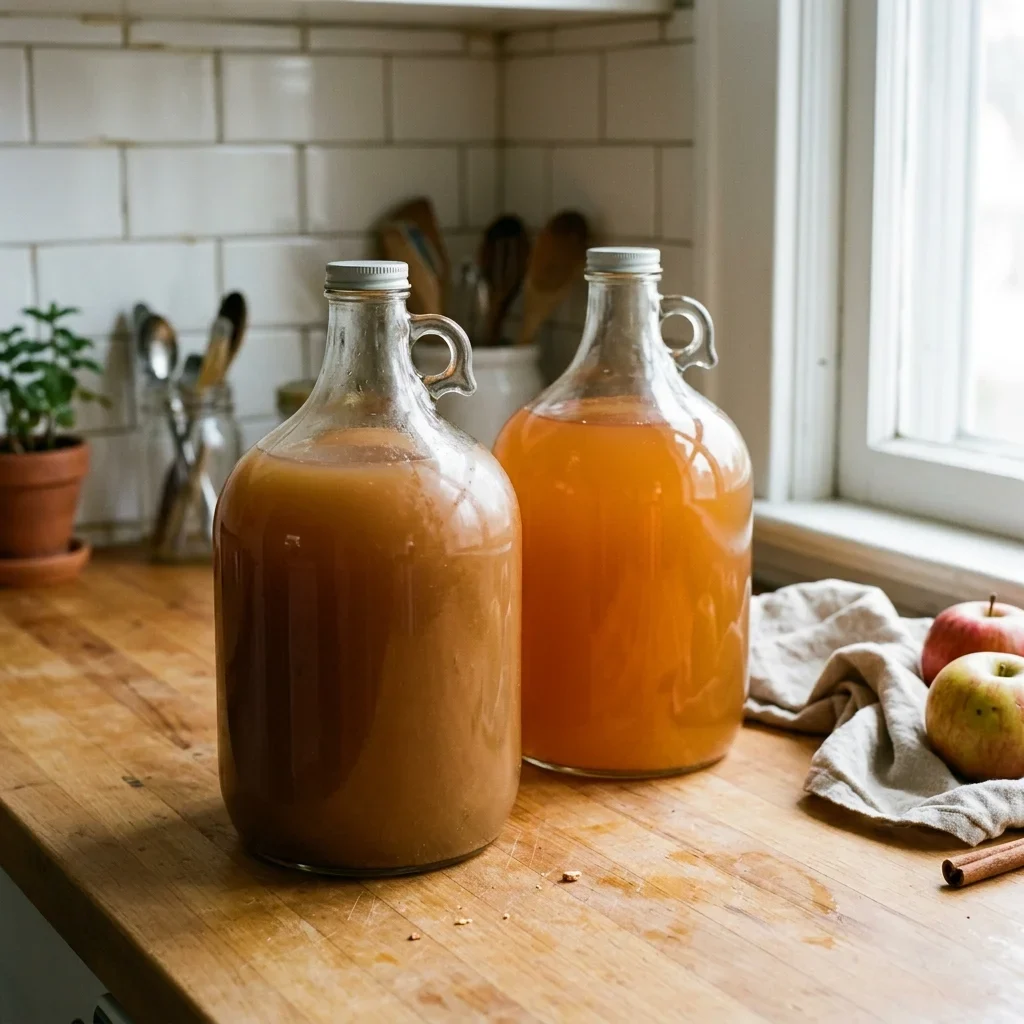
Cloudy or clear tells you nothing on its own. The label does.
A warning on the label means it is untreated. The FDA also requires those products to carry it, word for word. "WARNING: This product has not been pasteurized and therefore may contain harmful bacteria that can cause serious illness in children, the elderly, and persons with weakened immune systems." So if that sentence is on the jug, the cider is raw.
No label does not mean pasteurized, though. The FDA does not require warning labels for juice or cider that is sold by the glass. So a cup poured at a cider mill, a farmers' market or a juice bar may still be raw. Ask instead.
Who is drinking it matters more than the date. The FDA names children, older adults, pregnant women and people with weakened immune systems as the ones at risk. So for them, cider gets heated or skipped, however fresh it is.
The apples it came from set the ceiling. MSU Extension says never to use apples from the ground. Manure from cattle, deer and some birds can carry E. coli, because fallen fruit can pick it up. Washing helps, although it does not remove everything. Oregon State's grower guide also tells producers to discard spoiled, moldy or defective apples. Those can carry patulin, since it is a toxin produced by certain molds.
How to store apple cider so it lasts
To store apple cider so it lasts, keep it cold and keep it covered. There is no counter option here, unlike most things on this site. Cider is a perishable drink, so the fridge is the only place it belongs between pours.
How to store apple cider in the fridge
At 40°F or lower, covered, and back in the fridge as soon as you have poured. Oregon State University Extension puts raw cider at 40 degrees F or below for up to seven days. University of Maine Extension sets the same temperature. It also tells you to cool cider to 40°F or lower as quickly as possible after bottling. Oregon State's label guidance adds the other half, which is to refrigerate upon opening. So an opened jug is not a different rule, although it is a shorter clock in practice. Keep the lid on too, because every source here assumes a closed container.
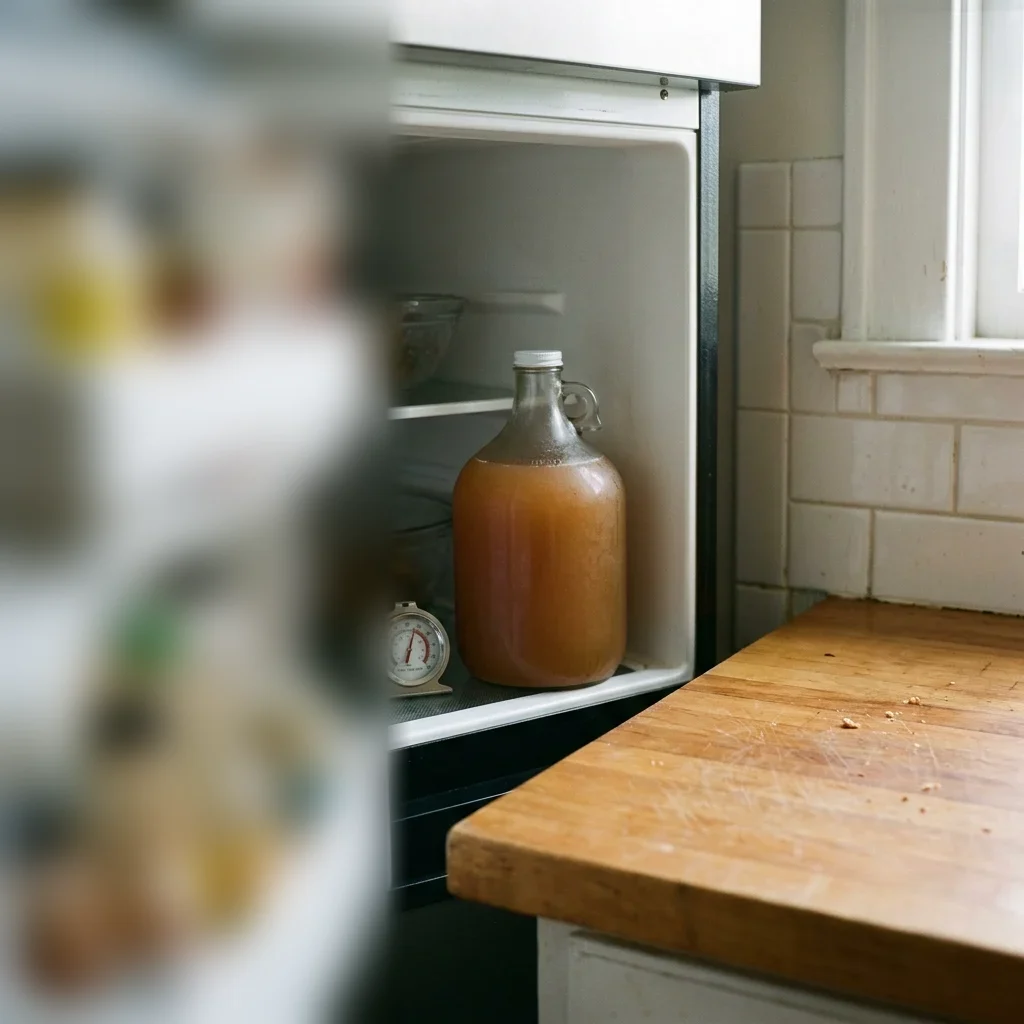
Capped, upright, at 40F or lower, and back in after every pour.
How long can you store apple cider?
Five to seven days, and the published figures sit right across that gap. Washington State University Extension says to refrigerate juice up to five days, or else freeze it for longer storage. Oregon State University Extension, meanwhile, gives raw cider up to seven days at 40°F or below. Its home-preserving page then puts pasteurized cider at about a week. MSU Extension also says up to seven days, in sanitized containers. So the whole spread is two days, which is small enough to take the short end.
So take five days, and treat the seventh as the outside edge. The reason is that nobody publishes a separate figure for an opened jug, however common that is. In other words, that window covers the whole life of the cider. It is not a fresh count from the day you break the seal.
Is it safe to store apple cider that is unpasteurized?
It is legal to sell, but it is not the same risk as a pasteurized jug. Oregon State University Extension says unpasteurized apple cider has been linked with illness caused by E. coli 0157:H7 bacteria. Washington State University Extension adds Salmonella to that list. So cold storage does not fix it, because the FDA requires the warning on product that is already kept refrigerated. If you want the cider and not the risk, heat it. Oregon State heats the juice to at least 160°F and holds it for 6 seconds. Without a thermometer that reads that high, it says to heat the juice until it simmers. University of Maine Extension gives 155°F for 10 seconds instead, which is also what Maine law requires. MSU Extension brings the cider just to a boil. So the numbers differ, although every source we opened says to heat it.
How to store mulled apple cider after a Halloween party
Cool it fast, cover it, and give it three to four days. The USDA, first of all, says not to leave any perishables out of the refrigerator more than 2 hours. University of Maine Extension says the same about cider, since warm cider is a perishable drink. So a pot that has been warm on the stove all evening is on that clock too. Then use the leftovers within 3 to 4 days, which is what the USDA gives leftovers generally. That way mold does not get a chance to grow, as the factsheet puts it. A pot that sat out overnight, however, is the version to avoid. The same factsheet also asks you to cover leftovers and refrigerate them promptly.
How to store apple cider you pasteurized at home
Get it cold quickly, then treat it like any other opened jug. University of Maine Extension says to cool the cider to 40°F or lower as quickly as possible after bottling. MSU Extension adds the container rule, because it asks for sanitized storage containers. Both then give you the same window as a shop-bought jug, so five to seven days is still the number. Also use freshly harvested apples when you press. MSU Extension says apples become less acidic as they age, which lets bacteria grow.
Can you store apple cider in the freezer?
Yes, and both Oregon State pages send you there for anything longer than a week, so this is the easy part. In fact, Oregon State University Extension says that for longer storage, freezing is recommended. Washington State University Extension gives the same choice, since it is refrigerate up to five days or freeze for longer storage. So the freezer is the answer to a gallon you cannot drink in a week.
How to store apple cider in the freezer
Leave room at the top, then seal it and freeze it. Oregon State University Extension asks for at least a 2-inch head space, since the cider will expand during freezing. For juice it gives the same figure, because glass or plastic jars need 2 inches of headspace. So pour the cider into containers rather than freezing the jug as it came. The FDA adds the reassuring part, which is that freezing at 0°F keeps food safe indefinitely. In other words, any freezer figure you read is about quality. Pomegranate juice follows the same rule, at about a year in the freezer.
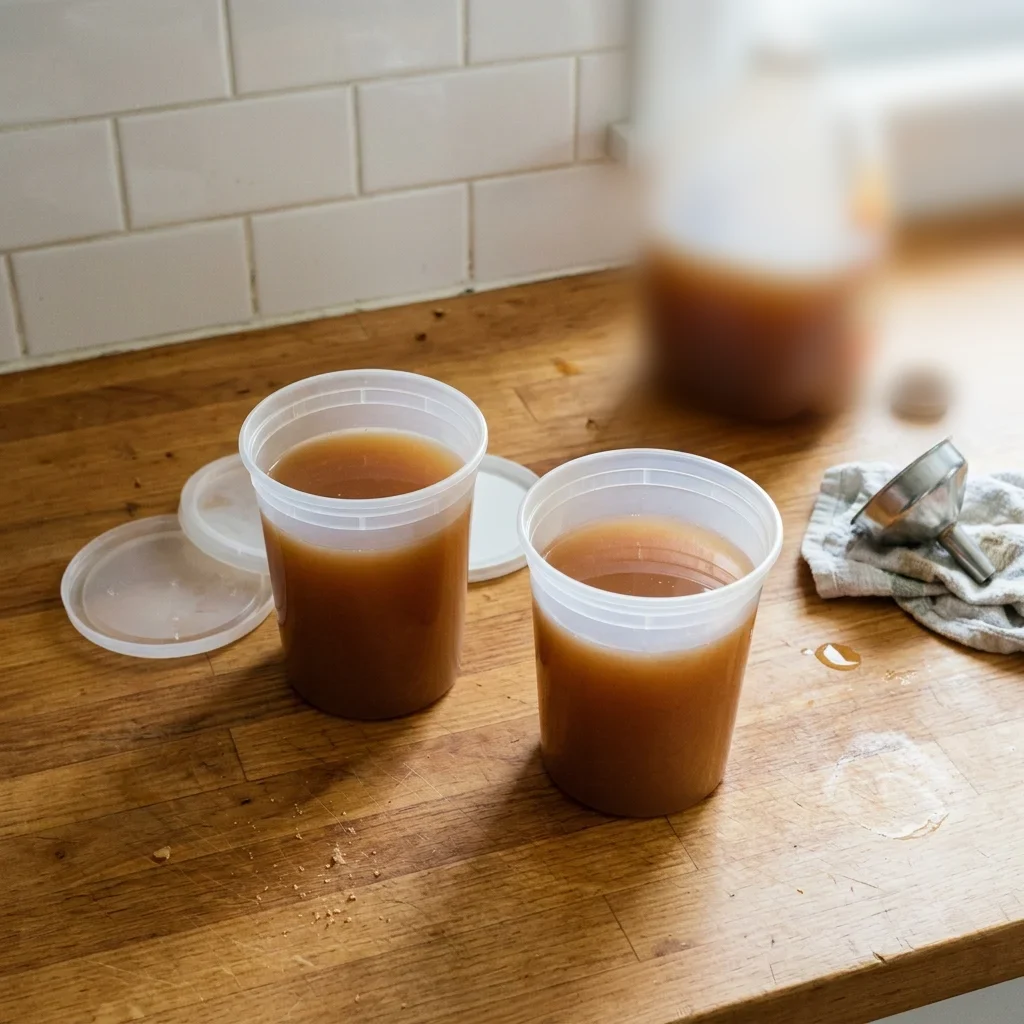
Two inches of empty space, because cider expands as it freezes.
Can you store apple cider in the jug it came in?
Not in the freezer, because a full jug has no room to expand. Oregon State University Extension wants at least 2 inches of head space, so a jug filled to the neck has nowhere to put that expansion. Pour some off and drink it, then freeze the rest in containers. In the fridge, on the other hand, the original jug is fine. Keep it capped and cold, and the five to seven days runs from the day you brought it home.
What happens to apple cider you store in the freezer
Nothing that matters, as long as the container had room. The FDA says freezing at 0°F keeps food safe indefinitely, so the freezer is not a clock for safety. What the freezer cannot do, however, is undo anything. University of Maine Extension says patulin, the toxin from moldy apples, is also heat stable and can survive pasteurization. No source we opened says cold removes it either, so the fix for that one sits at the apple end. Once it is thawed, nobody gives a separate window, so treat it as an opened jug again.
How to tell if apple cider has gone bad
However you store apple cider, the thing most people worry about is the thing that is normal. Cloudy cider with sediment, in fact, is just cider. Fizz, a boozy smell and mold are the real signals, although the fridge clock sits behind all of them. Here is what each stage means, then.
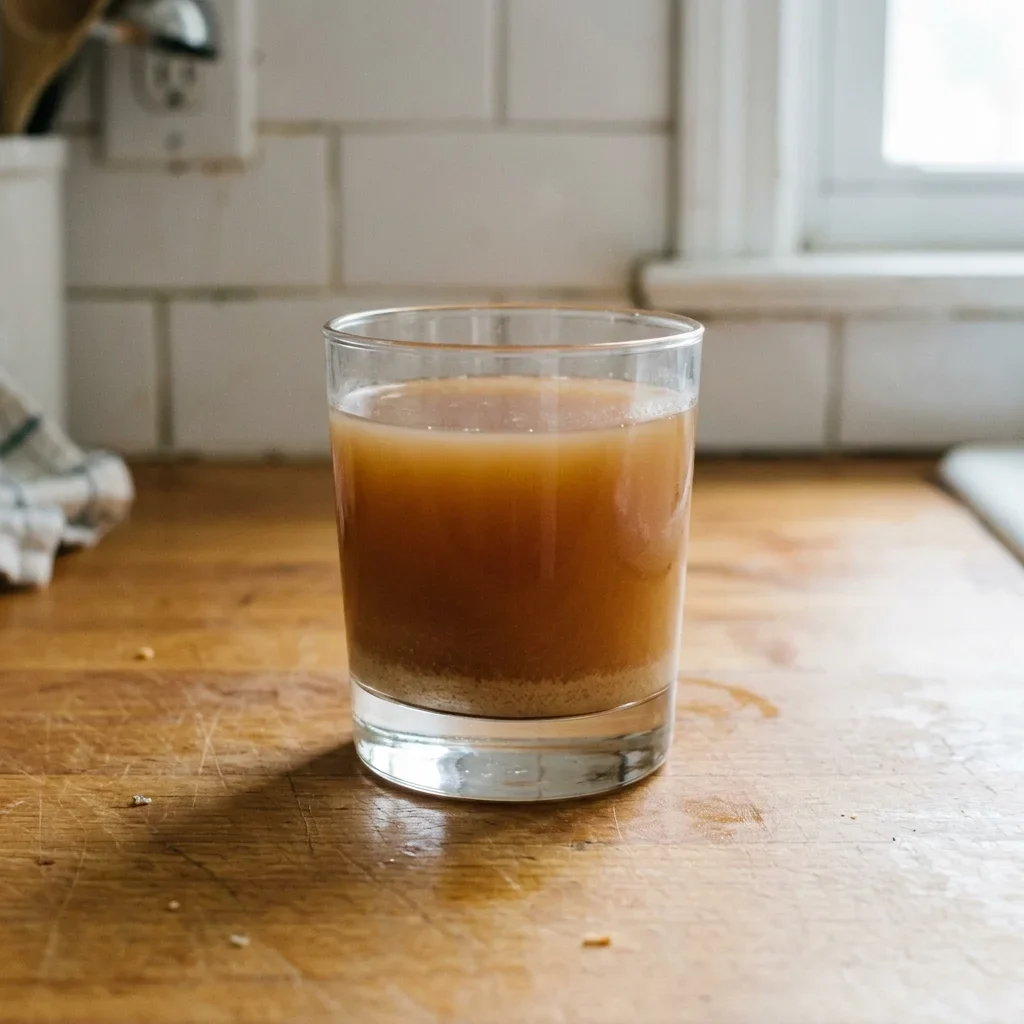
Verdict: drink it
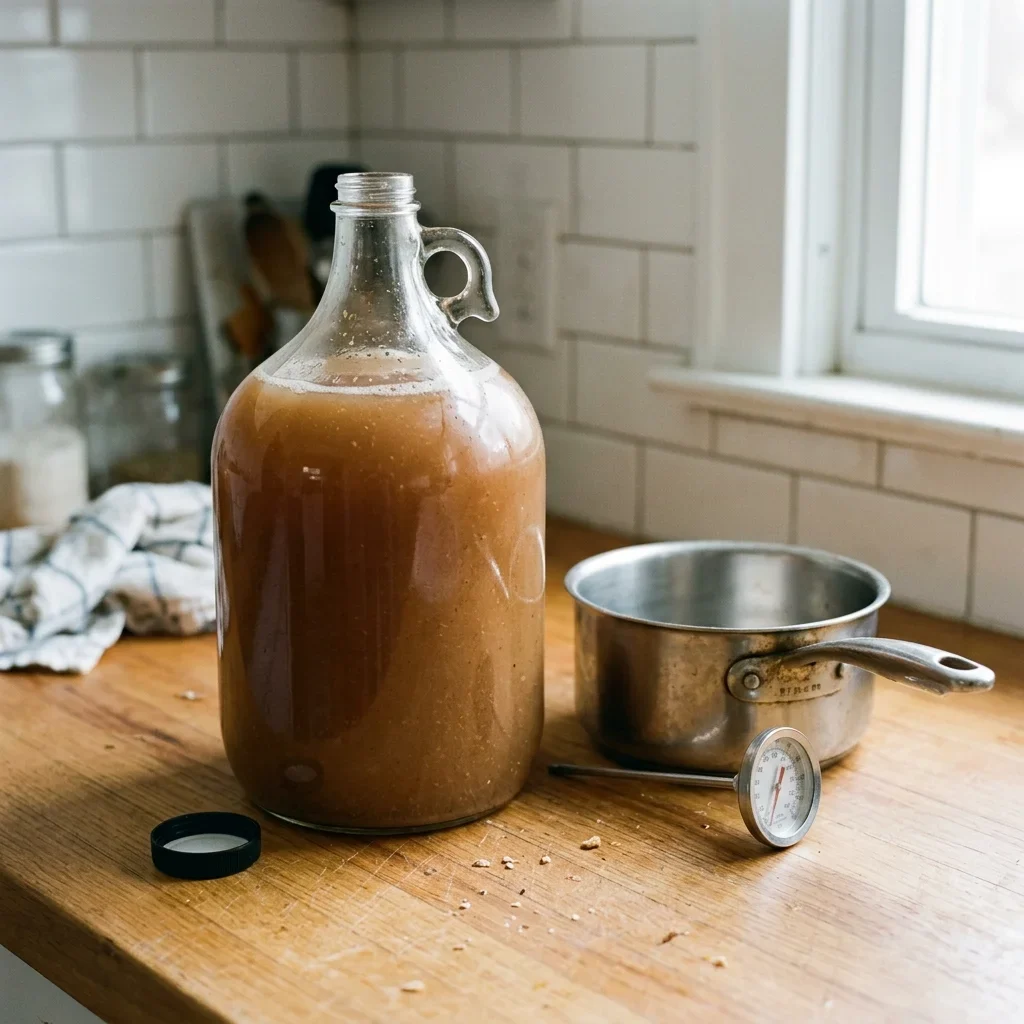
Cloudy apple cider with sediment
Cloudy is how fresh cider looks. Oregon State University Extension says, in fact, that fresh pressed cider has a cloudy appearance. So a jug that is not clear is not a jug that has turned. Give it a shake, then pour it.
Verdict: heat it or skip it
Unpasteurized apple cider
Raw cider is a storage question and a safety question at once. The FDA requires the warning on the label. It also names children, older adults, pregnant women and people with weakened immune systems as those at risk. So for anyone in that group, heat it to 160°F first, as Washington State University Extension directs. Everyone else is making a choice rather than a mistake, although Oregon State links raw cider to E. coli 0157:H7 illness. Cold storage does not change that part either.
Verdict: throw it out
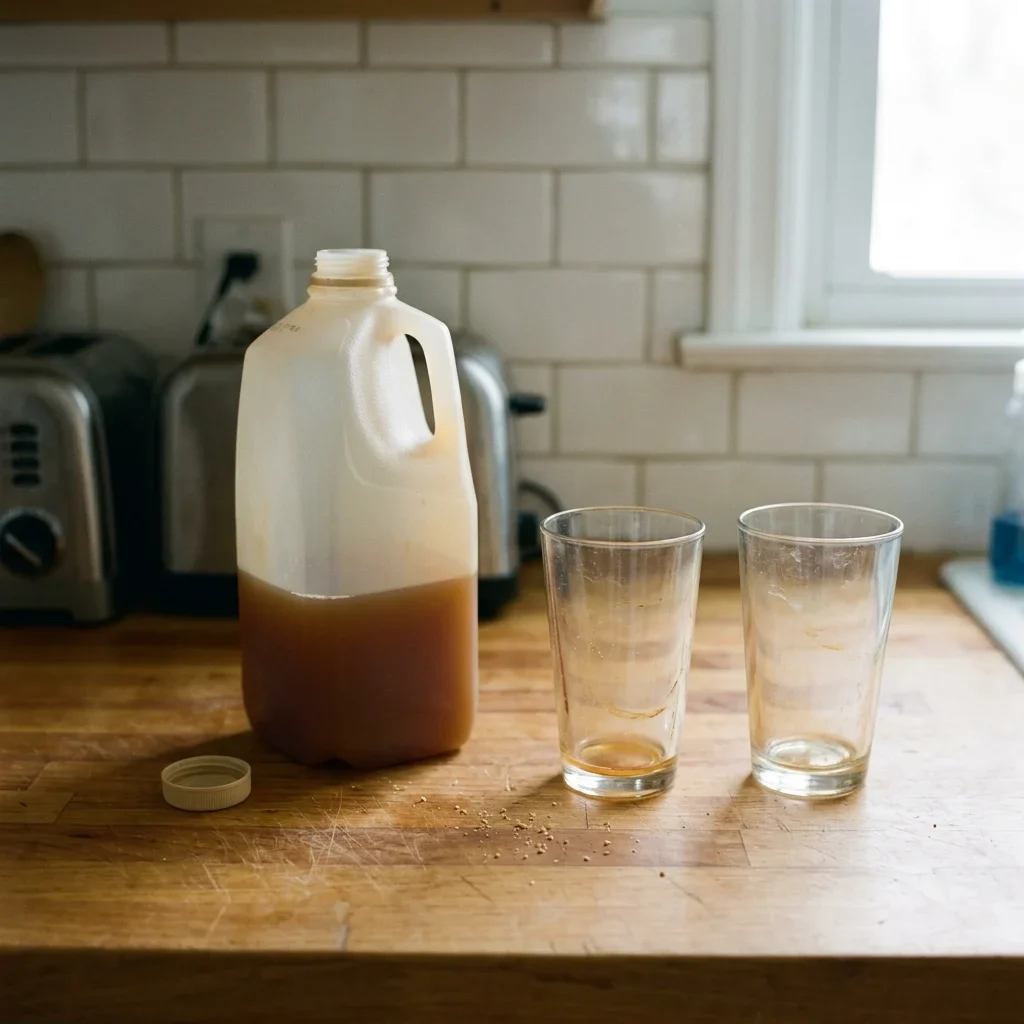
Apple cider that sat out for hours
Two hours is the published limit, and a party runs longer. The USDA says not to leave any perishables out of the refrigerator more than 2 hours. University of Maine Extension likewise lists leaving cider at room temperature for longer than two hours among the things not to do. So a jug that stood on the table all evening goes, however full it still is. Chilling it afterwards does not wind the clock back either.
Verdict: do not drink it
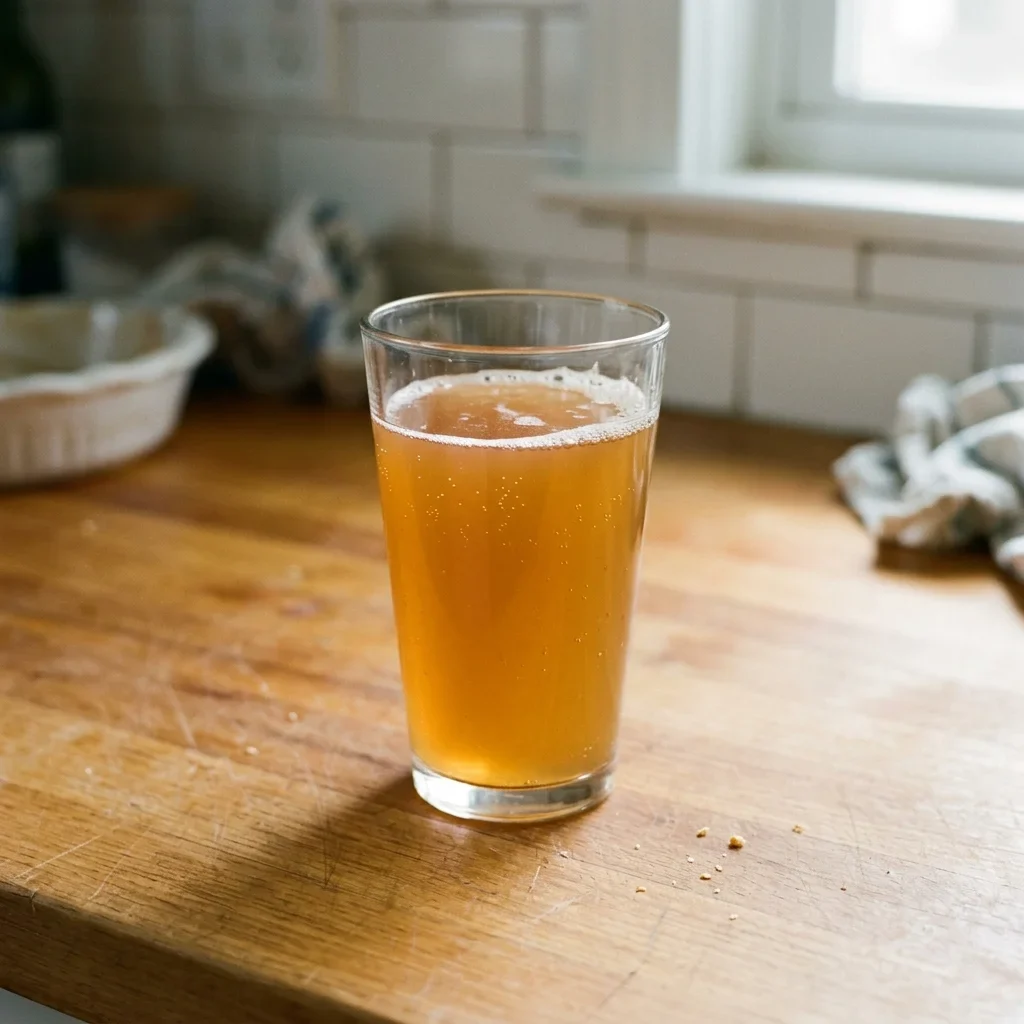
Fizzy or boozy apple cider
Fizz means something has started eating the sugar. Honey ferments the same way once water gets into the jar, which is the one thing that genuinely spoils it. Oregon State University Extension describes where that ends, since fermented cider becomes hard cider, an alcoholic beverage. No extension source we opened gives a home test for telling early fermentation from plain spoilage, though. So treat a fizzing jug as past its window, especially an unpasteurized one. Then pour it away rather than tasting it.
Verdict: throw the jug out
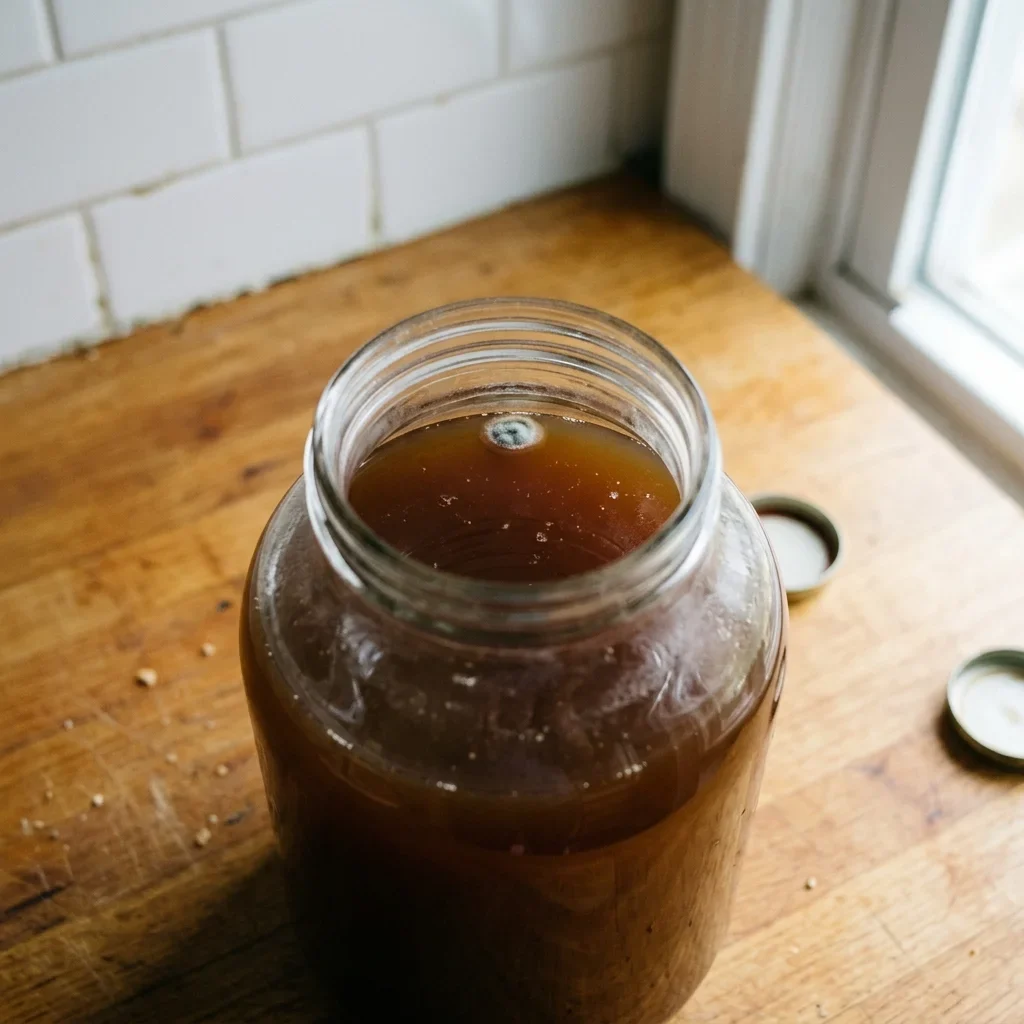
Moldy apple cider
Mold on cider is not a surface problem. The USDA puts foods with high moisture content in its discard column, because they can be contaminated below the surface. It also warns against sniffing a moldy item, since that can cause respiratory trouble. Mycotoxins are on its list for apples and grape juice, among other produce. That is why the grapes guide bins a moldy berry rather than trimming it. So pour the jug away, then clean the shelf where it sat.
How long is apple cider good for after you open it?
The same five to seven days, because no source we opened counts from the seal. Oregon State University Extension gives raw cider up to seven days at 40°F or below. Its label guidance only adds refrigerate upon opening. Washington State University Extension gives five days. Neither one restarts the count when the cap comes off, so an opened jug does not get a fresh week. That matters most around Halloween, when a gallon gets opened for one evening and then lives in the fridge. So buy the size you will actually drink, since the clock is the same either way. The pages ranking for this question give 3 to 10 days instead, although none of them names a source.
Apple cider substitutes
Out of cider, or did the jug turn fizzy? Then one of these will cover the same job.
Substitute
Works best in
What changes
Pasteurized apple juice
Mulling and baking
Clearer and sweeter, although it keeps the same way.
Frozen apple juice concentrate
A quick pot of mulled cider
Keeps for months, then dilutes to taste.
Hard cider
Braises and batters
Already fermented, so it is a different drink.
Apple cider vinegar
Dressings and glazes
Sour rather than sweet, so use a spoonful.
Mistakes people make when they store apple cider
These are the ways people store apple cider that cost them the most, although each one has an easy fix.
Leaving the jug on the table all evening. Two hours is the limit the USDA gives perishables, so pour and put it back.
Pouring warm mulled cider back into the jug. Cool it fast in a covered container instead, then use it within 3 to 4 days.
Freezing the jug as it came. Cider expands, so Oregon State Extension asks for at least 2 inches of headspace.
Giving raw cider to a small child. The FDA names children among those at risk, so heat it to 160°F first.
Pressing cider from windfall apples. MSU Extension says never to use apples from the ground, because manure can carry E. coli.
Reading cloudiness as spoilage. Fresh pressed cider is cloudy, so that one is normal.
Sniffing a moldy jug to check. The USDA warns that sniffing moldy food can cause respiratory trouble, so pour it away instead.
Sources
Preserving foods: Fruit juice and apple cider, Nellie Oehler, Oregon State University Extension Service SP 50-455, revised July 2024, on heating juice to at least 160°F for 6 seconds, the simmer alternative, the E. coli O157:H7 link, pasteurized cider keeping about a week in the refrigerator, 2 inches of headspace for freezing, fresh pressed cider looking cloudy, and fermented cider becoming hard cider.
Producing and selling raw apple cider under the Oregon farm direct marketing law, Kelly Streit and Melissa Fery, Oregon State University Extension Service EM 9441, August 2024, on refrigerating cider at 40 degrees F or below for up to seven days, freezing for longer storage, the warning label wording, refrigerating upon opening, discarding moldy apples because of patulin, and apples losing acidity as they age.
FSM 356: Making Pasteurized Apple Cider at Home, Susie Craig, Food Safety in a Minute, Washington State University Extension, on Salmonella and E. coli O157:H7 in unpasteurized juice, washing and trimming apples, sanitized equipment, pasteurizing at 160 degrees Fahrenheit with a thermometer, and refrigerating juice up to five days or freezing it for longer.
Food Safety Facts: Safe Home Made Cider, Jim Schupp, revised by Jason Bolton, University of Maine Cooperative Extension Bulletin #4191, on outbreaks from unpasteurized cider, patulin surviving pasteurization, heat treating to 155°F for 10 seconds, storing and cooling cider at 40°F or lower, blending tart apples for acidity, and not leaving cider at room temperature longer than two hours.
What You Need to Know About Juice Safety, U.S. Food and Drug Administration, content current as of March 2024, on the required warning statement, children, older adults, pregnant women and people with weakened immune systems being at risk, where untreated juice is sold, the exemption for juice sold by the glass, and keeping untreated products refrigerated.
Molds on Food: Are They Dangerous?, USDA Food Safety and Inspection Service, slightly revised September 2005, hosted by UC Davis Food Safety, on the 2-hour rule, using leftovers within 3 to 4 days, covering and refrigerating leftovers promptly, discarding high-moisture foods because mold can grow below the surface, mycotoxins on apples and grape juice, and not sniffing moldy food.
Avoid spiking your cider with foodborne pathogens, Michigan State University Extension, republished by Food Safety News, October 2017, on never using apples from the ground, manure from cattle, deer and birds carrying E. coli, pressing within 24 hours of harvest, apples losing acidity with age, bringing cider just to a boil, and storing it up to seven days in sanitized containers.
Refrigerator and Freezer Storage Chart, U.S. Food and Drug Administration, March 2018, on freezing at 0°F keeping food safe indefinitely, so freezer times are about quality rather than safety.
Storage times and safety advice on this page come from the sources above. Food safety depends on conditions I cannot see, so read the Disclaimer, and if in doubt, throw it out.
Other ingredient guides
Browse all guides



Share this guide
Never miss a guide
New ingredient guides when they go up, plus one storage tip worth knowing. Anything sponsored is labelled.

Emilly White