

About 3 months
Opened; Ohio State's peanut butter figure, the nearest published (Ohio State)
About 9 months
Opened and moisture-tight, also a peanut butter figure (Ohio State)
No figure
Cold slows rancidity, but no source gives a time (Illinois)
The short version: keep an unopened jar of almond butter cool, dry and dark. Then stir the oil back in and refrigerate the jar once it is open. Nothing we opened publishes a time for almond butter. So the nearest figures are Ohio State's, for peanut butter: about 3 months in the pantry. The fridge takes that to about 9 months.
Storage times here come from Ohio State University Extension. The rancidity rules come from Colorado State, Illinois and Mississippi State Extension. The Almond Board of California supplies the almond figures, while a 2015 peanut butter study supplies the separation ones.
On this page
Which almond butter are you storing?
Almond butter comes stabilized or not, and Illinois Extension says natural nut butters may need refrigerating once opened. The oil layer on top is the tell. So read the jar before you put it anywhere.
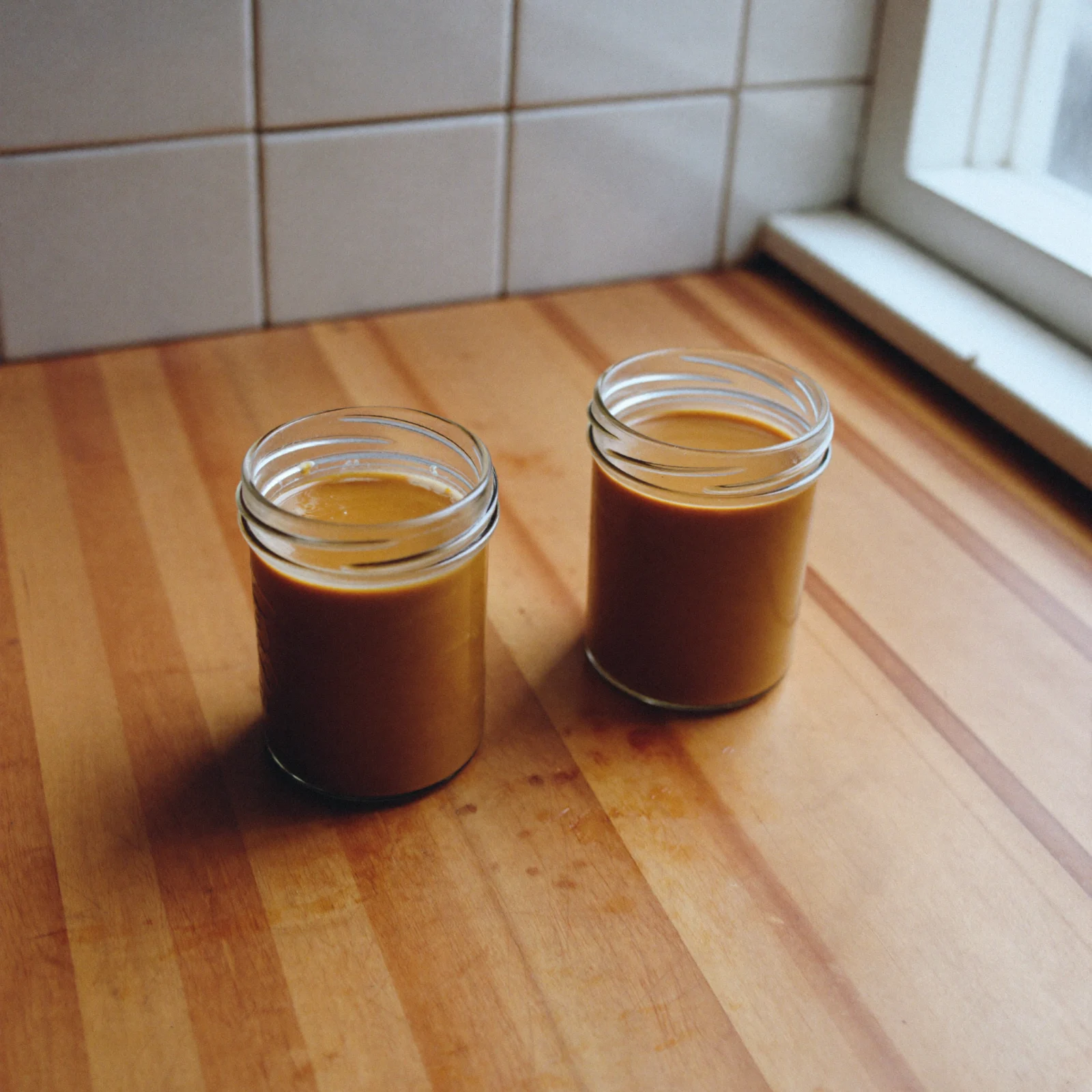
A natural jar separates, while a stabilized one does not, so the label decides the shelf.
Natural almond butter separates, and that is physics rather than a fault. A 2015 study of stabilizer-free natural peanut butter found separation reaching 21 percent at 35°C. The same measure stayed at 0.35 percent at 10°C.
Stabilized jars hold together. In the same study, the commercial peanut butter was stable throughout storage at all temperatures. That is what a stabilizer is for.
Almonds are a patient nut to start from. Colorado State University Extension ranks nut shelf life from shortest to longest. Its order runs walnuts, pecans, Brazil nuts, peanuts, almonds and pistachios, so almonds sit near the long end.
Buy the freshest jar on the shelf. Illinois Extension says to check best-by or use-by dates to buy the freshest nuts available. It also asks you to use a bulk buy before it starts to go rancid.
How to store almond butter so it lasts
To store almond butter so it lasts, keep it cool, sealed and out of the light. Fat is the part that fails here. Cold slows rancidity, while a tight lid keeps out the air and moisture that start it. The same holds for vegetable shortening, which also fails by going rancid.
Does almond butter need to be refrigerated?
Almond butter does not have to be refrigerated, although Mississippi State Extension says nut fats go rancid at room temperature. It sends nuts to a moisture-tight container in the fridge. Illinois Extension draws the line where most jars do, since it says natural nut butters may need refrigeration after opening. It also tells you to follow the storage advice written on the product. The 2015 peanut butter study backs the cold with numbers, since separation was least at 10°C. So an unopened jar can stay in the cupboard, whereas an opened natural jar is better off cold.
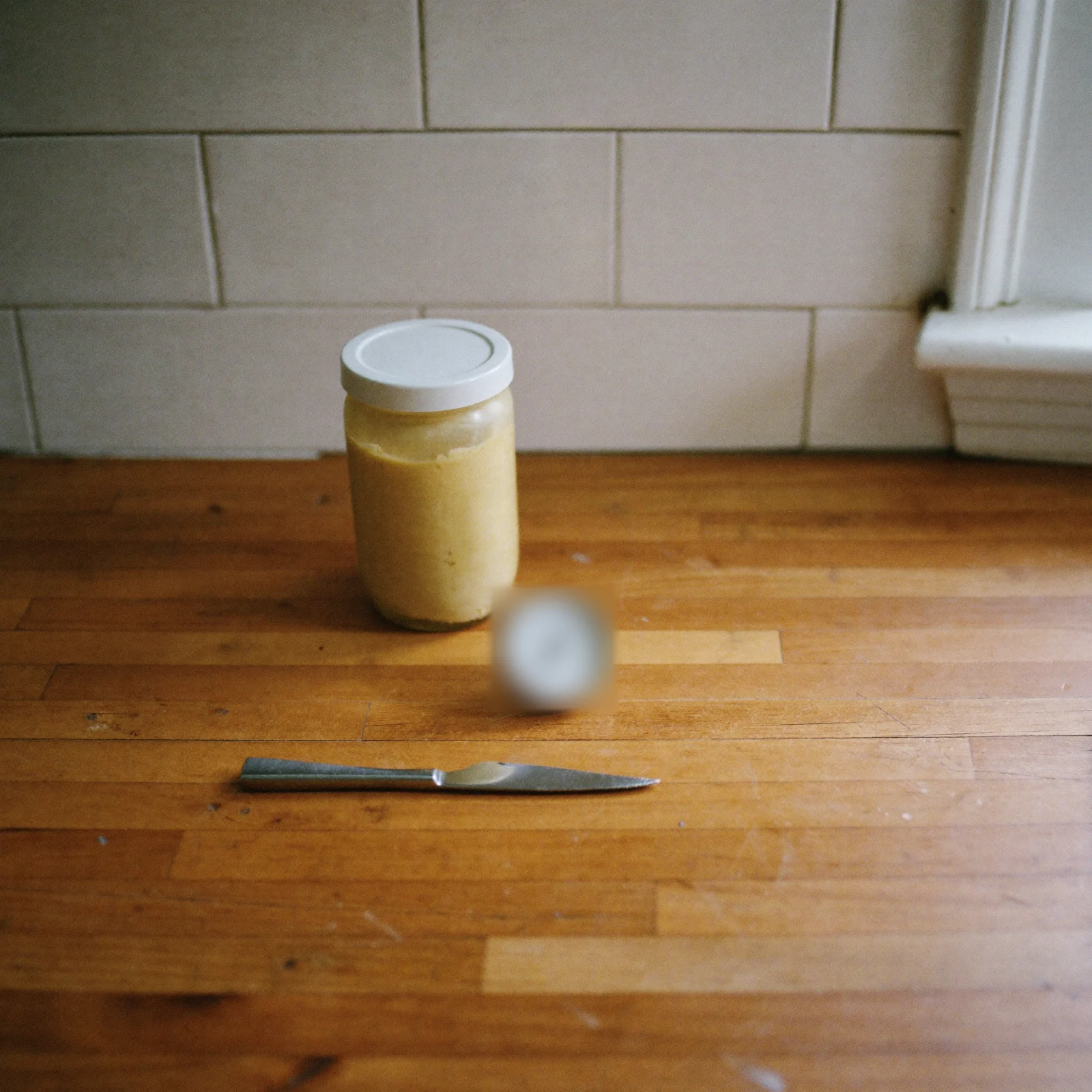
An opened natural jar keeps better cold, because nut fats turn rancid at room temperature.
How long does almond butter last once opened?
Nothing we opened publishes a figure for almond butter, so the nearest is Ohio State University Extension's for peanut butter. That answer gives about 3 months in the pantry once opened, or about 9 months refrigerated. For a natural butter with no preservatives, it gives about 6 months refrigerated, opened or unopened. Illinois Extension stays vaguer about nuts and seeds themselves, since it allows several weeks and months at room temperature. Those are peanut and nut figures rather than almond butter ones. So treat them as a range to check against rather than a date to trust.
The date on the jar is a quality marker, not a deadline. Ohio State University Extension says a best-by date indicates peak quality rather than food safety. It also suggests calling the number on the label for the maker's own figure. So smell the jar before you judge it by the print.
Why does almond butter separate?
Almond butter separates because a natural jar has nothing to hold the oil down, as the 2015 study explains. Its authors write that oil separation leads to lipid peroxidation, which develops the off-flavour and results in rancidity. Temperature drives it, since the stabilizer-free butter reached 21 percent separation at 35°C. At 10°C the same measure stayed at 0.35 percent. So the oil belongs stirred back through the jar rather than poured off.
Where should a jar of almond butter be kept?
Keep almond butter cool, dry and dark, and the Almond Board of California sets the target. It stores raw almonds under 15°C, or 59°F, at under 60 percent relative humidity. It also says to avoid exposure to light and to materials with extraneous odors. Clemson Cooperative Extension is looser, since it puts stored foods at 50 to 70°F. Above 75°F, storage time decreases significantly. The Almond Board figures are for whole almonds rather than the butter, though. So read them as the direction to aim in, and keep the jar away from the cooker.
Is almond butter safe if it was left out?
Almond butter is too dry for a warm afternoon to make it unsafe, says the Almond Board of California. It puts almond water content under 6 percent and says that means no bacteria and mold growth. The butter is ground almonds from the same dry base. What a warm spell costs you is quality instead, since nut fats go rancid at room temperature. For the foods where a night out does matter, the food left out overnight guide sorts them out.
Can you freeze almond butter?
Yes, you can freeze almond butter, and Illinois Extension gives the reason: cold slows how quickly the fats turn rancid. It freezes nuts and seeds for longer storage on that basis. Nothing we opened gives a freezer time for almond butter itself, though. So the freezer here slows the clock rather than setting a new one.
How should you freeze almond butter?
Freeze almond butter sealed against air and moisture, which Illinois Extension calls an airtight container. Mississippi State Extension asks for a moisture-tight one. The Almond Board of California wants packages with good barrier properties against water and air transmission. Clemson Cooperative Extension supplies the temperature, since it puts the freezer at 0°F or lower. Stir the oil back through first, so what comes out is the butter you put in.
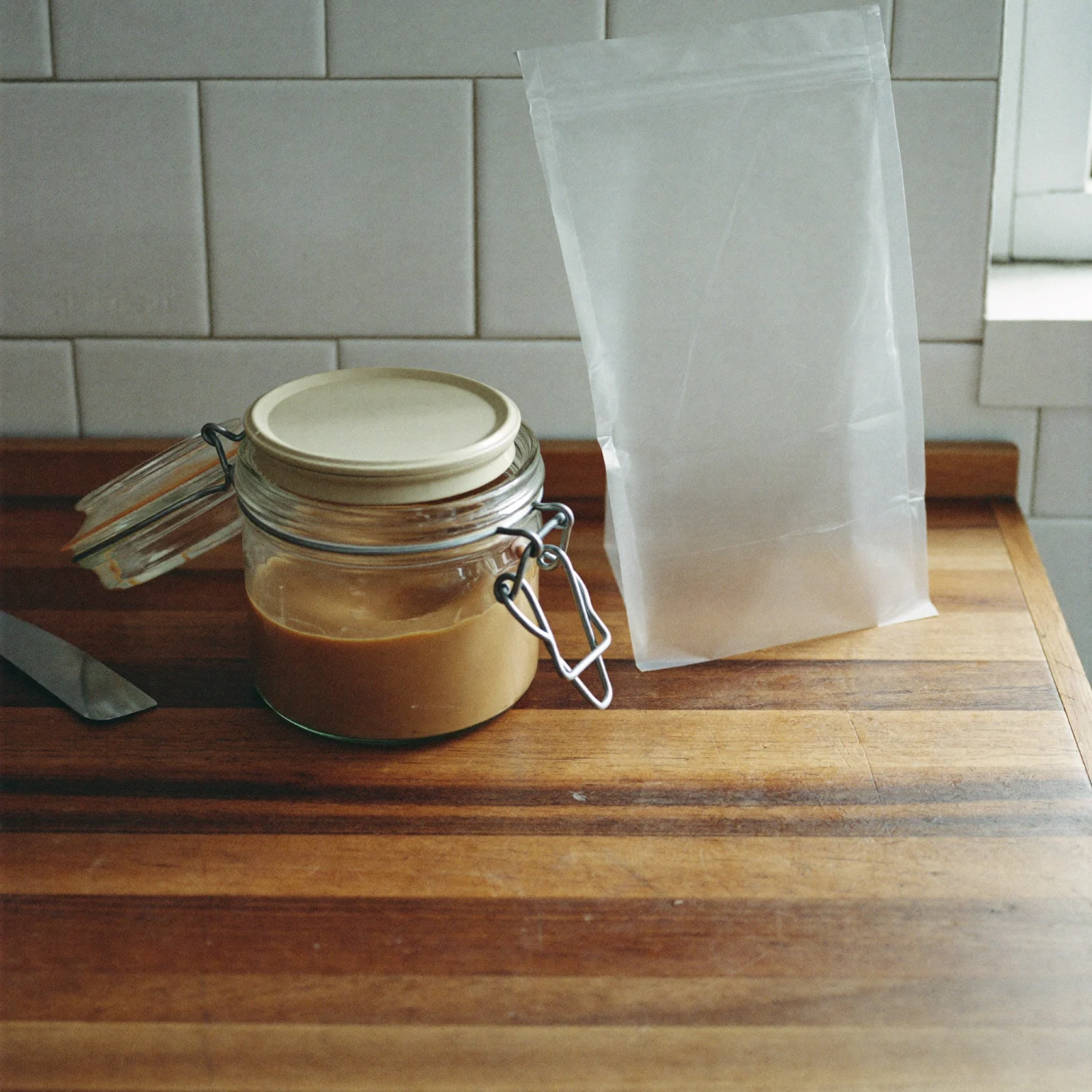
Sealed against air and moisture at 0°F, because cold slows rancidity without stopping it.
How long does frozen almond butter keep?
No source we opened gives a freezer time for almond butter, so this guide will not invent one. Illinois Extension is careful about what cold does, since it says freezing slows how quickly the fats turn rancid. Slowing is not stopping, so a frozen jar still has a limit. Label it with the date it went in, then work through it.
Does freezing change almond butter?
Nothing we opened tests almond butter before and after freezing, so the texture question is unanswered. What the research does measure is separation, and there the cold helps. The 2015 study found the least oil separation at its coldest storage temperature. The Almond Board of California notes that temperature and humidity drive oil and water migration in almonds. So expect a firm jar out of the freezer, then stir it once it softens.
How to tell if almond butter has gone bad
Almond butter usually goes bad by turning rancid rather than by growing mold. There is not enough water in it for microbes to work with. Colorado State University Extension gives the smell to look for, since it says rancid fats smell like paint. Mold is the rarer, later sign. Even so, the same page warns that nuts and seeds can pick up molds during improper storage. Here is what each stage means.
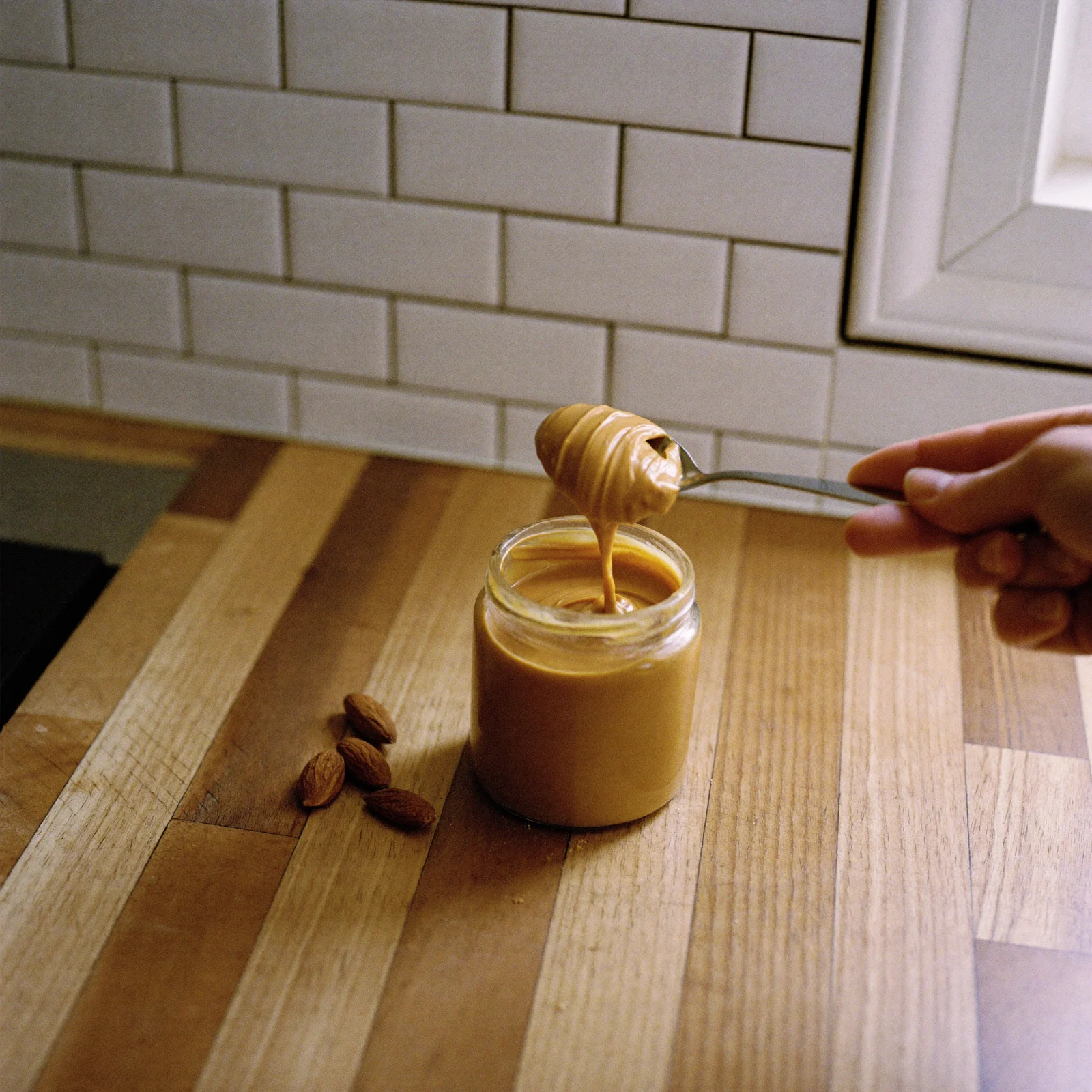
Verdict: use it
Fresh almond butter
It smells of roasted almonds and tastes sweet rather than sharp. That is the opposite of the paint-like smell Colorado State University Extension describes. So the jar is in good order, and you can spread it.
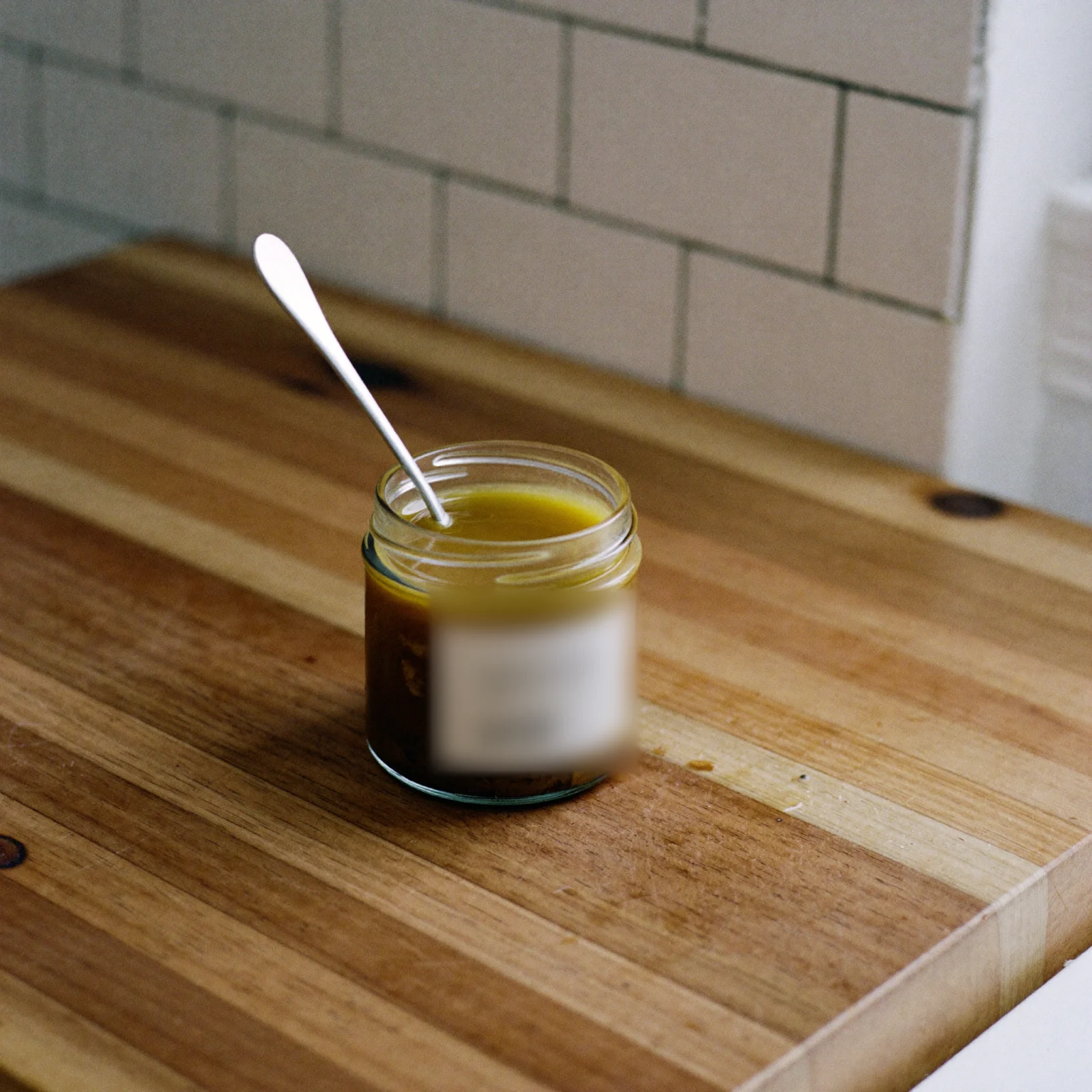
Verdict: stir it
Separated almond butter
A layer of oil on top and a stiff, dry paste underneath. The 2015 peanut butter study calls that normal for a stabilizer-free butter. It measured up to 21 percent separation at 35°C. Separation is not spoilage, although the same paper ties it to the peroxidation behind rancidity. So stir it right through, then get the jar somewhere cold.

Verdict: use it up
Flat-tasting almond butter
The nutty flavour has gone quiet without turning sharp. Illinois Extension describes that first step as fat becoming rancid and showing up as an off taste. The Almond Board of California records flavour volatiles fading over storage in almonds. Nothing here is unsafe, so finish the jar in something baked. Then buy a fresher one for toast.
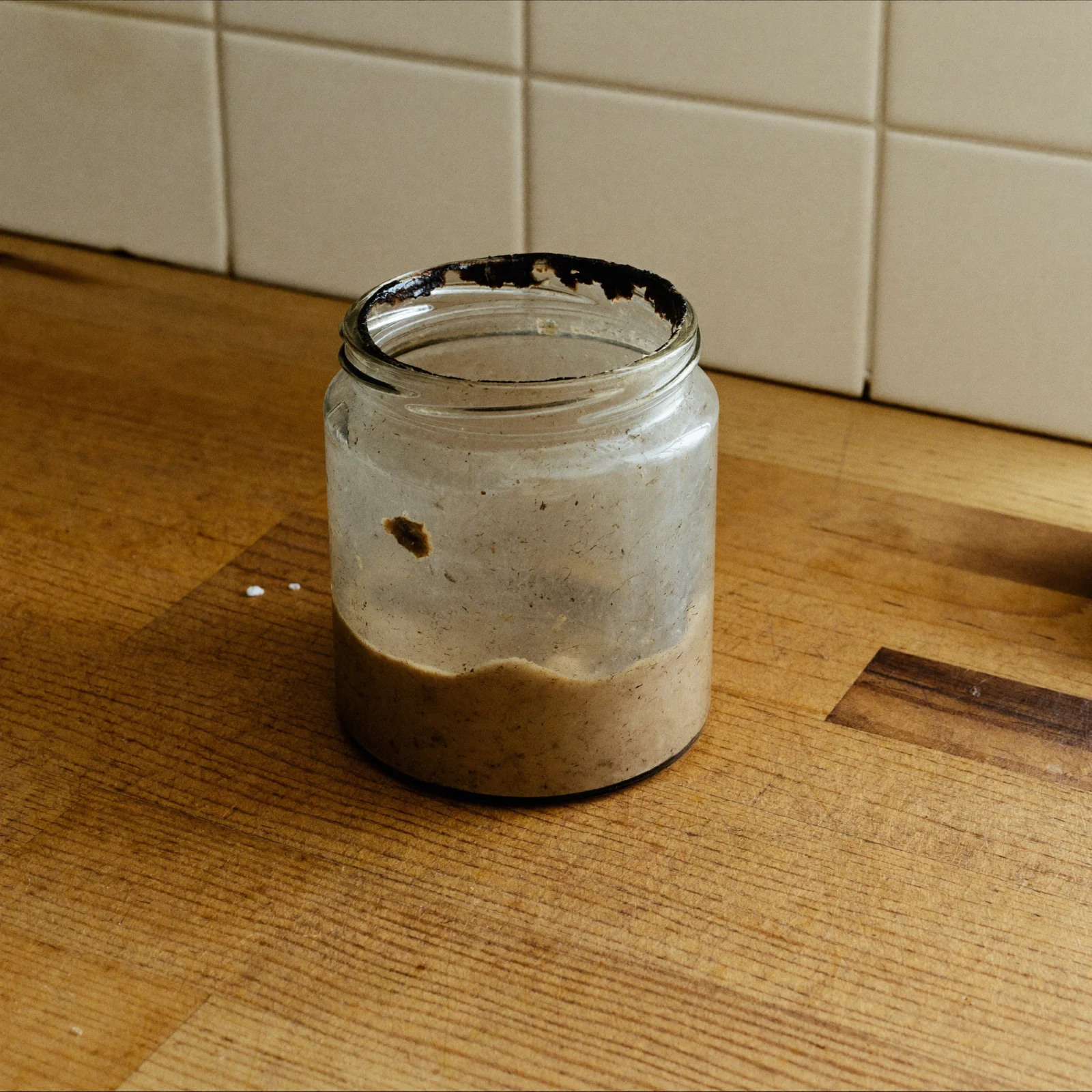
Verdict: throw it out
Rancid almond butter
A sharp, paint-like or bitter smell, and a taste that matches it. Colorado State University Extension names that smell as what rancid unsaturated fats do to nuts. Mississippi State Extension explains where it comes from, because nut fats go rancid at room temperature. The bacon grease guide describes the same smell in a jar of fat. Rancid fat does not recover, so bin the jar rather than baking with it.
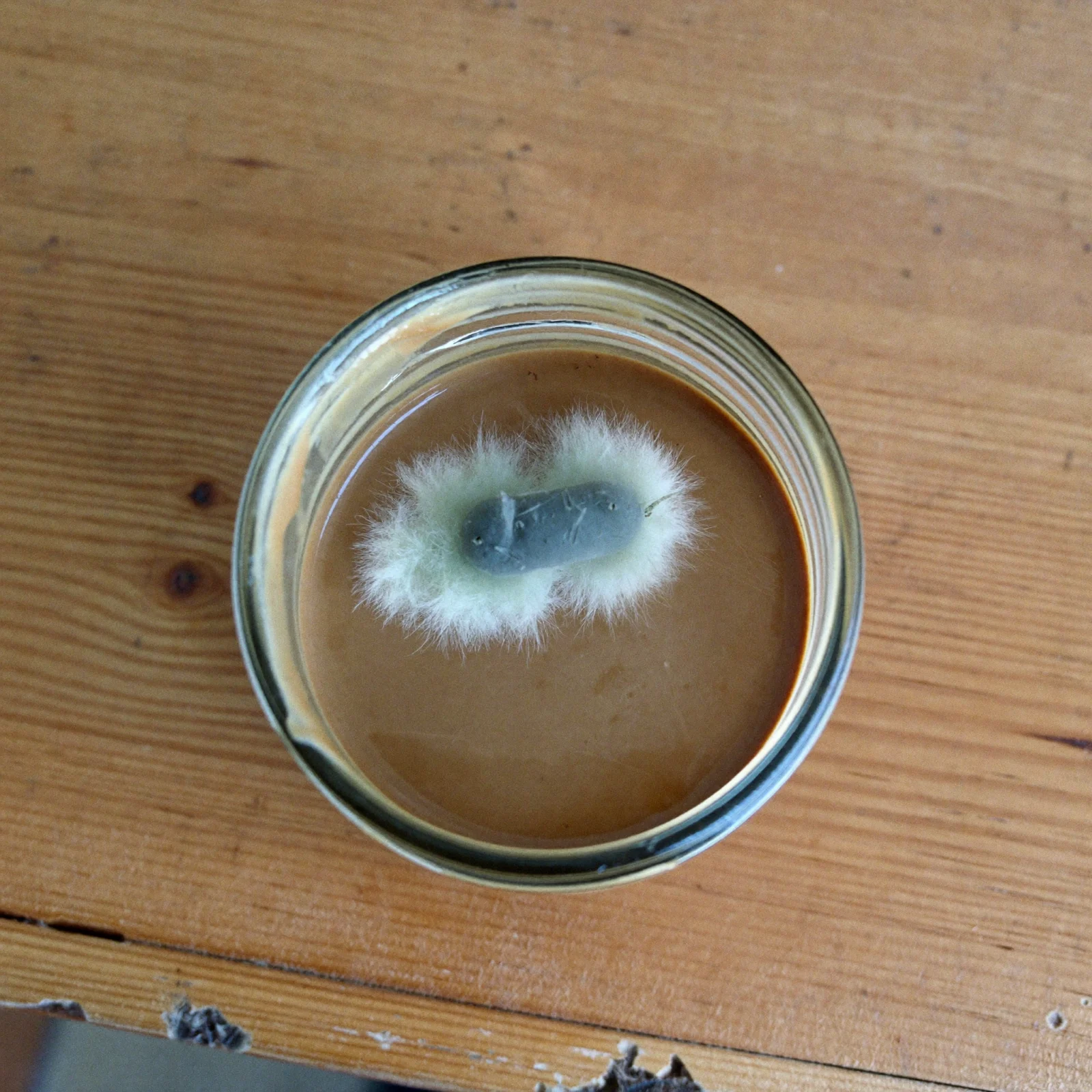
Verdict: throw it out
Moldy almond butter
Fuzz or coloured spots on the surface, around the rim or under the lid. Colorado State University Extension says nuts and seeds can be infected with molds during improper storage. Once toxins from mold are present, the same page adds, they persist through processing. N.C. Cooperative Extension says mycotoxins are heat stable, so cooking does not help. It also warns that root threads run deep into a food. So throw the jar out, and do not sniff it to be sure.
What should you do if your almond butter is recalled?
Throw recalled almond butter away, the CDC advised, even if you have eaten some and nobody got sick. That advice came during a 2015 outbreak. CIDRAP at the University of Minnesota reported 11 Salmonella infections across nine states, traced to one company's nut butter spreads. The strain was Salmonella Paratyphi B variant L(+) tartrate(+). The advice is that firm because of the shelf life, since CIDRAP notes that nut butters keep a long time. Recalled jars are therefore still in cupboards months later. In other words, a dry food that cannot grow bacteria can still carry what got into it at the factory.
Almond butter substitutes
Out of almond butter, or did the last jar turn? Then one of these will stand in.
Substitute
Works best in
What changes
Peanut butter
Sandwiches and sauces
Ohio State gives an opened jar about 3 months in the pantry.
Sunflower seed butter
Nut-free kitchens
Seeds rather than nuts, and Colorado State puts them under the same rancidity rules.
Tahini
Dressings and dips
Sesame rather than almond, so the same paint-like warning applies.
Roasted pumpkin seeds
Crunch on top
Whole rather than ground, and the roasted pumpkin seeds guide covers them.
Mistakes people make when they store almond butter
These are the ways people lose a jar of almond butter, and each one has a quick fix.
Pouring off the oil. It is part of the butter, and the 2015 study ties separation to the rancidity that follows.
Leaving an opened natural jar in a warm cupboard. Mississippi State Extension says nut fats go rancid at room temperature, so move it to the fridge.
Keeping it above the cooker. Clemson Cooperative Extension says storage time drops significantly above 75°F, so choose a cooler shelf.
Storing it in a loosely closed jar. Illinois Extension asks for airtight containers, since air is what turns the fat.
Baking with a rancid jar. Colorado State says rancid fats taste as bad as they smell, so heat will not hide it.
Scraping mold off the top. N.C. Cooperative Extension says mycotoxins are heat stable and root threads run deep, so the jar goes out whole.
Eating from a recalled jar because it looks fine. The CDC told people to throw recalled nut butter away even if some had been eaten.
Sources
Nuts need food safety too, Caitlin Mellendorf, Illinois Extension, November 2025, on storing nuts and seeds in airtight containers at room temperature for several weeks and months, refrigerating or freezing them to slow how quickly the fats turn rancid, natural nut butters needing refrigeration after opening, following the storage advice written on the product, and buying the freshest dates available.
Nuts and Seeds, Food Smart Colorado, Colorado State University Extension, on unsaturated fats becoming rancid and giving nuts a paint-like smell and bad taste, nuts and seeds being infected with molds during improper storage, mold toxins persisting through processing, and a shelf-life ranking that puts almonds near the long end.
Refrigerate This!, Extension for Real Life, Mississippi State University Extension Service, on the fats in nuts going rancid at room temperature and storing nuts in a moisture-tight container in the fridge, along with nut-based oils, whole grain flours and brown rice.
Almond Shelf Life, Guangwei Huang, Almond Board of California, 2022, on almond water content under 6 percent meaning no bacteria and mold growth, hydrolytic and oxidative rancidity, storing raw almonds under 15°C and 60 percent relative humidity, avoiding light and materials with extraneous odors, barrier packaging against water and air, and flavour volatiles fading over storage.
Quality changes of stabilizer-free natural peanut butter during storage, N. H. Mohd Rozalli, N. L. Chin, Y. A. Yusof and N. Mahyudin, Journal of Food Science and Technology, 2015, on oil separation reaching 21 percent at 35°C and staying at 0.35 percent at 10°C over 16 weeks, commercial peanut butter staying stable at all temperatures, and separation leading to lipid peroxidation, off-flavour and rancidity.
Peanut butter shelf life, Pat Holmes, Ohio State University Extension, Ask Extension, March 2024, on a best-by date marking peak quality rather than safety, an opened jar keeping about 3 months in the pantry or 9 months refrigerated, natural peanut butter keeping about 6 months refrigerated, and calling the number on the label for the maker's figure.
Nine-state Salmonella outbreak prompts nut butter recall, Lisa Schnirring, CIDRAP, University of Minnesota, December 2015, on 11 Salmonella infections in nine states traced to one company's nut butter spreads, the strain involved, nut butters having a long shelf life, and the CDC telling consumers to throw remaining product away even if some had been eaten.
Moldy Foods: Use or Pitch, Cheryle Syracuse, N.C. Cooperative Extension, Brunswick County Center, September 2024, on mycotoxins being heat stable so cooking does not help, root threads running deep into a food, and not sniffing moldy foods.
Safety of Stored Foods, Pamela Schmutz and E. H. Hoyle, Clemson Cooperative Extension factsheet HGIC 3520, revised April 2020, on storing food at 50 to 70°F, storage time decreasing significantly above 75°F, and a freezer at 0°F or lower.
Storage times and safety advice on this page come from the sources above. Food safety depends on conditions I cannot see, so read the Disclaimer, and if in doubt, throw it out.
Other ingredient guides
Browse all guides



Share this guide
Never miss a guide
New ingredient guides when they go up, plus one storage tip worth knowing. Anything sponsored is labelled.

Emilly White